Baroxon Jordan | Barrier Gates & Automatic Access Control

What Is a Parking Barrier Gate and How Does It Work?
Release time:
2026-10-29
A parking barrier gate is the automatic device that controls vehicles entering and leaving a car park, residential compound, commercial building or industrial facility. It is more than an arm that rises and falls: it is a system made up of the motor and drive mechanism, the controller, the access verification method and the vehicle detection devices. Understanding these components is what allows you to choose a barrier that will operate reliably for years rather than one that only suits a quiet entrance.
What is a parking barrier gate?
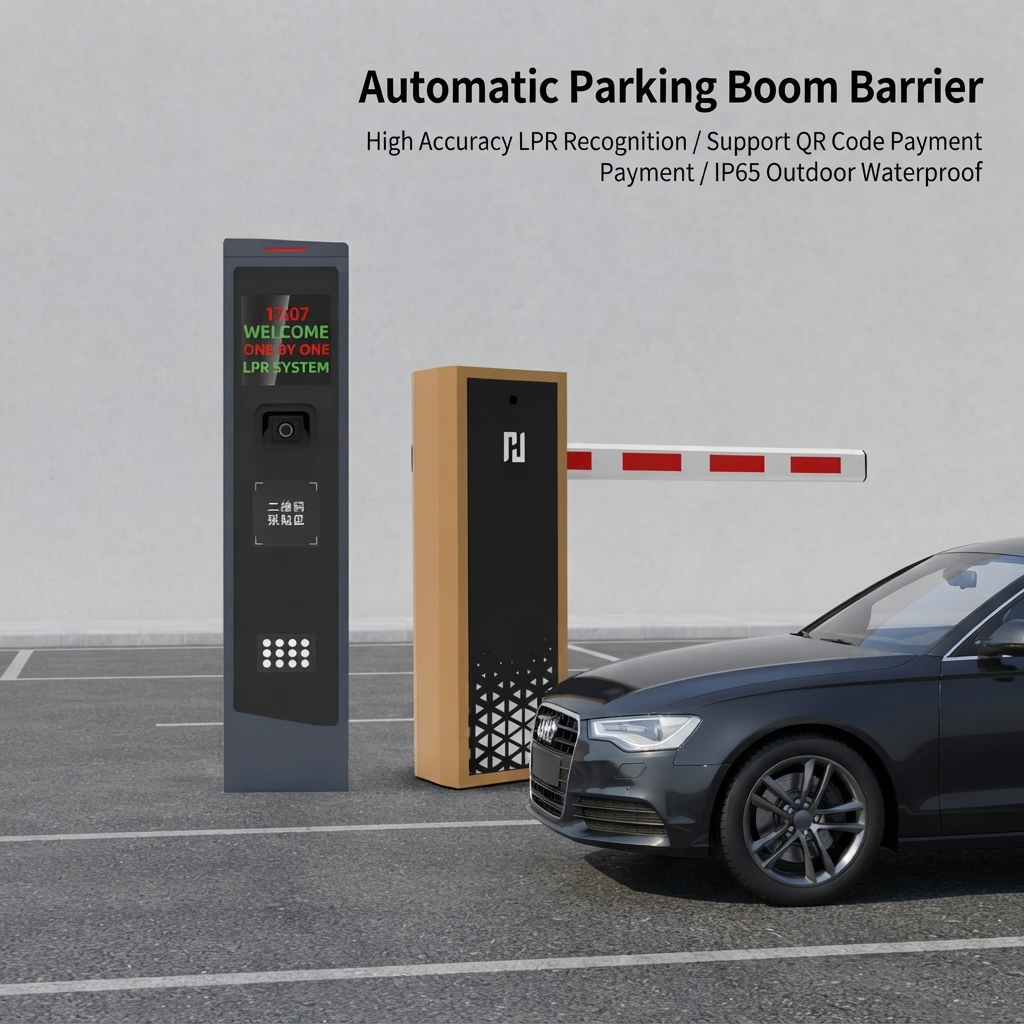
The system usually consists of a cabinet housing the motor, the drive mechanism and the controller, together with a barrier arm that rises to allow passage and lowers to prevent unauthorised entry. It can be operated manually, or connected to a verification method such as an RFID card, an LPR/ANPR licence plate recognition system or a parking ticketing system.
Terminology differs between markets and suppliers — "boom barrier", "automatic barrier arm", "vehicle gate", "parking gate". Because a name alone is not enough for comparison, you should look at the arm type, lane length, operating speed, verification method and accessories. The full range is listed under boom barriers and parking gates at Baroxon Jordan.
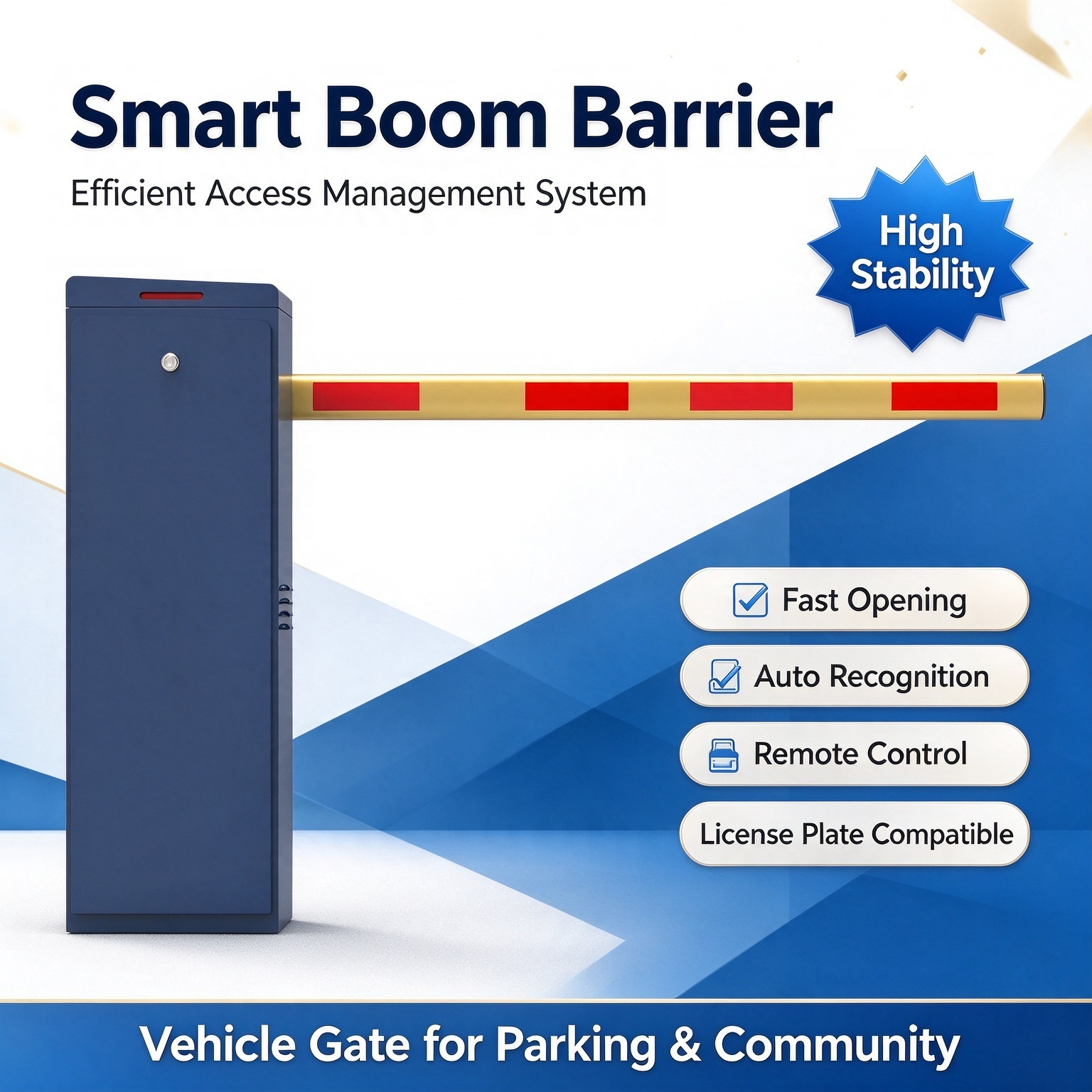
How does a parking barrier gate work?
The operating cycle begins when a vehicle arrives at the entry point. The system reads the approved access credential or receives a command from an authorised operator, and the controller then verifies that the request is valid. If access is granted, the controller sends a signal to the motor to raise the arm. After the vehicle has passed and the movement area is clear, the arm returns to the closed position according to the system settings and the signals from the safety devices.
The process can be reduced to five stages: detect the vehicle → verify authorisation → issue the open command → vehicle passes → safe closing. The exact sequence depends on the system design, the type of entry reader, the vehicle detection devices and the parking management software in use.
What are the main components of an automatic barrier?
1. Barrier cabinet and motor
The cabinet contains the drive assembly, the electrical components and the controller. The motor should be selected according to the lane width, the arm weight, the traffic density and the expected number of operating cycles. Baroxon Jordan presents a range of barrier categories, including brushless DC motor options and configurations for frequent use; however, the datasheet for the specific model should be consulted before relying on any performance or service-life figure.
2. Barrier arm
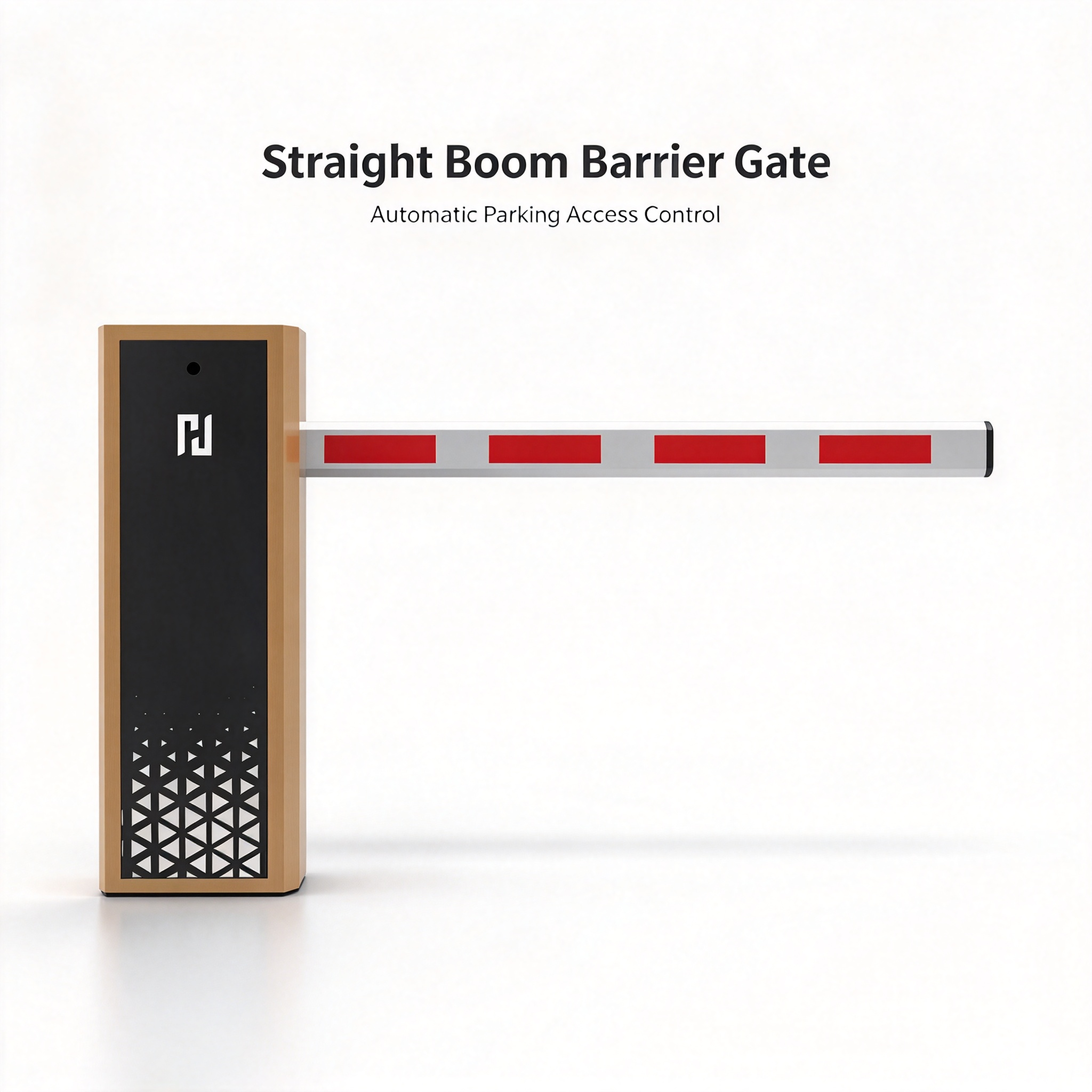
The arm may be straight, folding or a multi-rail fence type, depending on the product configuration. A straight arm suits many open entrances, while a folding arm may be appropriate for some sites with limited vertical clearance. The length and shape should be determined after measuring the lane width, the ceiling height, the surrounding obstacles and the pedestrian route.
3. Controller and verification method
The controller receives open and close commands from compatible access devices. The verification method may be a remote control, a button at the security desk, an RFID reader, an LPR/ANPR system or a ticketing and payment system. Before purchase, confirm that the electrical interfaces and communication protocols are compatible with the existing system.
4. Vehicle detection and safety devices
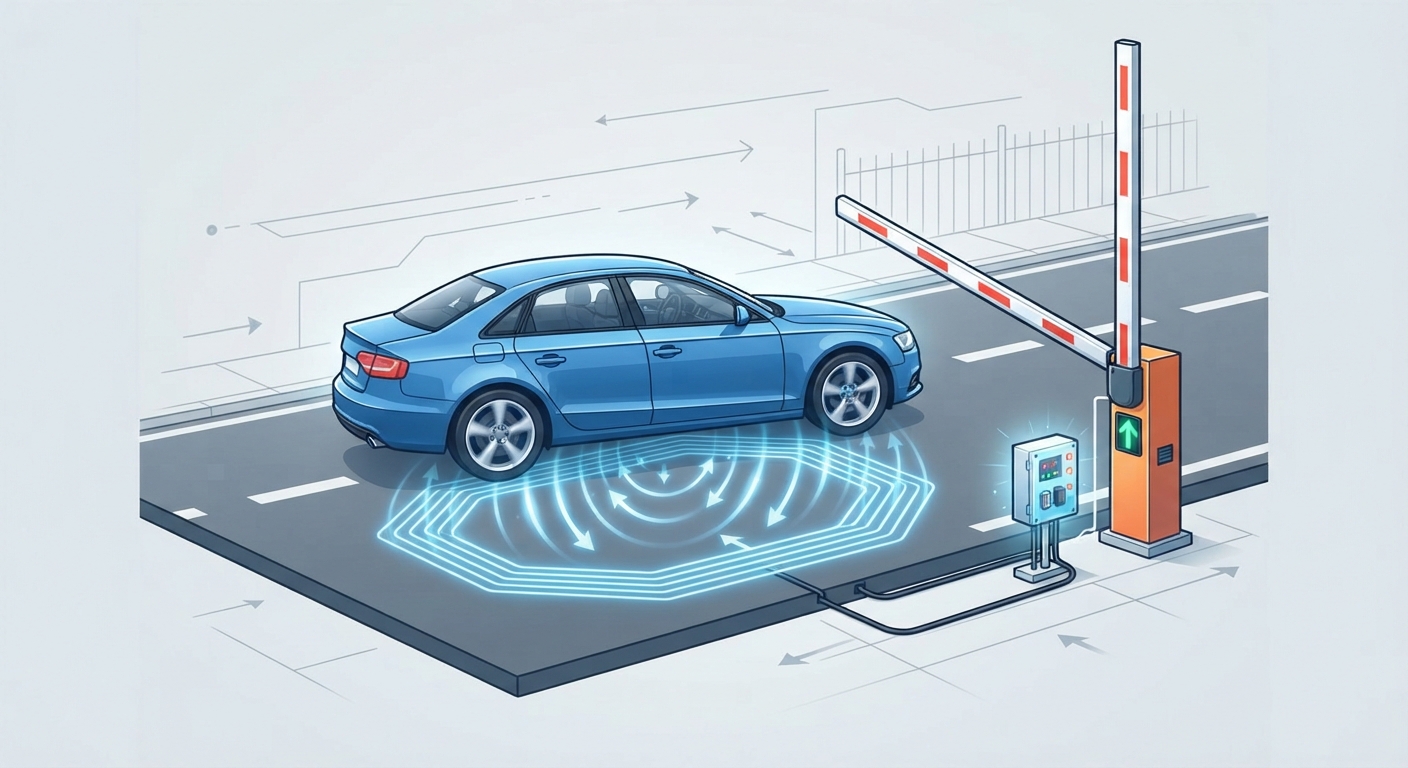
The system may use an induction loop, radar or other sensors to detect whether a vehicle is present in the arm's movement area. Properly specified and installed safety devices help reduce the risk of the arm descending onto a vehicle. The barrier alone should not be treated as a substitute for clear traffic planning, warning signs or safe operating procedures.
How can a parking barrier gate be controlled?
Manual or remote control
At small sites or entrances supervised by an employee, the barrier can be opened with a remote control, an operating button or a guard's control console. Operating permissions should be organised, and a clear procedure should be available if the device fails or the power supply is interrupted.
RFID access
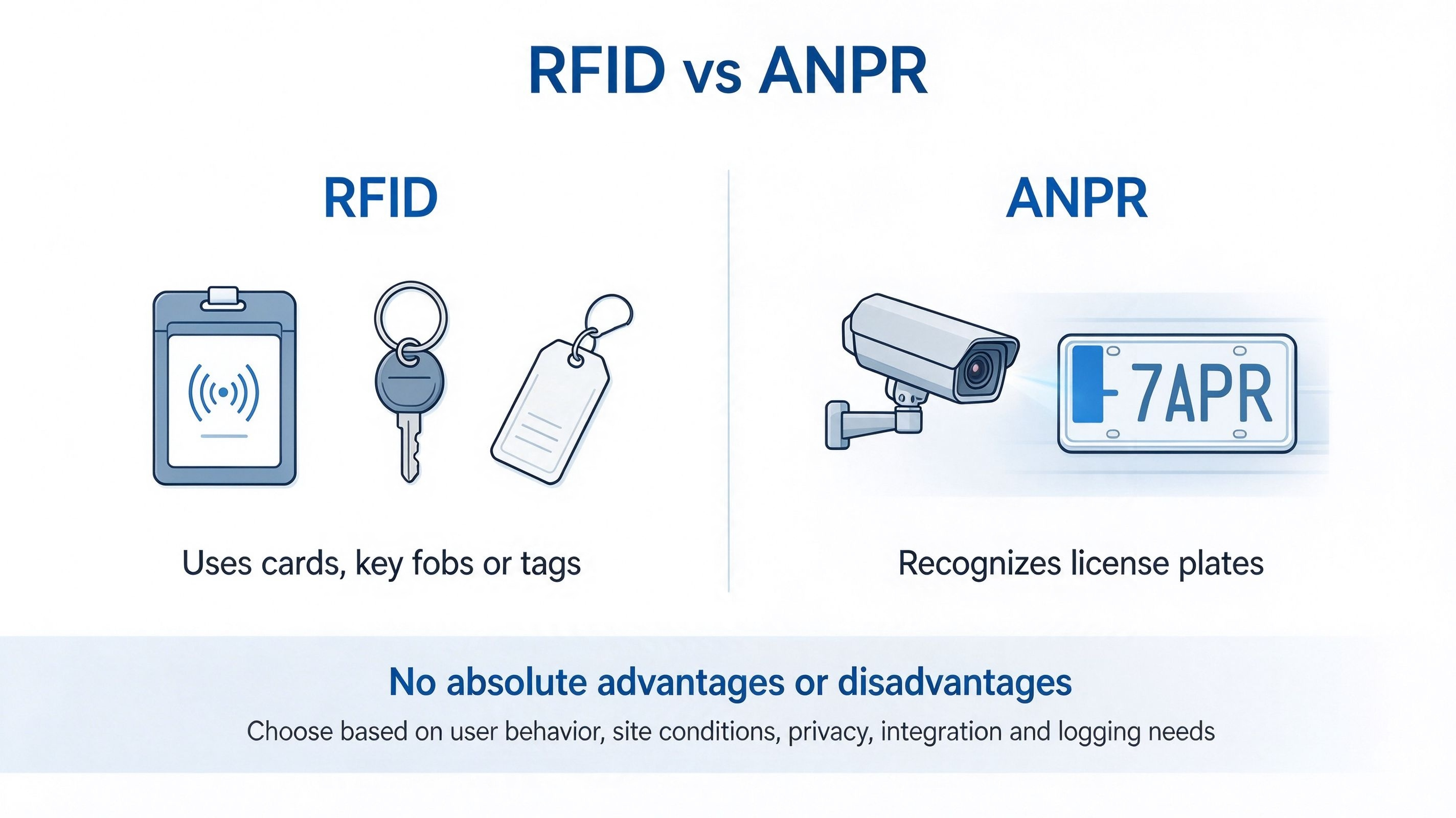
The barrier can be connected to an RFID reader to allow registered vehicles or holders of approved cards to enter. This option is useful in residential compounds and staff car parks where card management and permissions suit the needs of the site.
LPR/ANPR licence plate recognition
An LPR/ANPR system uses a camera and software to read the vehicle plate and compare it with an authorisation list or parking database. When the system is correctly integrated with the barrier controller, an open command can be sent automatically for authorised vehicles. The result depends on camera position, lighting, vehicle speed, plate condition and software settings, so performance should be tested on the actual site.
Ticketing, payment and parking management
In commercial car parks, the barrier can be integrated with a ticketing, payment or revenue management system to record entries and exits and calculate charges according to the operator's rules. The handling of lost tickets, exempt vehicles, visitors and communication failures should be defined before the system goes live.
Where are parking barrier gates used in Jordan?
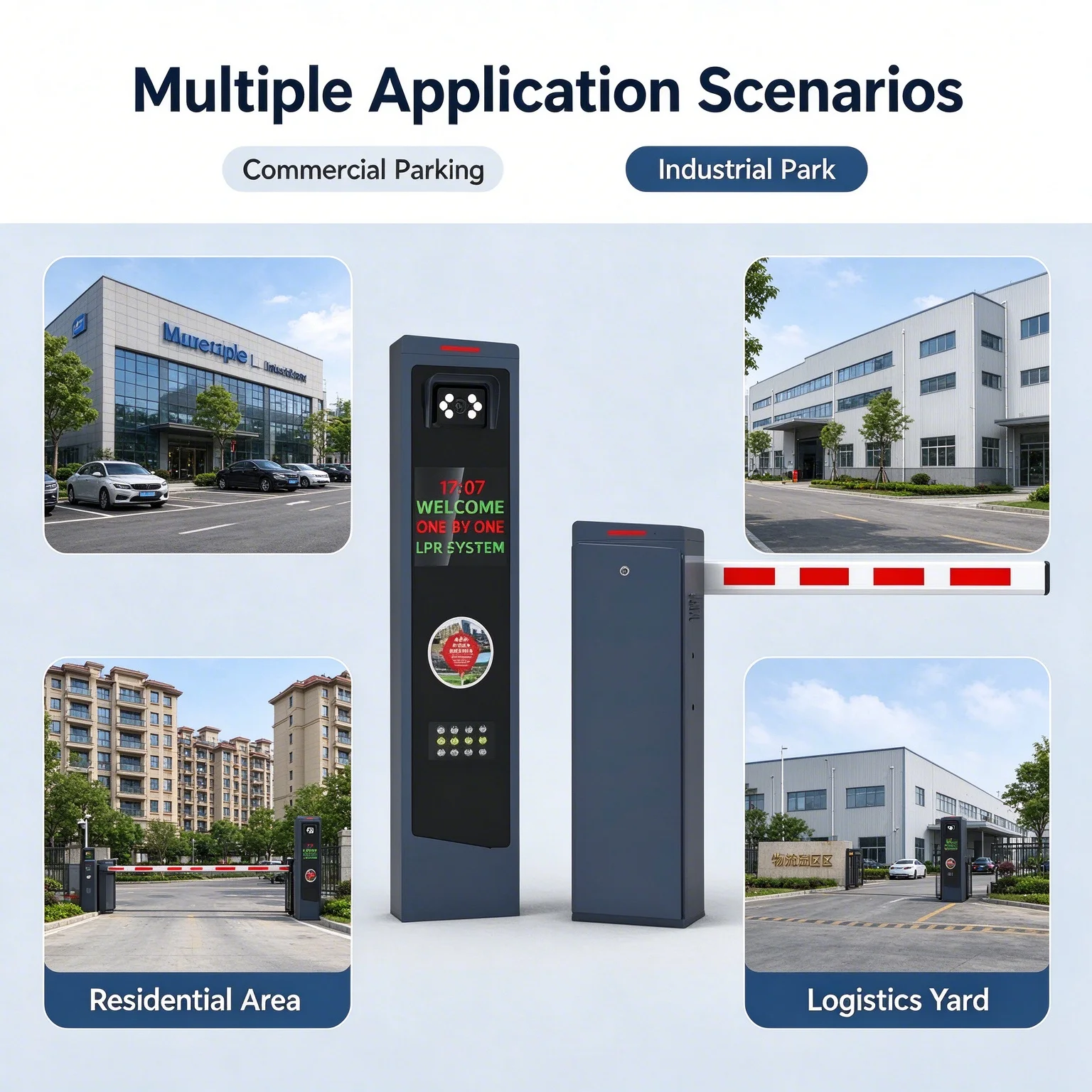
Residential compounds and villas
Barriers help organise the entry of residents, visitors and service vehicles. RFID, access codes or plate recognition can be used depending on the size of the project and the visitor management policy, while keeping a clear route for emergency vehicles.
Offices and shopping centres
These sites need to manage staff and visitor traffic during peak hours. Integration with LPR/ANPR, ticketing or payment systems can reduce manual handling, provided the lane design matches the expected traffic volume.
Factories, warehouses and logistics facilities
Truck lane width, the required arm length, operating frequency, vehicle collision risk and outdoor conditions should all be assessed. These sites may need a heavy-duty barrier, appropriate detection devices and a regular maintenance plan, with the final selection based on model data and the actual risks.
How do you choose the right parking barrier?
- Measure the lane width and clearance: record the entrance width, ceiling height, cabinet position, obstacles and pedestrian route.
- Estimate traffic density: determine the number of vehicles at peak hours and the expected number of open and close cycles per day.
- Choose the arm shape: compare straight, folding and fence arms according to the available space and safety requirements.
- Define the verification method: decide whether the site needs manual control, RFID, LPR/ANPR, ticketing or a combination.
- Review safety: check the vehicle detector or radar, the obstacle response logic and the emergency procedures.
- Examine the installation conditions: review temperature, dust, rain, the power source and the mounting position of the cabinet.
- Request model data: confirm arm length, operating speed, duty cycle, ingress protection, warranty and spare parts.
- Plan integration and maintenance: confirm compatibility with the existing parking software, and ask for wiring diagrams, maintenance instructions and technical support.
Installation, safety and maintenance
The barrier should be installed on a suitable, stable base, taking into account the direction of vehicle movement, the position of the access devices and the pedestrian areas. Electrical connections and testing should be carried out by a qualified technician in accordance with the manufacturer's instructions and local requirements. Before commissioning, the opening and closing, the detection devices, the stop or reverse mechanism and the manual operation procedures should all be tested.
Routine maintenance includes checking the fixing of the arm and cabinet, cleaning the detection devices as instructed by the manufacturer, verifying the connections and fault indicators, and reviewing system performance after a power failure or maintenance work. Safety devices must not be bypassed, and the arm must not be allowed to close while a vehicle is in the danger area. The maintenance schedule should follow the manual for the specific model and the actual conditions of use.
Frequently asked questions
Is a parking barrier gate the same as a boom barrier?
The two terms are often used to describe a barrier with a moving arm that controls vehicle passage. Product names can differ between markets and suppliers, however, so the arm type, operating specifications and accessories should be reviewed rather than relying on the name alone.
Can the barrier operate automatically without an attendant?
Yes. Access can be automated by connecting the barrier to a suitable verification system such as RFID, LPR/ANPR or ticketing, together with safety devices and procedures for exceptional cases. The degree of automation depends on the project configuration and the software used.
Can a Baroxon barrier be integrated with an existing parking system?
Integration may be possible where the communication interfaces, control signals and software are compatible. The controller model, the type of existing parking system and the communication requirements should be sent to the supplier to confirm compatibility before purchase or modification.
What information is needed to request a quotation?
Send the lane width, the number of entrances, the traffic density, the expected arm length, the required verification method, the power source, the installation conditions and the integration requirements. This information helps define the right configuration and produce a more accurate quotation.
Conclusion
A parking barrier gate is part of an integrated vehicle access management system, not simply an arm that rises and falls. Good performance depends on selecting the right motor and arm, integrating the verification method, installing the safety devices, planning the lanes correctly and maintaining the system regularly. Baroxon Jordan offers barrier categories that include boom barriers, high-speed barriers, licence plate recognition systems and RFID barriers, so the datasheet for the specific model should be compared with the requirements of the site before a decision is made.
Latest News
Baroxon Jordan | Barrier Gates & Automatic Access Control
Advanced Security Access Control and Intelligent Parking Solutions.
Company Strength
Adequate Inventory
Fast Shipping
Our Products
CONTACT US
Address: Factory: No. 2 Wanshou Road, International Innovation Industrial Park, Jinan, Shandong, China




© COPYRIGHT 2025 Baroxon Jordan | Barrier Gates & Automatic Access Control

Contact Us
Our passion is to bring your ideas to life. Work with our design team to create a one-of-a-kind custom finish or cladding system to create a truly unique space. Together we can make your story stand out. If you need something to request a sample, request pricing, or request a demo, please fill out the contact form below. Explain your request in as much detail as you can and a representative will contact you within 1 business day.