Baroxon Jordan | Barrier Gates & Automatic Access Control

What Is a Parking Barrier? Types, Uses and How It Works
Release time:
2026-10-29
What is a parking barrier? A parking barrier is a vehicle access control system made up of a drive unit, a movable arm and a controller. The arm stays closed to block unauthorised entry and rises when it receives a release signal from the access system or an authorised operator. These systems regulate traffic flow, strengthen security and reduce the need to manage every vehicle by hand.
This guide explains how a barrier works, the main types available, the sectors that rely on them in Jordan, and the factors that decide which model fits a site before purchase.
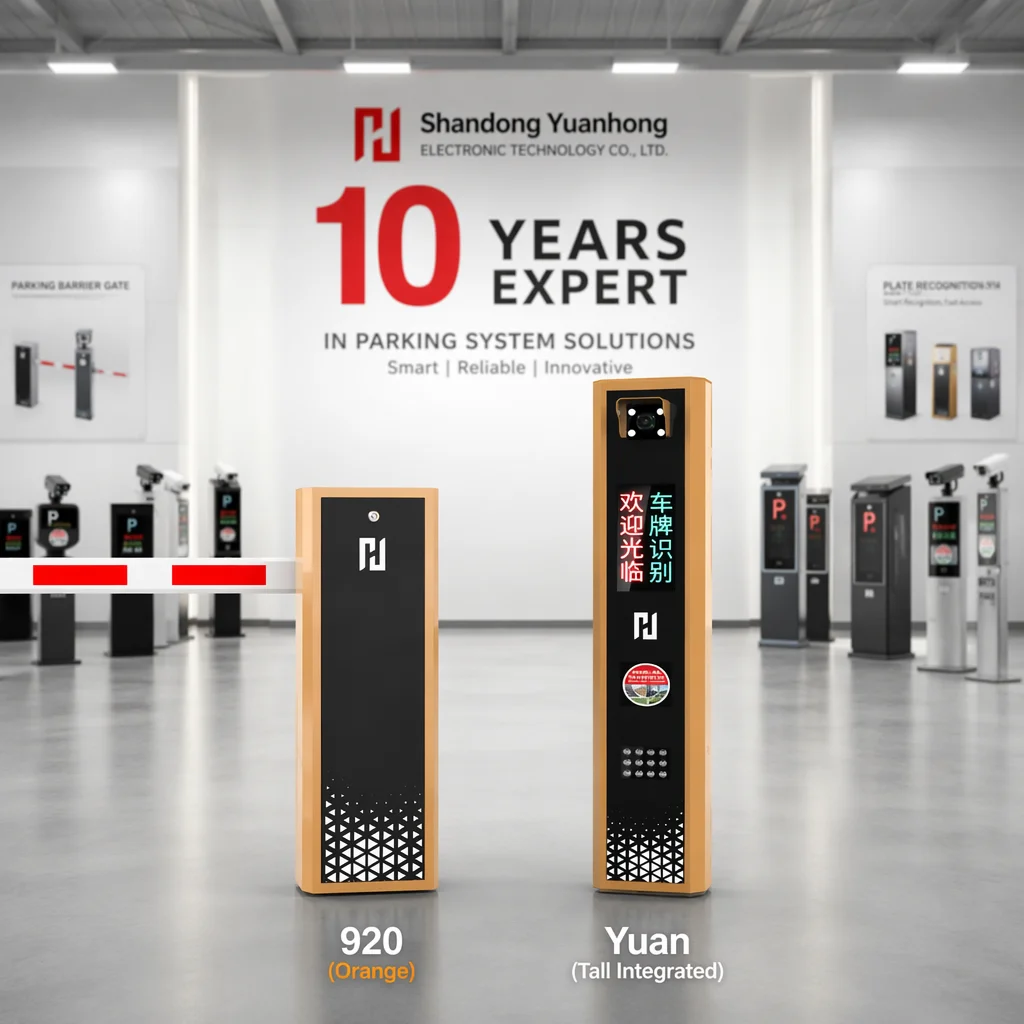
How does a parking barrier work?
The sequence starts when a vehicle approaches the entry point. The system reads the approved credential — an RFID card, the licence plate through LPR/ANPR, a ticket or an access code — and verifies access rights. Once approval is confirmed, the controller sends a signal to the barrier motor to raise the arm. After the vehicle has passed and the movement zone is clear, the arm closes according to the system settings and the signals from the safety devices.
Operation varies with the equipment installed. A barrier may be driven by a remote control or a guard's push button, an RFID reader, an automatic licence plate recognition system, or a ticketing and payment platform. The controller and its communication interfaces must be checked for compatibility with the existing system before purchase.
Main types of parking barriers
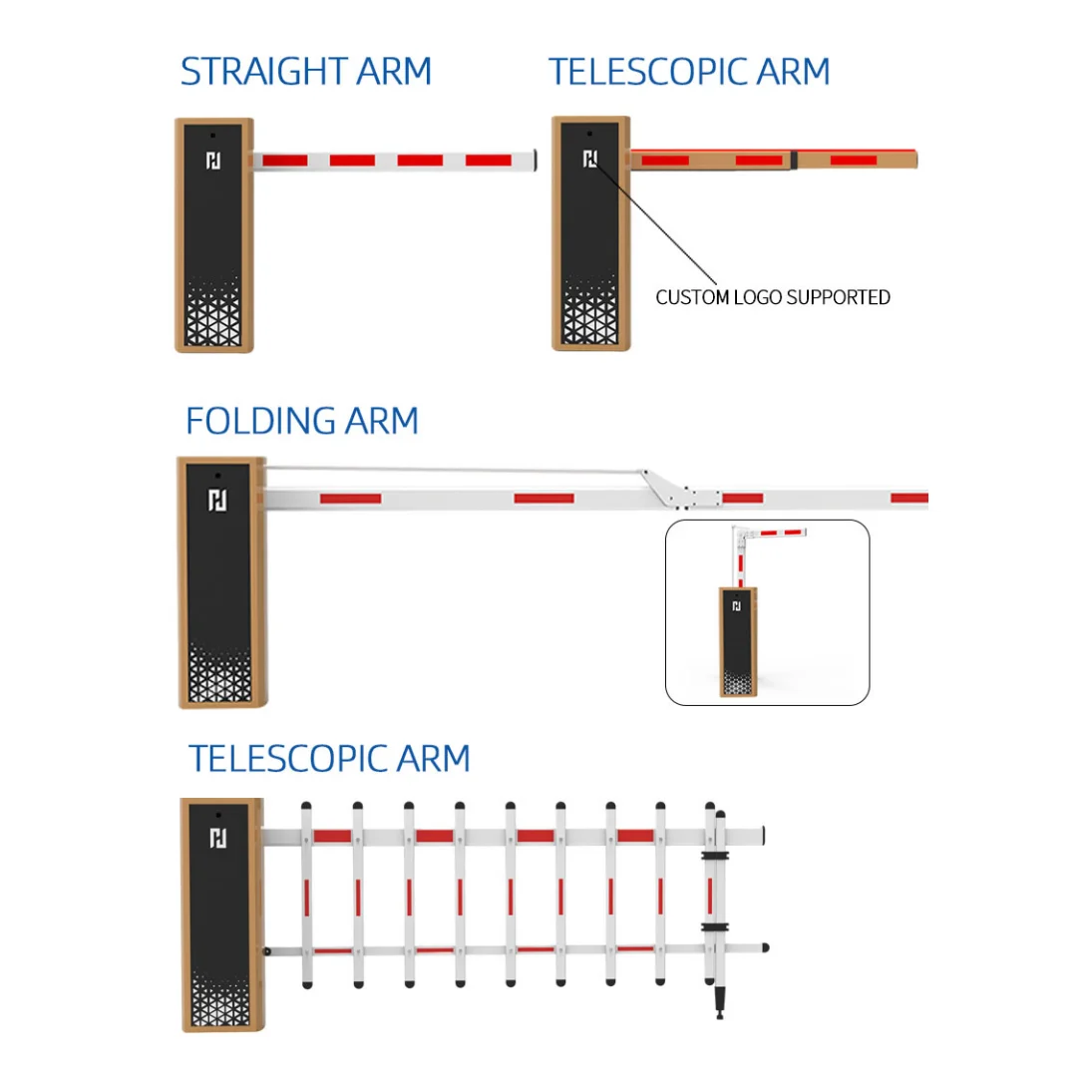
1. Straight-arm barrier
The straight arm is widely used at open car park entrances, residential compounds, offices and shopping centres. Arm length is chosen according to lane width, cabinet position and the space vehicles need to manoeuvre. Measure the actual lane width and confirm that the arm will not conflict with pedestrians, doors or nearby equipment.
2. Folding-arm barrier
A folding arm suits sites with limited vertical clearance, such as some covered car park entrances or basement levels. The folding angle and configuration should be selected according to ceiling height, vehicle clearance and the manufacturer's instructions.
3. Fence-arm barrier
A fence arm carries additional crossbars that make the closed zone more visible, and it can suit entrances that need a higher level of visual deterrence and traffic control. Verify lane dimensions, safety requirements and the suitability of the arm for vehicle movement before selecting it.
4. High-speed or heavy-duty automatic barrier
At high-frequency entrances such as shopping centres, logistics facilities and factories, assess opening and closing speed, daily operating cycles, motor capacity and maintenance requirements. Baroxon Jordan offers options that include brushless DC motors and multiple configurations; final specifications should always be confirmed against the data for the specific model and the conditions on site.
Where are parking barriers used in Jordan?
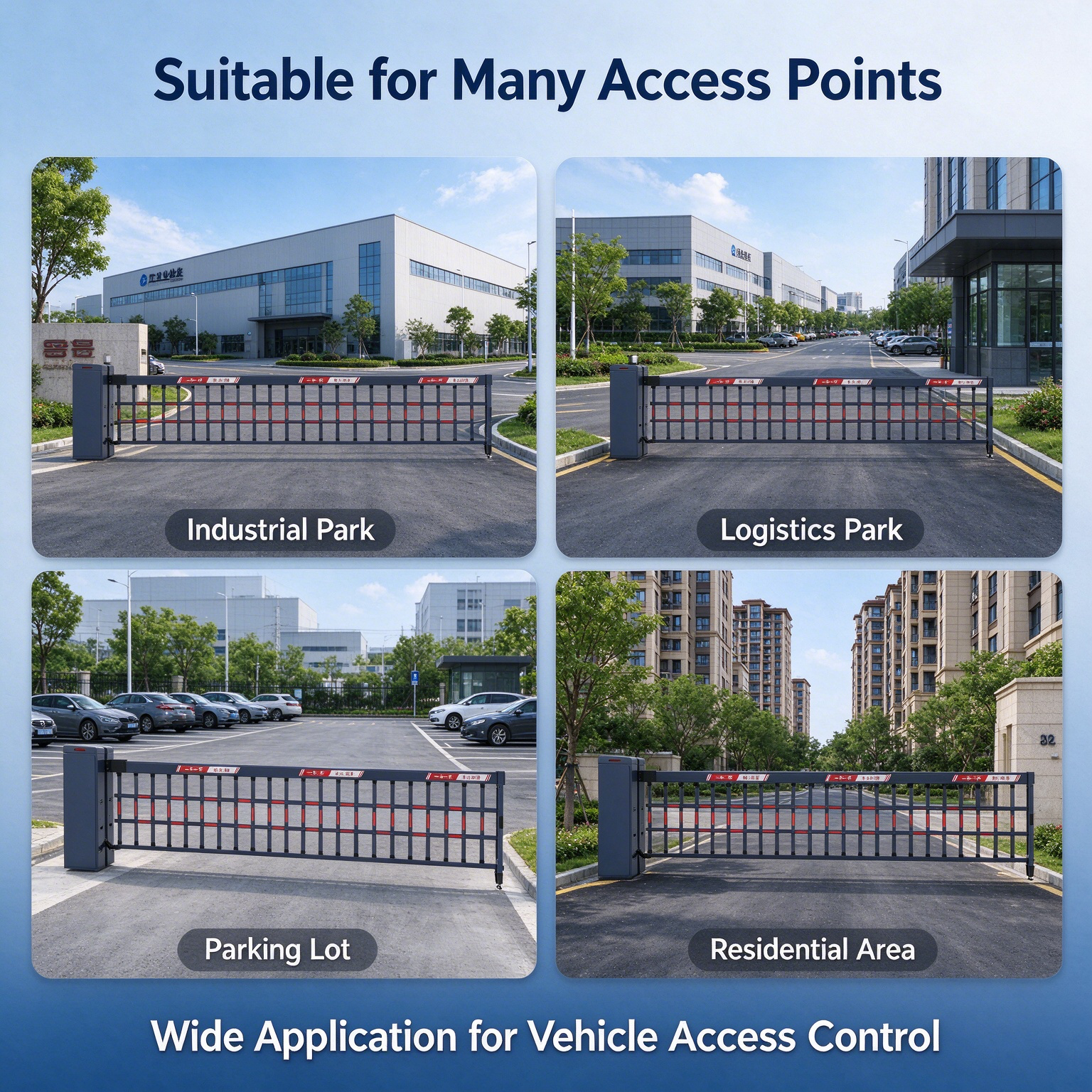
Residential compounds and villas
Barriers help manage access for residents, visitors and service vehicles. They can be linked to RFID cards, QR codes or other verification methods depending on the system design, provided there is a clear procedure for visitors and emergency situations.
Office buildings and shopping centres
Barrier systems help control entry during peak hours and can be integrated with ticketing, payment or licence plate recognition to manage paid parking or bays reserved for tenants and staff.
Factories, warehouses and logistics areas
These sites require an assessment of truck and vehicle traffic density, lane width, the outdoor environment and access control requirements. Barriers with robust construction and safety sensors can be appropriate when their specifications match the actual operating risks.
Hospitals, universities and public facilities
Barriers can organise parking for staff, visitors and service vehicles. Access control must not obstruct emergency vehicles, and manual operating procedures plus a plan for power failure or system faults should be in place.
Components to understand before buying
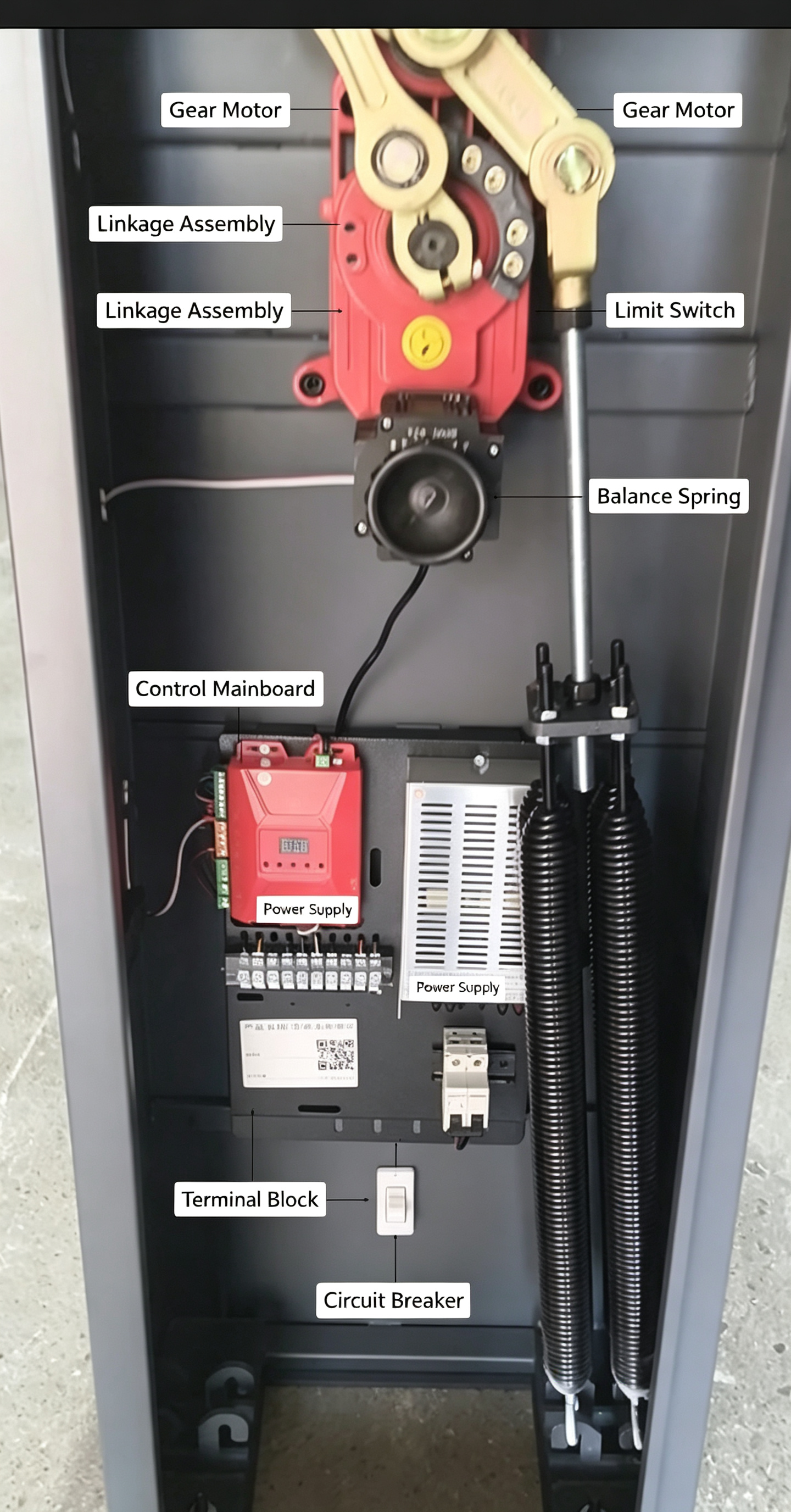
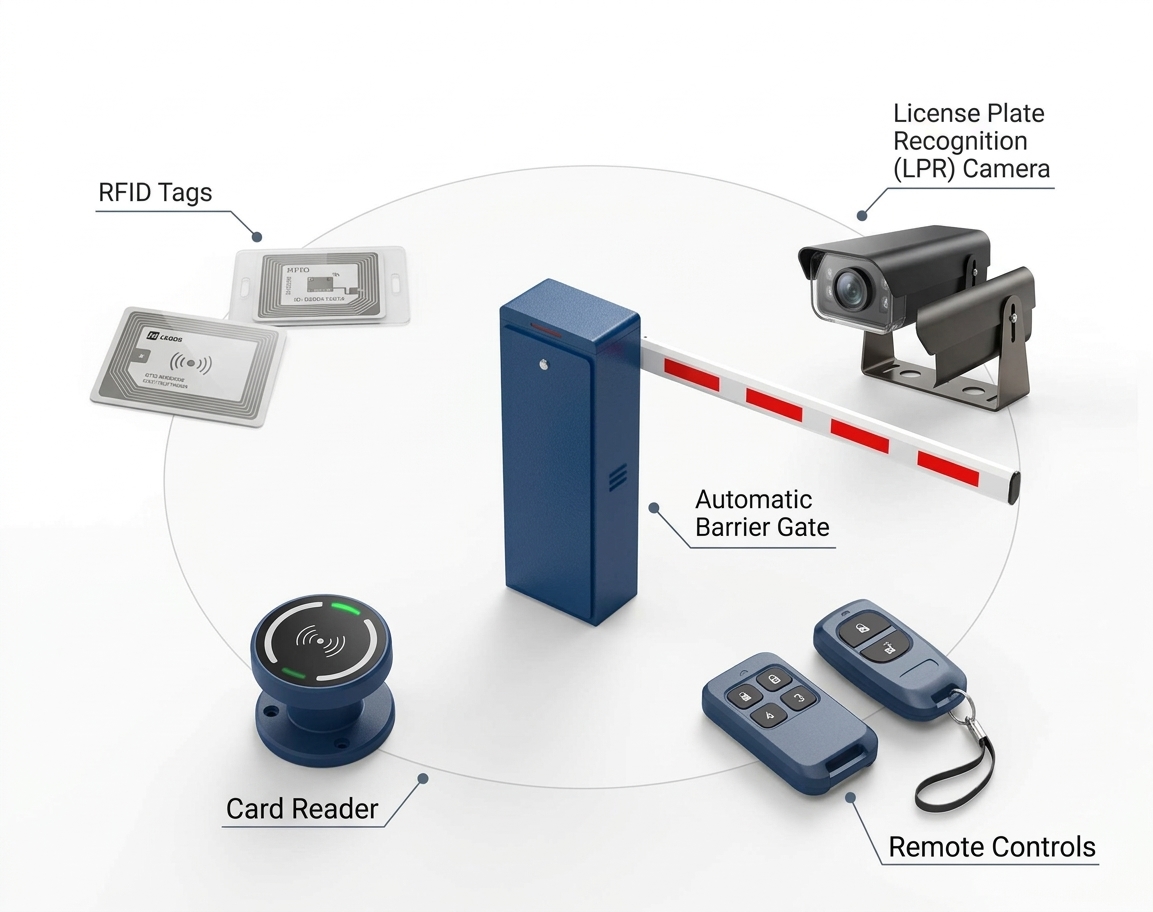
- Barrier unit and arm: arm length and shape must match lane width, clearance and surrounding obstacles.
- Motor and controller: selected according to the required operating speed, usage volume and power supply compatibility.
- Access verification method: RFID, licence plate recognition, ticketing or manual control.
- Safety devices: vehicle detectors, radar or suitable sensors that prevent the arm from closing on a vehicle.
- Integration and communication: confirm that the required interfaces are supported and compatible with the parking software or existing access system.
- Cabinet and environmental protection: the protection rating, materials and installation conditions should suit dust, rain and heat at the site.
How to choose the right parking barrier in Jordan
- Measure the entrance accurately. Define arm length, cabinet position, vehicle path and pedestrian zones.
- Estimate usage intensity. Record peak-hour vehicle counts and the expected number of operating cycles per day.
- Choose the access method. Decide whether the site needs RFID, LPR/ANPR, ticketing, manual control or a combination.
- Define safety requirements. Review vehicle detection devices, the obstacle reverse function and emergency procedures.
- Check site conditions. Assess dust, rain, heat, cabinet location and electrical connections.
- Request specifications for the exact model. Confirm operating speed, arm length, protection rating, duty cycle, warranty and spare parts availability.
- Plan maintenance and support. Agree on installation, operation and maintenance instructions and how technical assistance is obtained.
Safety and maintenance guidance
Before installation, confirm that the foundation is solid, the cabinet position is correct and the power supply and earthing comply with local requirements, and have qualified technicians carry out wiring and commissioning. During operation, inspect arm fasteners, balance, sensors, manual release devices and the control system at regular intervals.
Safety devices must never be bypassed, and the arm must not be forced down while a vehicle is still in the danger zone. The maintenance schedule should follow the manufacturer's instructions for the specific model and the actual intensity of use on site.
Frequently asked questions
Is a parking barrier the same as a boom barrier?
Both terms are commonly used for a barrier with an arm that moves up and down to control vehicle passage. Naming can differ by market or product type, so it is better to check the arm design and operating specifications rather than rely on the name alone.
Can the barrier be connected to a licence plate recognition system?
Yes. Many barrier systems can be configured to work with LPR/ANPR, provided the controller, communication interface and software are compatible. Plate recognition should be tested under the actual lighting and vehicle speed conditions at the site.
Do I need RFID or licence plate recognition?
The choice depends on the type of users, visitor traffic, budget, privacy requirements and operations. RFID suits vehicles that are authorised on a continuing basis, while licence plate recognition can automate entry when the plate data and processing procedures are suitable. The two technologies can also be combined when needed.
What information should I send when requesting a quotation?
Send an approximate lane width, the number of barriers, daily traffic volume, the required access method, the power source, installation conditions and integration needs. This information helps the supplier propose a suitable configuration and issue a more accurate quotation.
Conclusion
A parking barrier is part of an access management system, not simply a moving arm. The right choice depends on lane width, traffic intensity, the vehicle verification method, safety requirements, the environment, integration and maintenance.
Baroxon Jordan offers categories that include boom barriers and parking gates, high-speed barriers, licence plate recognition systems and RFID barriers, so the specifications of the actual models should be compared against site requirements before a decision is made.
Latest News
Baroxon Jordan | Barrier Gates & Automatic Access Control
Advanced Security Access Control and Intelligent Parking Solutions.
Company Strength
Adequate Inventory
Fast Shipping
Our Products
CONTACT US
Address: Factory: No. 2 Wanshou Road, International Innovation Industrial Park, Jinan, Shandong, China




© COPYRIGHT 2025 Baroxon Jordan | Barrier Gates & Automatic Access Control

Contact Us
Our passion is to bring your ideas to life. Work with our design team to create a one-of-a-kind custom finish or cladding system to create a truly unique space. Together we can make your story stand out. If you need something to request a sample, request pricing, or request a demo, please fill out the contact form below. Explain your request in as much detail as you can and a representative will contact you within 1 business day.