Baroxon Jordan | Barrier Gates & Automatic Access Control

RFID vs ANPR Parking Systems: What Is the Difference?
Release time:
2026-10-29
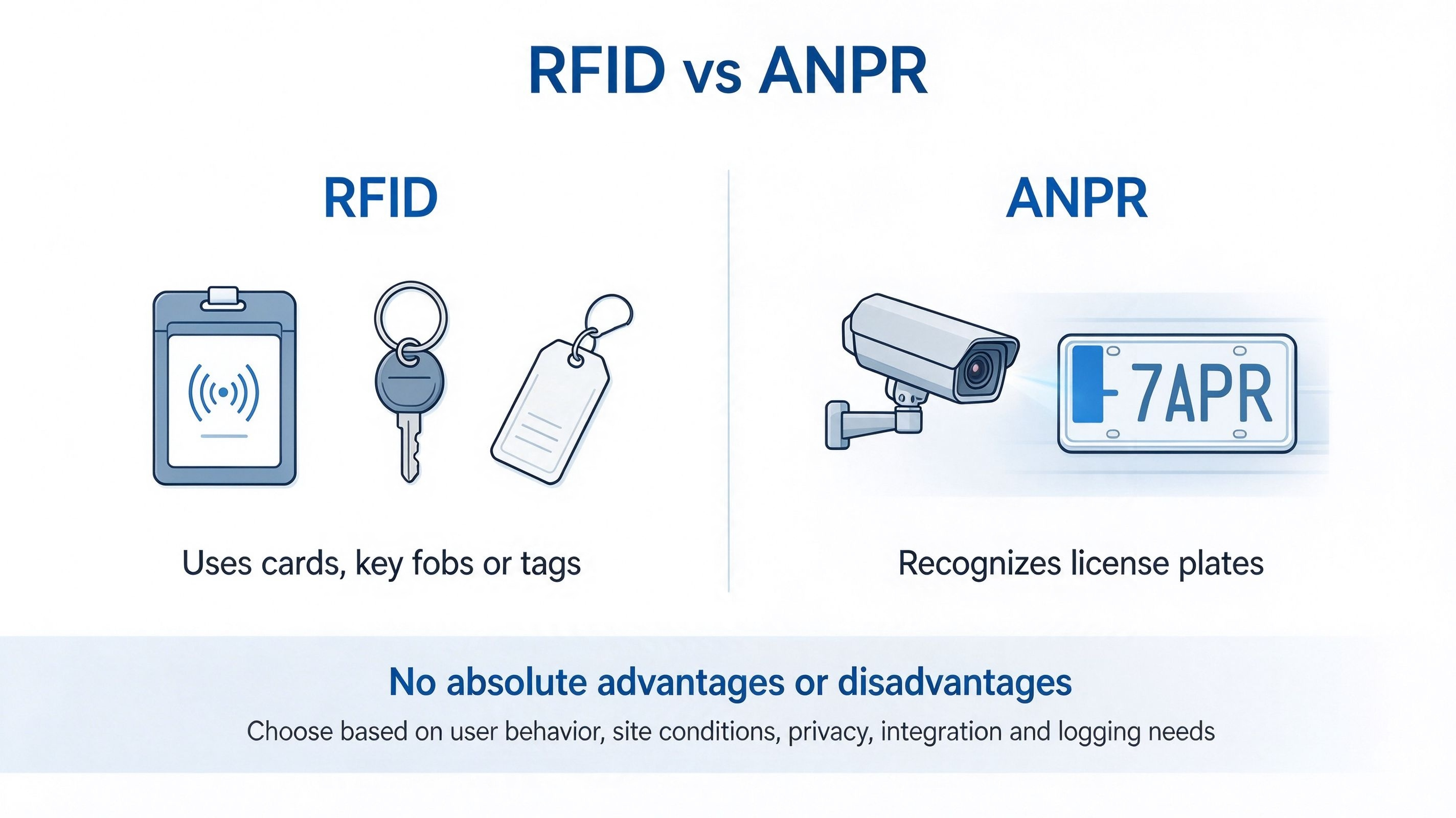
The short answer: an RFID system relies on a card, tag or electronic credential that the user carries or that is fixed to the vehicle, while an ANPR system uses a camera and software to read the vehicle plate and compare it with a list of authorised vehicles. Both can be connected to an automatic barrier, but the better choice depends on the pattern of use, the number of vehicles, visitor management, budget and privacy requirements.
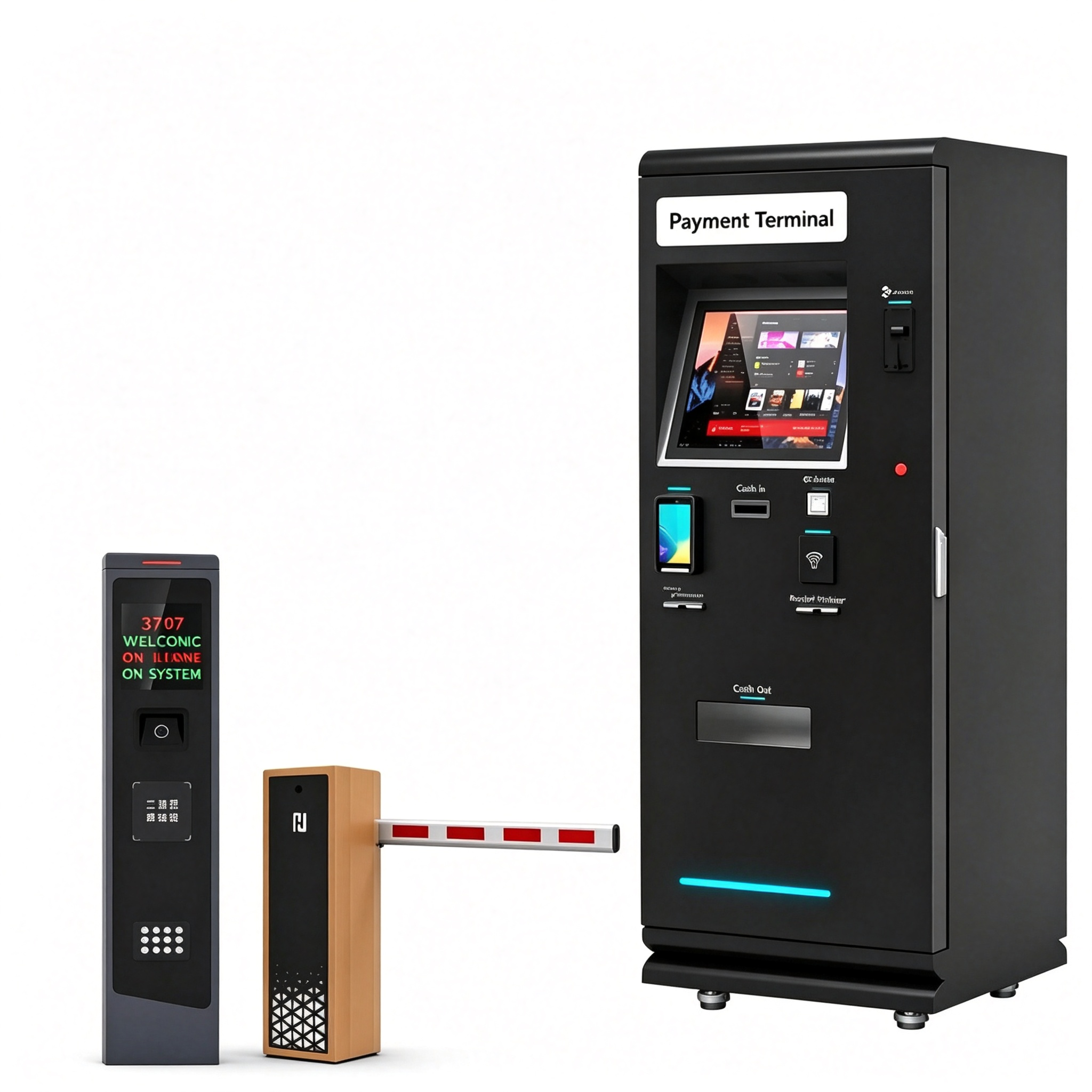
1. How does an RFID parking system work?
An RFID system uses a compatible card, tag or wireless identifier. As the vehicle approaches, the reader picks up the identifier within its range and the control system verifies access permission; if the credential is valid, the system sends an open command to the parking barrier. A lost card can be cancelled, or user permissions updated, according to the capabilities of the system.
RFID suits sites with a known group of users, such as staff car parks, residents and pre-registered vehicles. The type of card or tag and the reader position should be chosen according to the lane design, and the reading range tested to avoid unintended reads or the need to stop in an awkward position.
2. How does an ANPR or LPR system work?
ANPR refers to automatic number plate recognition, and LPR is also used to describe plate reading technology. The camera captures an image of the vehicle at the entry point, and the software extracts the plate number and compares it with an allow list, access rules or subscription data. If the vehicle passes the verification conditions, the system can send a signal to open the barrier and record the entry or exit time.
The Baroxon Jordan website presents solutions that combine LPR/ANPR cameras, an automatic barrier and parking management software, and mentions support for Arabic and Latin plate formats. Actual performance is affected by camera angle, lighting, glare, dirt, vehicle speed and plate format, so the system should be tested at the intended site in Jordan before it is approved.
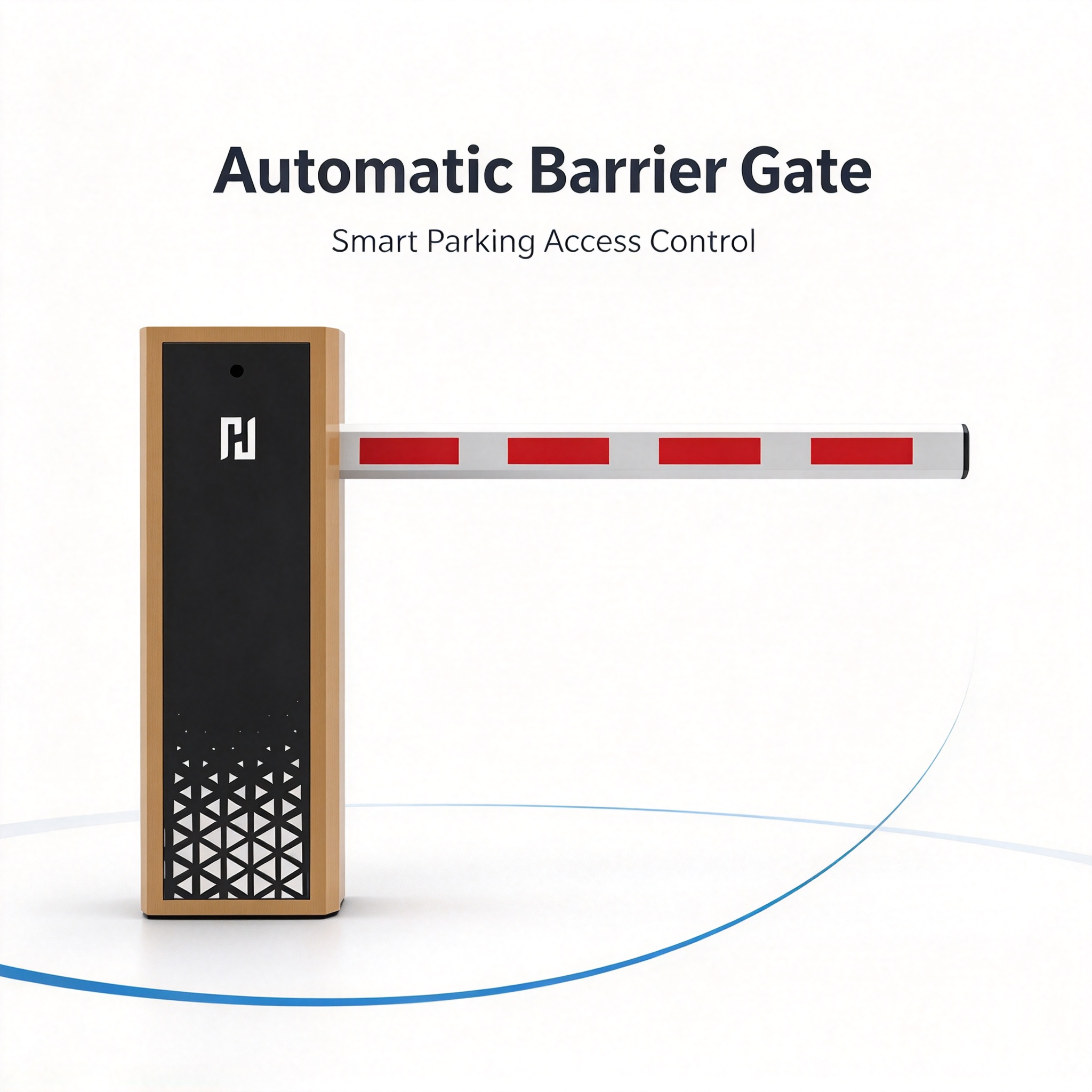
3. A quick comparison of RFID and ANPR
| Comparison criterion | RFID | ANPR / LPR |
|---|---|---|
| Identification method | A card, tag or electronic credential | A camera and software that read the vehicle plate |
| What the user needs | To carry a card, or to have a compatible tag or sticker | Usually no card is needed if the plate is registered and readable |
| User management | Managing cards, credentials and their permissions | Managing plate numbers, allow lists and access rules |
| Visitors | The visitor may need a temporary card or an alternative procedure | The plate can be added, or an alternative verification route used, depending on the system |
| Operating conditions | Depends on reader and credential compatibility and on distance | Depends on image quality, lighting, angle and plate cleanliness |
| Logging and reports | Depends on the controller and the system software | The plate and passage time can be logged if the function is supported and configured |
| Privacy considerations | Protecting user data and card identifiers | Protecting plate images, movement logs and the retention policy |
| Cost | Affected by readers, cards and infrastructure | Affected by cameras, software, integration, lighting and infrastructure |
4. Which system suits which scenario in Jordan?
- Residential buildings and private car parks: if the vehicles are known and stable, RFID may be a simple option for resident management, with a separate procedure for visitors.
- Offices and staff parking: RFID can be used where cards are already part of the staff access system; ANPR can be chosen if management prefers to link authorisation to the vehicle plate.
- Shopping centres and paid car parks: ANPR can be useful where entry and exit need to be recorded, or where plates must be linked to parking management or payment software, provided the system supports the required workflow.
- Warehouses and industrial sites: RFID can be used for registered vehicles, or ANPR to document vehicle movement; a project may combine both according to the security level and truck flow.
- Sites with variable visitors: a clear visitor route should be defined, such as a QR code, staff verification or temporary plate authorisation, rather than assuming that RFID or ANPR alone will cover every case.
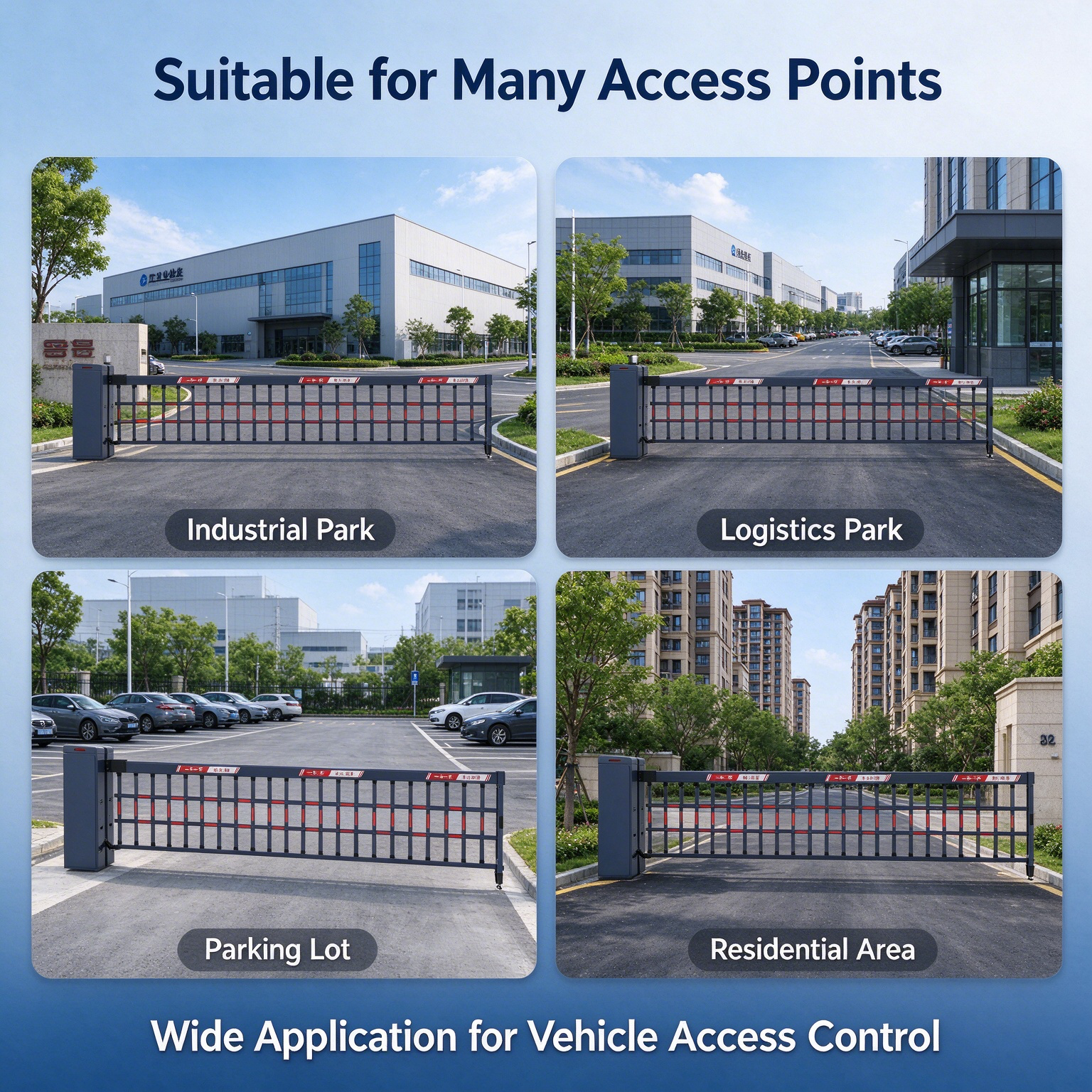
5. Integration with the automatic barrier
Whether RFID or ANPR is chosen, the system must work as an integrated solution: a reader or camera, a controller, a database or management software, a barrier, vehicle detection devices and the appropriate safety components. Before purchase, check the type of control signal, the available communication interfaces, the software compatibility and how a network or power failure is handled.
Baroxon Jordan pages present barrier and parking gate solutions that integrate with LPR, RFID and card readers, and also show ANPR systems with parking management. This does not mean that every model automatically supports every reader or software package; ask for written confirmation of compatibility and define who supplies and configures each component.
6. Speed and the driver experience at the entrance
ANPR may allow an authorised vehicle to pass without presenting a card, while RFID requires the credential to reach the reader within the correct range. There is no absolute rule that one is always faster: total speed depends on verification time, barrier settings, the stopping position, traffic flow, access refusal cases and the quality of the setup.
To reduce queues, set the camera and reader so that the driver interacts with the system in a natural position, install clear signage, and plan an alternative route for failed reads or vehicles without authorisation. Test at peak time, not only in a quiet commissioning run.
7. Privacy, security and data management
RFID systems handle credential identifiers and user permissions, while ANPR systems may handle plate numbers, vehicle images and entry and exit time records. In both cases, access to the system must be restricted, login credentials protected, the retention period for records defined, and the people who may view or export them documented.
Before deploying ANPR, explain to users what data is collected and why, and verify the legal and regulatory obligations that apply to the site. Do not collect more images or records than are needed to manage the car park, and ask the supplier to explain where data is stored, how it is backed up and how access is controlled.
8. Budget and long-term maintenance
An RFID project may include readers, cards or tags, a controller, wiring and credential management; an ANPR project may include cameras, recognition software, supplementary lighting, a controller, networking and integration with parking management. The final price depends on the number of lanes, the equipment grade, software licences, the installation environment and after-sales service, and it should not be compared on the price of a single device.
For maintenance, RFID readers, credential management and communication links should be checked periodically; for ANPR, lens cleanliness, camera angle, night lighting, recognition logs and software updates should be reviewed. In both cases, test network and power failures, device faults and the manual release procedure.
9. Can RFID and ANPR be combined?
Yes. Some entrances can be designed to use ANPR for registered vehicles and RFID as a backup or additional method, depending on the capabilities of the controller and software. This can be useful where user categories differ, or where management needs an alternative when a plate cannot be read.
Combining the two technologies increases the requirements for configuration, testing and permission management, and it is not necessary for every car park. Define the problem you want to solve first, then ask the supplier for a diagram showing the verification sequence, the priority of access methods and what happens if a plate reading conflicts with the validity of an RFID card.
10. Selection checklist before purchase
- Define the number of lanes, the daily number of vehicles and the peak hours.
- Determine whether users are fixed or whether visitors form a large proportion.
- Compare RFID and ANPR in terms of driver experience and ease of permission management.
- Test reading of the plates actually used in Jordan, by day and at night.
- Confirm that the reader or camera is compatible with the controller, the barrier and the software.
- Define the required vehicle detection devices and safety features.
- Define the data retention and access policy, particularly for images and plate records.
- Request a quotation covering installation, software, connectivity, training and maintenance.
- Test failed reads, power or network outages and the manual release option.
- Document the warranty, the maintenance plan and spare parts availability.
Conclusion: which one should you choose?
If the car park serves known residents or staff, RFID may be a practical option for managing cards and permissions. If you want to reduce reliance on cards and record vehicle movement through plates, ANPR may suit you, provided the imaging conditions, software and integration are appropriate. Sites with varied needs may benefit from a hybrid solution, after studying the cost and the operating processes.
Baroxon Jordan offers automatic parking barrier solutions and RFID and LPR/ANPR systems, so start with the entrance layout, the number of vehicles, the visitor entry process and the data and safety requirements, then request a written configuration showing the components, compatibility and warranty. The best decision is the system that operates safely and reliably under your actual site conditions, not the one with the more advanced technical name.
Latest News
Baroxon Jordan | Barrier Gates & Automatic Access Control
Advanced Security Access Control and Intelligent Parking Solutions.
Company Strength
Adequate Inventory
Fast Shipping
Our Products
CONTACT US
Address: Factory: No. 2 Wanshou Road, International Innovation Industrial Park, Jinan, Shandong, China




© COPYRIGHT 2025 Baroxon Jordan | Barrier Gates & Automatic Access Control

Contact Us
Our passion is to bring your ideas to life. Work with our design team to create a one-of-a-kind custom finish or cladding system to create a truly unique space. Together we can make your story stand out. If you need something to request a sample, request pricing, or request a demo, please fill out the contact form below. Explain your request in as much detail as you can and a representative will contact you within 1 business day.