Baroxon Jordan | Barrier Gates & Automatic Access Control

How to Choose a Parking Barrier for an Underground Car Park
Release time:
2026-10-29
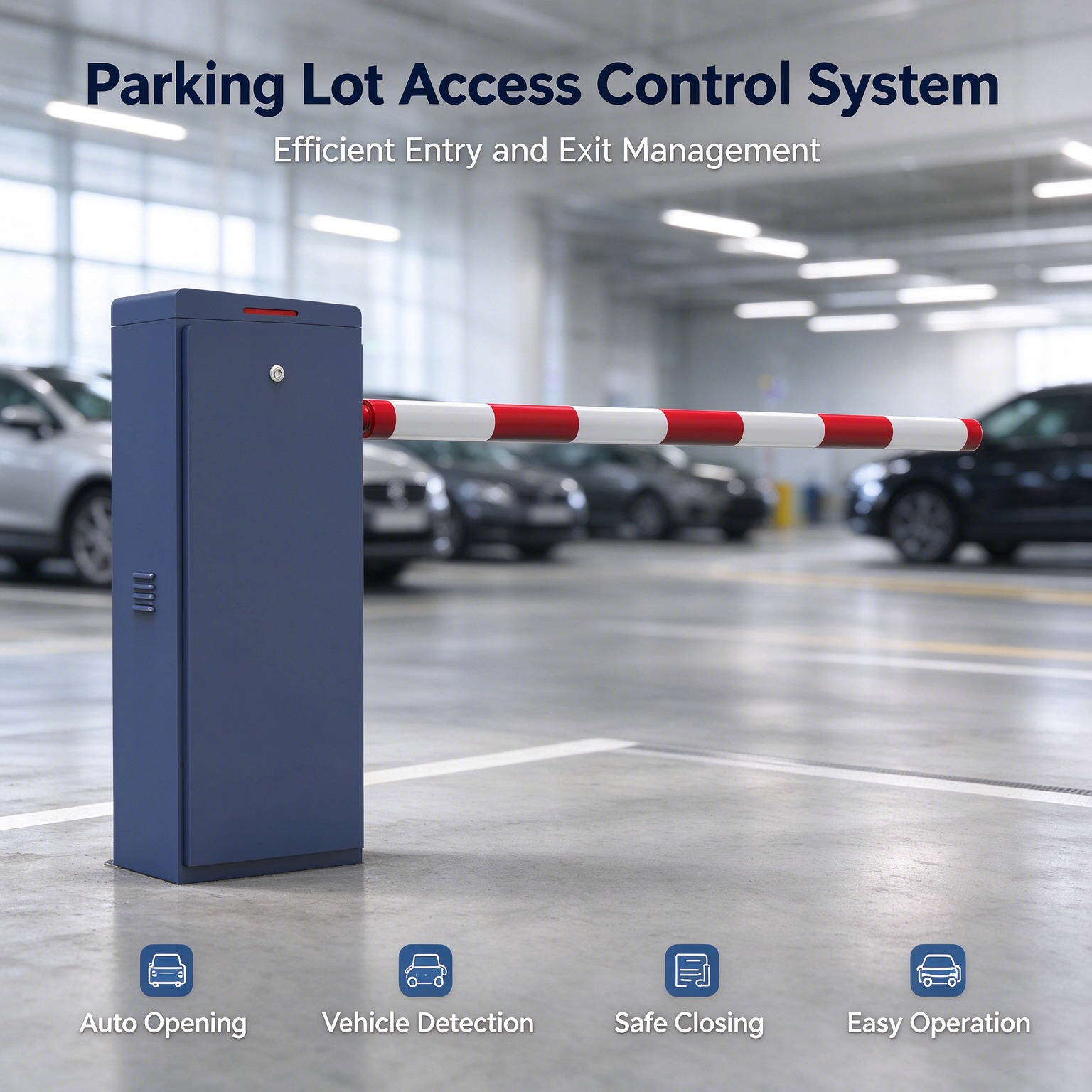
Choosing a parking barrier for an underground car park requires a careful study of the entrance conditions, because space may be tight, the ceiling low, the entry ramp close to the stopping point, and vehicle movement may cross pedestrian routes. Choosing a fast or inexpensive barrier is therefore not enough: the arm has to suit the available space, vehicle movement has to be safe, access control has to be clear and maintenance has to be practical.
Baroxon Jordan offers automatic barrier and access control solutions, including options for high-traffic commercial entrances, straight or folding arms, and integration with RFID and LPR/ANPR licence plate recognition. Specifications vary by model, so the data for the specific product should be matched against the car park dimensions and project requirements before purchase.
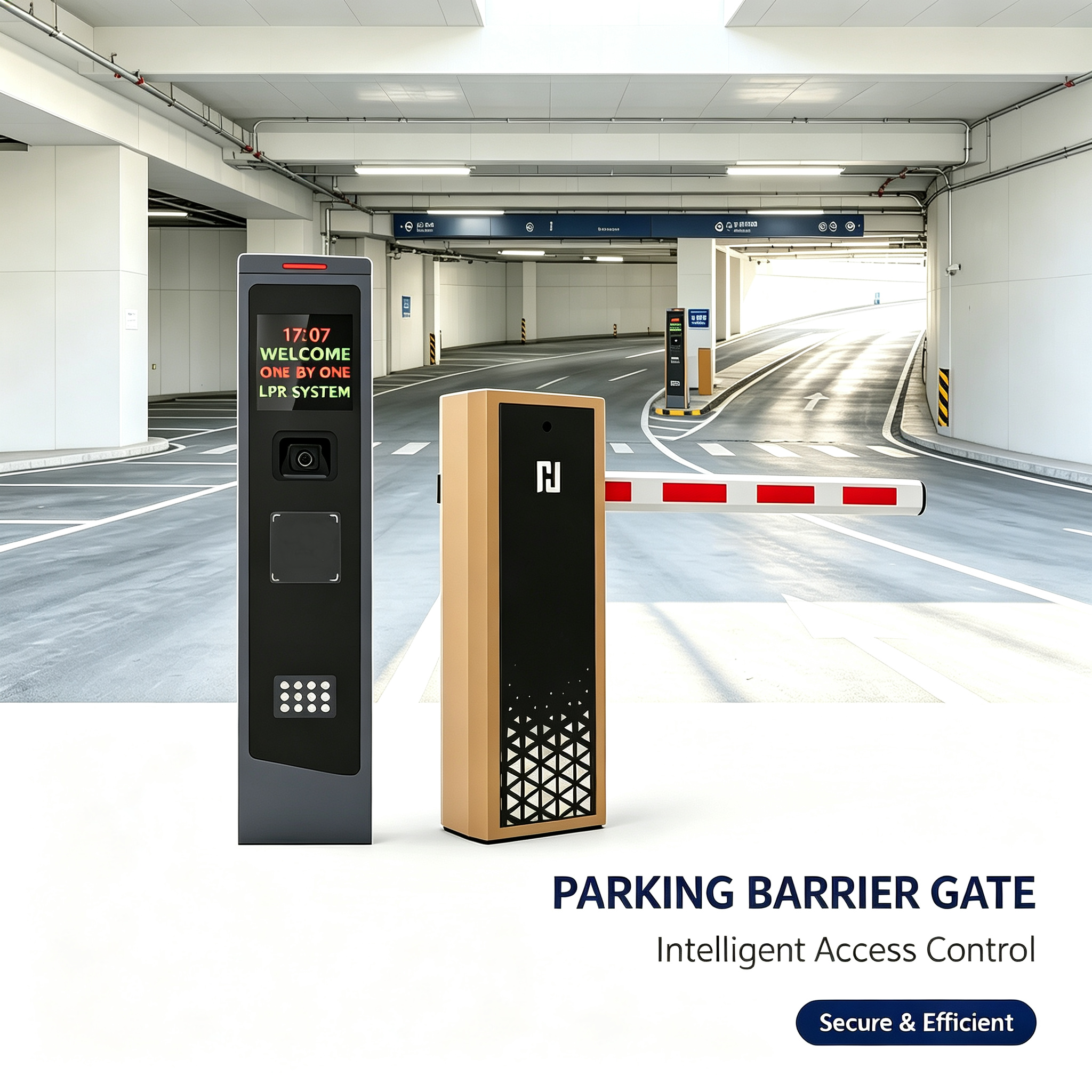
1. Measure the vertical clearance before choosing the arm type
In underground car parks, ventilation ducts, cable trays, sprinklers and signage may run below the ceiling. The lowest clear height along the arm's travel path must be measured, taking into account vehicle height and the position of the barrier cabinet. If the ceiling is low, or a straight arm would strike an overhead obstacle, a 90 or 180 degree folding arm may be a suitable option, provided the space required for its movement is verified.
Do not rely on the ceiling height shown on the drawings alone; inspect the site itself, including the ramp, floor levels, beam positions, lighting and fire protection systems. The site engineer or installation technician should review the full travel path before the barrier base is fixed.
2. Position the barrier relative to the ramp and the stopping point
The barrier should be clearly visible to the driver, with enough space for the vehicle to stop before the arm without rolling back onto the ramp or blocking the public passage. Avoid placing the barrier where the driver cannot see the arm clearly, or where stopping would obstruct following vehicles. At entrances with a steep ramp, sight lines, drainage, surface friction and stopping distance should be assessed according to the site design.
If the entrance is narrow, also review the position of the card reader, ticket machine or LPR camera so the driver can use it without leaving the vehicle's path. There should be enough room to open the vehicle window or stop briefly, while keeping a safe pedestrian route.
3. Choose the arm length and type according to the lane width
Measure the actual lane width, not just the building opening, and allow for the space taken by the cabinet, pavements, walls and side barriers. Some Baroxon Jordan products offer customisable arms, and one general specification page lists a range of 1 to 6 metres; the available length and suitable speed depend on the model, the arm weight and its configuration. Ask for written confirmation of the permitted length before finalising the design.
A straight arm suits many entrances with sufficient vertical clearance. A folding arm deserves consideration where the ceiling is low, while fence arms may suit sites that need an extended visual barrier. Do not choose a longer arm simply because it covers the lane: it must be compatible with the drive mechanism, the arm balancing system and the safety requirements.
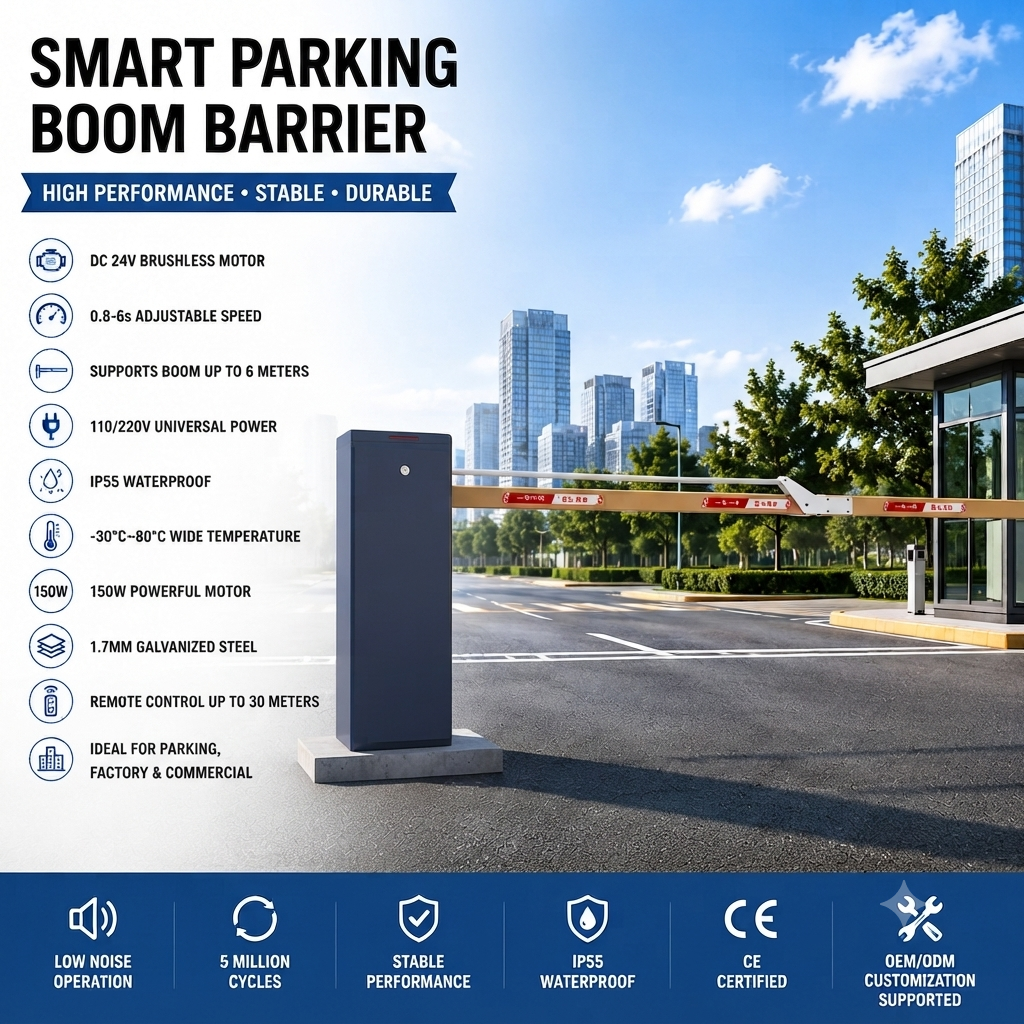
4. Match the motor and duty cycle to the number of vehicles
A small residential car park may serve a limited number of vehicles per day, while the car park of an office tower or shopping centre handles high flows at peak hours. The number of open and close cycles per day, the entry and exit movement per hour and the congestion periods should therefore be estimated, and a motor and drive mechanism chosen that can withstand that use. Baroxon Jordan presents brushless DC, AC and servo motor options in different configurations; the specification of the proposed model should be verified rather than assuming that every option is available on every product.
Do not make opening speed the only selection criterion. In underground car parks, visibility, stopping distance and pedestrian movement may matter more than saving fractions of a second. Ask the supplier for the operating speed appropriate to the arm length, the recommended daily cycle count, the cooling and maintenance requirements, and the manual operation method in an emergency.
5. Make vehicle detection and anti-collision part of the design
The barrier should be coordinated with a vehicle detection system, such as an induction loop, radar or a sensor compatible with the controller. The choice depends on the floor construction, the sensor mounting method, the lane geometry and the surrounding environment. The aim is to reduce the likelihood of the arm descending while a vehicle is in the danger area, not merely to have a device installed without testing its function on site.
Ask for a practical test showing how the system responds when a car is under the arm, when vehicles follow one another closely, when communication between devices is lost, and when a sensor fails. Safety devices must not be bypassed to speed up traffic, and pedestrian routes should be organised with warning signs and clear lighting in low-light areas.
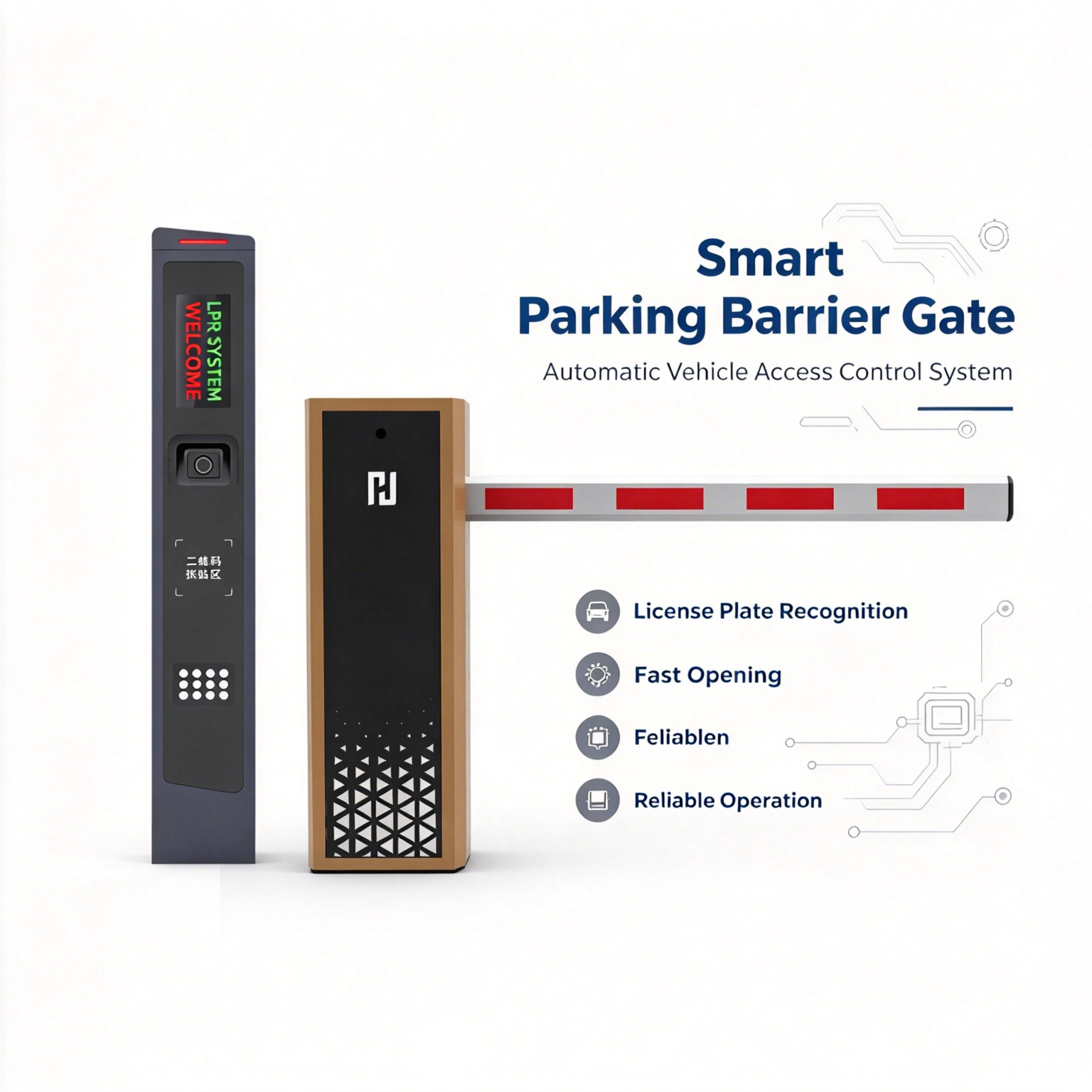
6. Choose an access method suited to residents and visitors
The car park barrier can be operated by remote control, RFID card, QR code, LPR/ANPR licence plate recognition or a ticketing system, depending on the project configuration. In residential buildings, an authorised vehicle list and resident cards may be practical; commercial car parks may need visitor management, ticketing and payment. The system should be clear to users, with a procedure for lost cards, visitors and unregistered vehicles.
If the project uses an LPR/ANPR camera, verify the camera angle, the lighting, the plate reading distance, the vehicle speed, headlight reflections and the legibility of the plates actually used in Jordan. The integration between the camera, the controller and the software should be tested before handover, and it should not be assumed that the camera alone controls the barrier without proper configuration.
7. Review ventilation, humidity, dust and site conditions
Although the barrier is usually inside the car park, the basement environment may include humidity, dust, cleaning water or seepage from the ramp. Check the position of the cabinet relative to drains, washing areas, damp walls and ventilation equipment. Verify the documented ingress protection rating of the model, the operating temperature limits and the method of protecting the electrical connections.
Do not assume that every barrier carries the same protection rating. Baroxon Jordan pages show different specifications for some models, including various IP ratings, so the datasheet for the specific product should be consulted and the protection level chosen according to the site conditions, following the manufacturer's instructions for installation, cleaning and maintenance.
8. Plan for power, emergencies and maintenance
Check the available power source, the position of the electrical isolation, the cable route and whether the cabinet can be reached for maintenance without closing the entire car park. Ask about the manual release mechanism during a power failure, and whether the model supports a backup battery or another solution for continued operation; do not treat these functions as standard unless the written specifications confirm them.
Before purchase, request a periodic maintenance plan, a spare parts list, the warranty terms and a means of contacting technical support. In car parks serving large residential or commercial buildings, calculate the impact of barrier downtime on vehicle movement and define a temporary, safe procedure for handling faults.
9. A checklist before approving the solution
| Check item | What must be measured or confirmed? |
|---|---|
| Vertical clearance | The lowest clear height and the arm's travel path |
| Entrance geometry | Lane width, the ramp and the vehicle stopping point |
| Arm type | Straight, folding or fence, with confirmation of the permitted length |
| Traffic density | The expected number of operating cycles per day and at peak hours |
| Motor | The type, the appropriate speed and the maintenance requirements |
| Safety | Vehicle detection, radar or sensors, and obstacle response testing |
| Access control | RFID, LPR/ANPR, QR, or ticketing and payment |
| Installation environment | Humidity, dust, water drainage and the ingress protection rating |
| Power and emergency | The power source, manual release and backup options if any |
| Support and cost | Warranty, spare parts, maintenance and response time |
Frequently asked questions
Is a folding arm best for every underground car park?
No. It is useful where the ceiling or an overhead obstacle restricts the movement of a straight arm, but it needs suitable space for its movement and a compatible configuration. The vertical clearance should be measured and the installation drawing reviewed before deciding.
What arm length is suitable for a car park entrance?
That depends on the lane width, the cabinet position, the side obstacles and the model chosen. The lane should be measured on site, and the permitted length, arm weight and motor requirements then confirmed with the supplier.
Can the barrier be integrated with RFID or licence plate recognition?
This is possible in compatible configurations, but the controller, software and communication interfaces must all be confirmed as supported, and the complete system should be tested on site before handover.
What is the most important test before handover?
Test the arm movement, vehicle detection, access signals, fault and power failure scenarios and manual operation, and confirm that vehicle and pedestrian routes do not conflict with the arm or with each other.
Conclusion
Choosing a parking barrier for an underground car park depends on how well the arm matches the vertical clearance, the ramp position, the lane width, the operating intensity, the safety devices, the access system, and the environmental and maintenance conditions. Boom barriers and parking gates from Baroxon Jordan offer a range of barrier and access control options, but the model should be selected after measuring the site, reviewing the datasheet and confirming integration and safety. Ask the supplier for a written technical proposal covering the model, arm length, operating mechanism, safety devices, wiring, warranty and maintenance plan.
Latest News
Baroxon Jordan | Barrier Gates & Automatic Access Control
Advanced Security Access Control and Intelligent Parking Solutions.
Company Strength
Adequate Inventory
Fast Shipping
Our Products
CONTACT US
Address: Factory: No. 2 Wanshou Road, International Innovation Industrial Park, Jinan, Shandong, China




© COPYRIGHT 2025 Baroxon Jordan | Barrier Gates & Automatic Access Control

Contact Us
Our passion is to bring your ideas to life. Work with our design team to create a one-of-a-kind custom finish or cladding system to create a truly unique space. Together we can make your story stand out. If you need something to request a sample, request pricing, or request a demo, please fill out the contact form below. Explain your request in as much detail as you can and a representative will contact you within 1 business day.