Baroxon Jordan | Barrier Gates & Automatic Access Control

How to Choose the Right Automatic Parking Barrier for Your Site
Release time:
2026-10-29
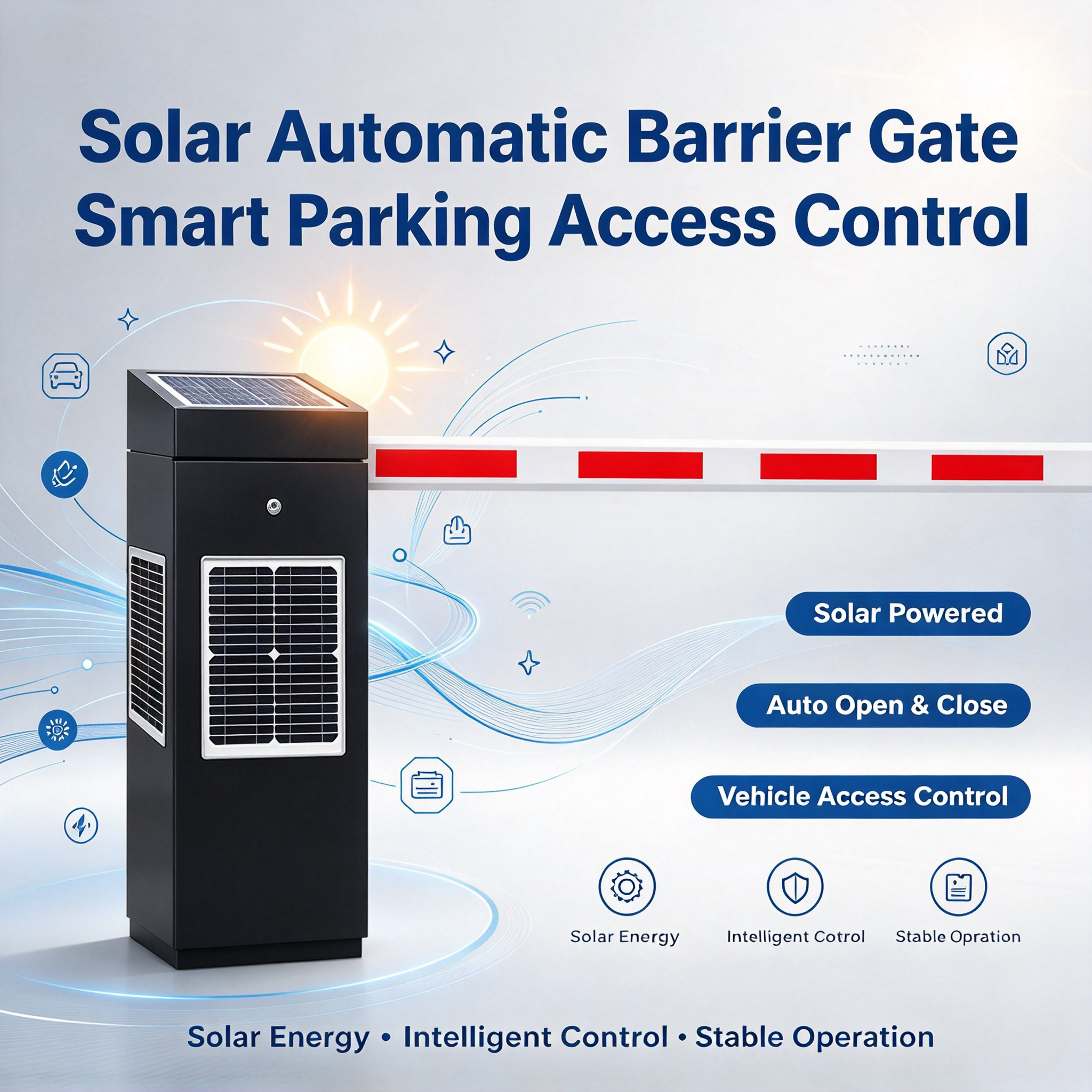
Choosing the right automatic parking barrier is not a decision about price or arm-lifting speed alone. The barrier has to match the entrance width, the number of vehicles at peak hours, the way access is verified, the available installation space, the safety requirements and the ability to integrate with a parking management system. Baroxon Jordan offers boom barriers, high-speed barriers, LPR/ANPR licence plate recognition systems and RFID barriers, so the full system configuration should be compared against the real site conditions before a quotation is requested.
1. Define the site type and the nature of vehicle traffic
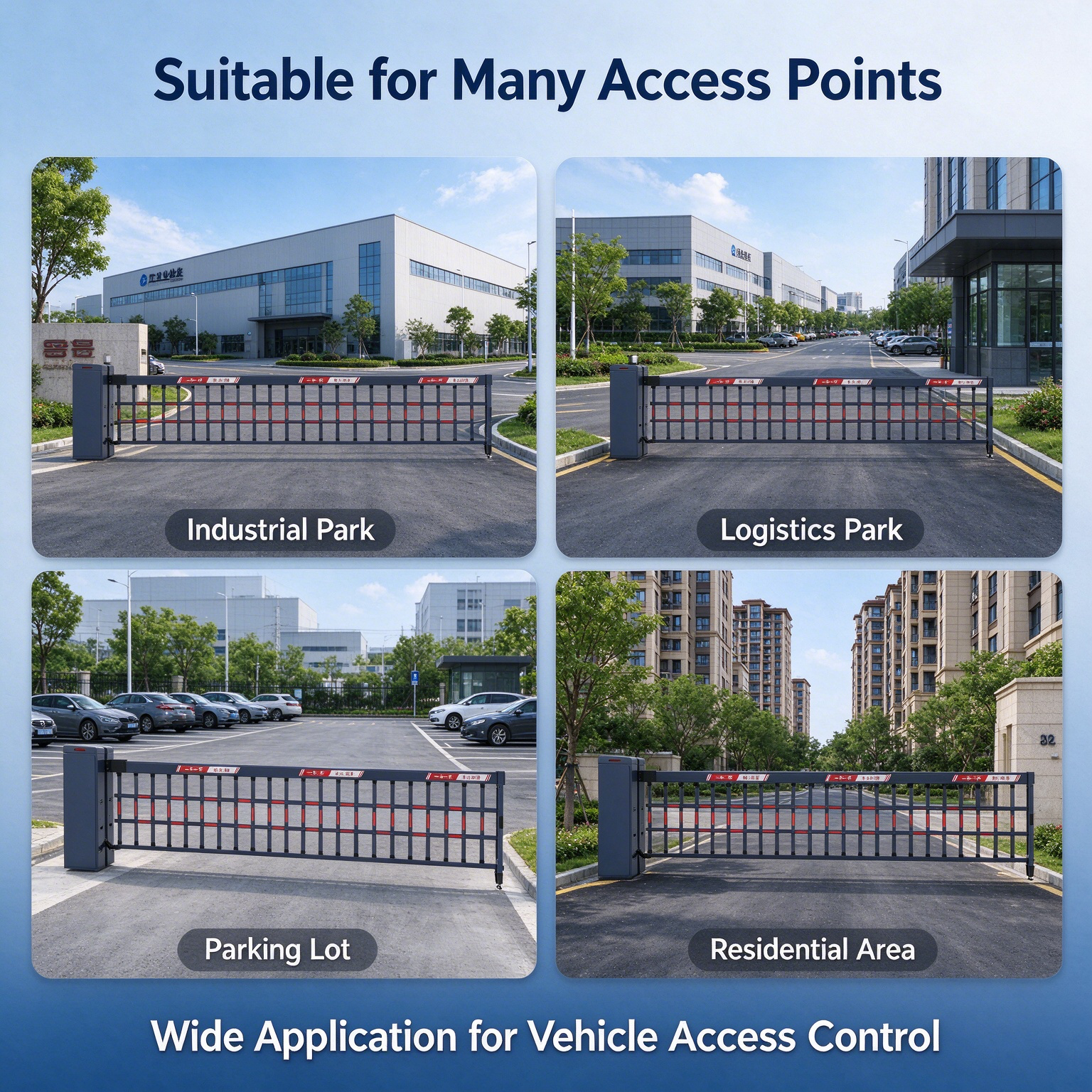
Start by defining what the entrance serves: a residential compound, an office building, a shopping centre, a warehouse, a factory or a paid public car park. Priorities differ with each use, and the right choice begins with this answer rather than with a product name.
| Site type | Main consideration when choosing the barrier |
|---|---|
| Residential compound | Frequent entry for approved vehicles, organised visitor management and quiet operation around the clock. |
| Office building | Clear allocation for authorised vehicles and integration with the existing security or parking system. |
| Shopping centre | Fast throughput at peak hours and short waiting times at the entry lane. |
| Warehouse or factory | An arm and components suited to heavy vehicles and intensive operating conditions. |
| Paid public car park | Connection to a ticketing or automatic payment system and recording of parking time. |
2. Measure the lane width and choose the right arm length
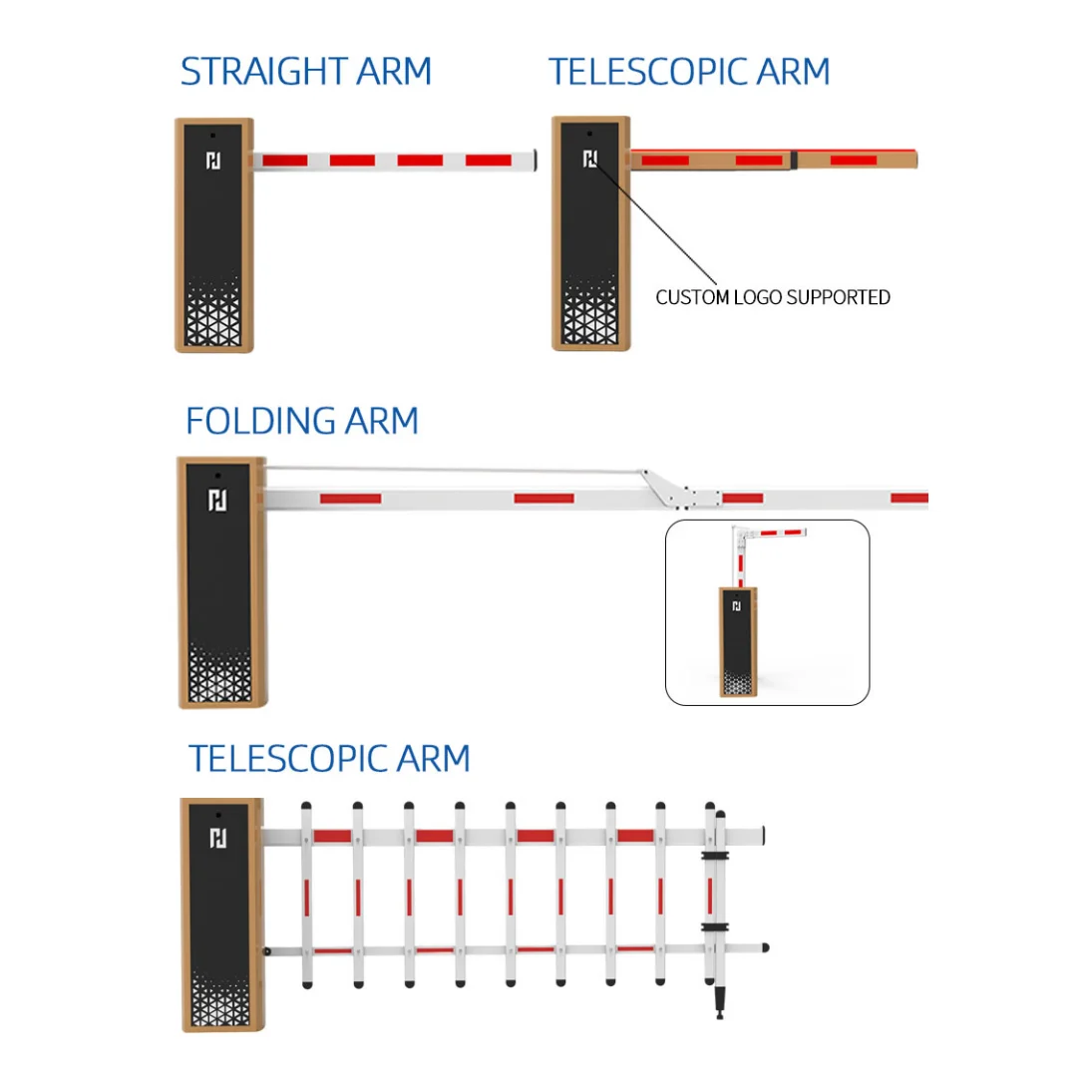
Measure the actual lane width, the position of the barrier cabinet, the clearance available for the arm to rise, and any nearby obstacles such as walls, columns, trees or signage. Baroxon product pages offer customisable straight arms, and folding arm or fence arm configurations are available on some models.
Do not assume that a longer arm is always better. Length, weight and arm type must match the drive mechanism and the installation layout. An arm that is longer than necessary increases vibration during opening and closing and puts extra load on the motor, while an arm that is too short will not close the lane completely.
3. Match the operating speed to traffic density
For a busy entrance, estimate how many vehicles pass per hour at peak, the acceptable waiting time and the number of open and close cycles per day. A standard barrier may be sufficient for a low-traffic entrance, while a high-speed barrier may suit a site that needs frequent cycles and shorter queues.
Speed alone does not define performance, however. Arm length, motor type, duty cycle, safety devices and installation conditions all have to be assessed as well. Speed specifications vary by model, arm length and settings, so ask the supplier for a datasheet for the specific model and check the real opening and closing times instead of relying on a general description of the product category.
4. Choose the arm shape according to entrance height and obstacles
- Straight arm: a common choice for open entrances where there is enough space for the arm to rise.
- Folding arm: can suit some entrances with limited vertical clearance, such as covered car parks, provided the model is designed for that use.
- Fence arm: can make the closed area more visible at certain sites, but space, weight and safety requirements must be assessed.
Confirm that the arm type is available on the required model and that it is compatible with the lane length and the operating speed. Do not choose a folding or fence arm for its appearance alone; base the decision on site measurements and the manufacturer's instructions.
5. Decide how vehicles obtain access authorisation
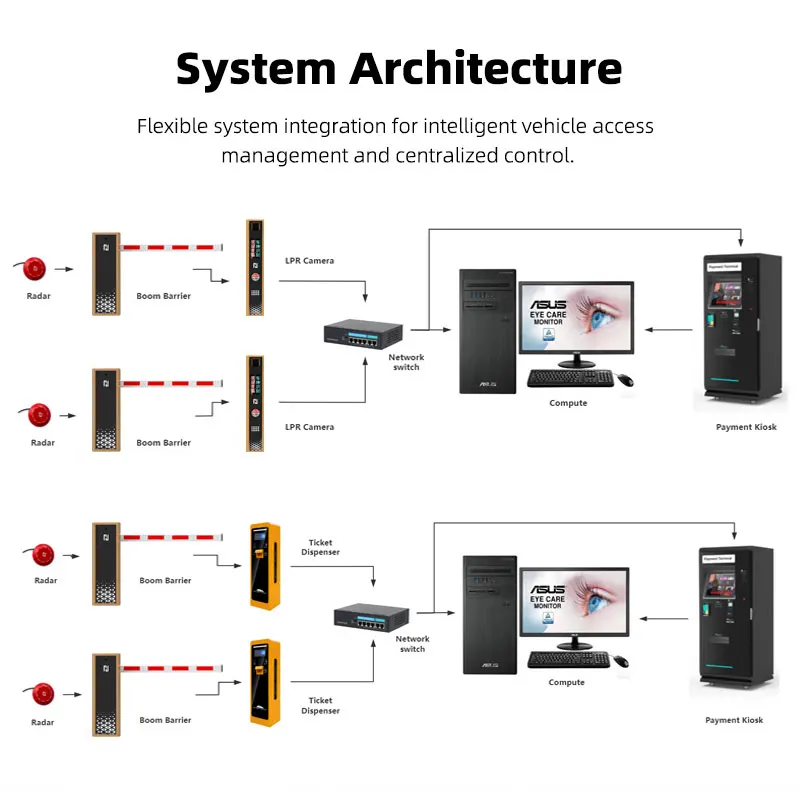
When choosing the access verification method, take into account the number of resident vehicles, the visitor management process, whether staff are present at the entrance, data management requirements and the need to integrate with the existing parking software.
- Remote or manual control: may suit small sites or entrances supervised by an employee.
- RFID cards or UHF readers: suitable where authorised vehicles need a dedicated identification method.
- LPR/ANPR licence plate recognition: can verify the vehicle plate and link it to an access list or a compatible parking management programme.
- Tickets or automatic payment: may suit commercial car parks that need to manage parking time and collection.
- Hybrid solution: more than one method can be combined where user categories differ, provided technical compatibility between the devices is confirmed.
6. Check the motor, the controller and electrical compatibility
Baroxon product pages describe brushless DC motors and other configurations depending on the model. When comparing, ask for the motor type, supply voltage, power consumption, adjustable operating speed, duty cycle and the manual release options available during a power failure.
Also confirm that the controller is compatible with vehicle detectors, card readers, plate recognition cameras and parking management software. Do not compare figures taken from different models as if they described one device; request the datasheet for the proposed configuration and check any claims about cycle counts, ingress protection or warranty against the documents for that specific model.
7. Assess safety before entry speed
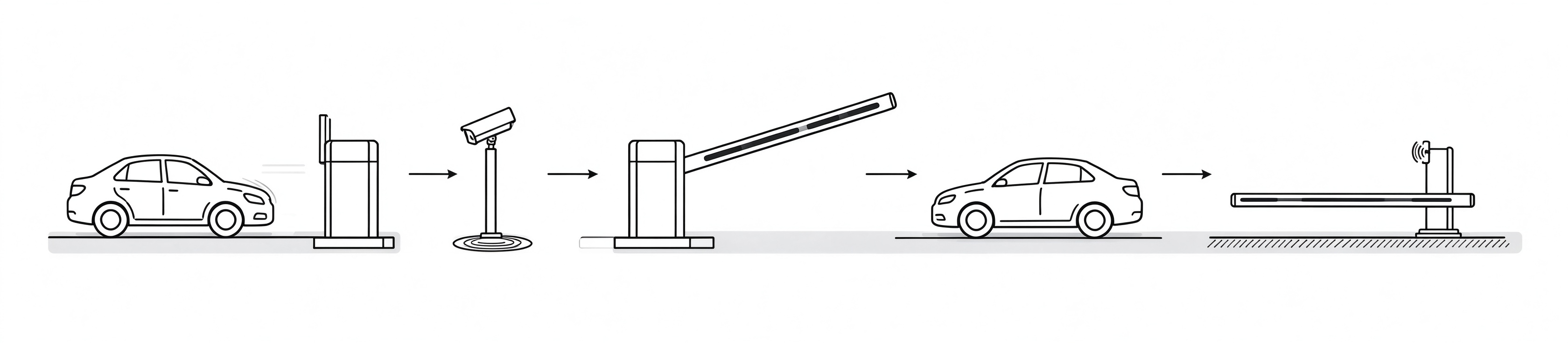
The design should include a suitable way of detecting vehicles and preventing the arm from closing on them, such as an induction loop, radar or a sensor compatible with the system. Review the re-open logic when an obstacle is detected, the manual operation capability, the position of emergency buttons and, where needed, night visibility or warning lights.
Installation and testing must follow the model instructions and the relevant local regulations, and safety devices must not be disabled in order to speed up traffic flow. A device that saves a few seconds at peak does not offset the risk of damaging a vehicle or injuring a person.
8. Account for the environment and installation conditions in Jordan
An entrance may be exposed to dust, sunlight, heat and rain, and it may be in an open car park, a basement level or an industrial area. Review the declared ingress protection rating of the model, the cabinet material and coating, the operating temperature range, the drainage arrangement and the mounting position of the electronic components.
Do not assume that every product in a category shares the same protection rating. The classification must be confirmed from the datasheet of the specific model, particularly at exposed sites that face dust and rain throughout the year.
9. Calculate the total cost, not just the purchase price
The total cost may include the barrier, the arm, the controller, safety devices, access verification devices, foundation works, cabling, installation, programming, training, maintenance and spare parts. An LPR/ANPR system may also require a camera, software, a network connection and additional integration.
Ask for a quotation that states clearly what is included and what is optional, and confirm the warranty terms, technical support and the lead time for spare parts. A fair comparison is between the cost of operating the system over several years, not between isolated initial figures.
10. A checklist before requesting a quotation
Before contacting the supplier, prepare the following information:
- Lane width, the nature of the entrance and photographs of the installation site.
- The expected number of vehicles per hour at peak times.
- The approximate number of operating cycles per day.
- The initial arm length and type, together with any height restrictions.
- The required verification method: manual control, RFID/UHF, LPR/ANPR, tickets or payment.
- Integration requirements with the existing parking or security system.
- Weather and dust conditions, the installation location and the power source.
- Safety, emergency and power-failure operating requirements.
- The number of entrances and barriers, and future expansion needs.
- Warranty, training, maintenance and spare parts requirements.
Frequently asked questions
What is the best automatic barrier for a small car park?
The right solution is usually the configuration that matches the entrance width, the traffic volume and the required control method, not necessarily the fastest or the largest model. A straight-arm barrier with simple control may be sufficient, but safety and site compatibility still have to be confirmed.
Can a parking barrier be connected to a licence plate recognition camera?
Yes. The system can be designed to integrate with LPR/ANPR where the controller, the software and the communication interfaces are compatible. Plate reading should be tested under the actual lighting and vehicle speed conditions, and a procedure should be defined for unreadable plates or vehicles that are not on the access list.
Should I always choose a high-speed barrier?
Not necessarily. The speed has to match the traffic density, the arm length and the safety requirements. A faster barrier may bring no practical benefit if the verification or payment step is the cause of the delay, or if site conditions do not allow it to operate safely.
What should be confirmed about warranty and maintenance?
Check the warranty period and what it covers, the availability of spare parts, the maintenance instructions, access to technical support and the periodic inspection requirements. Ask for these terms to be documented in the quotation or contract rather than relying on verbal assurances.
Conclusion: choose the system that fits your site
To choose a suitable automatic parking barrier in Jordan, start with the entrance measurements and the volume of vehicle traffic, then define the arm type, the operating speed, the access verification method and the safety, environmental and integration requirements. Baroxon Jordan offers boom barriers and parking gates, high-speed barriers, LPR/ANPR systems and RFID barriers, and the project team can compare configurations against the needs of the site.
Before purchasing, request a datasheet for the specific model and a quotation that sets out the equipment, installation, integration, warranty and maintenance, and make sure that every technical figure in the offer can be traced to an official document for that model.
Latest News
Baroxon Jordan | Barrier Gates & Automatic Access Control
Advanced Security Access Control and Intelligent Parking Solutions.
Company Strength
Adequate Inventory
Fast Shipping
Our Products
CONTACT US
Address: Factory: No. 2 Wanshou Road, International Innovation Industrial Park, Jinan, Shandong, China




© COPYRIGHT 2025 Baroxon Jordan | Barrier Gates & Automatic Access Control

Contact Us
Our passion is to bring your ideas to life. Work with our design team to create a one-of-a-kind custom finish or cladding system to create a truly unique space. Together we can make your story stand out. If you need something to request a sample, request pricing, or request a demo, please fill out the contact form below. Explain your request in as much detail as you can and a representative will contact you within 1 business day.