Baroxon Jordan | Barrier Gates & Automatic Access Control

What to Consider When Buying a Heavy-Duty Parking Barrier
Release time:
2026-10-29
When buying a heavy-duty parking barrier, comparing prices or arm speed alone is not enough. The barrier has to match the lane width, the expected number of vehicles per day, the type of vehicles, the installation conditions, the access control method and the safety and maintenance requirements. Choosing the wrong model can lead to congestion at the entrance, frequent downtime or higher than expected maintenance costs.
The Baroxon Jordan website presents a range of automatic barrier categories, including brushless DC motor options, straight, folding and fence arms, and access control solutions that can be connected to RFID and licence plate recognition. Specifications differ between models, however, so the datasheet for the specific product should be reviewed and the required configuration confirmed before a purchase order is issued.
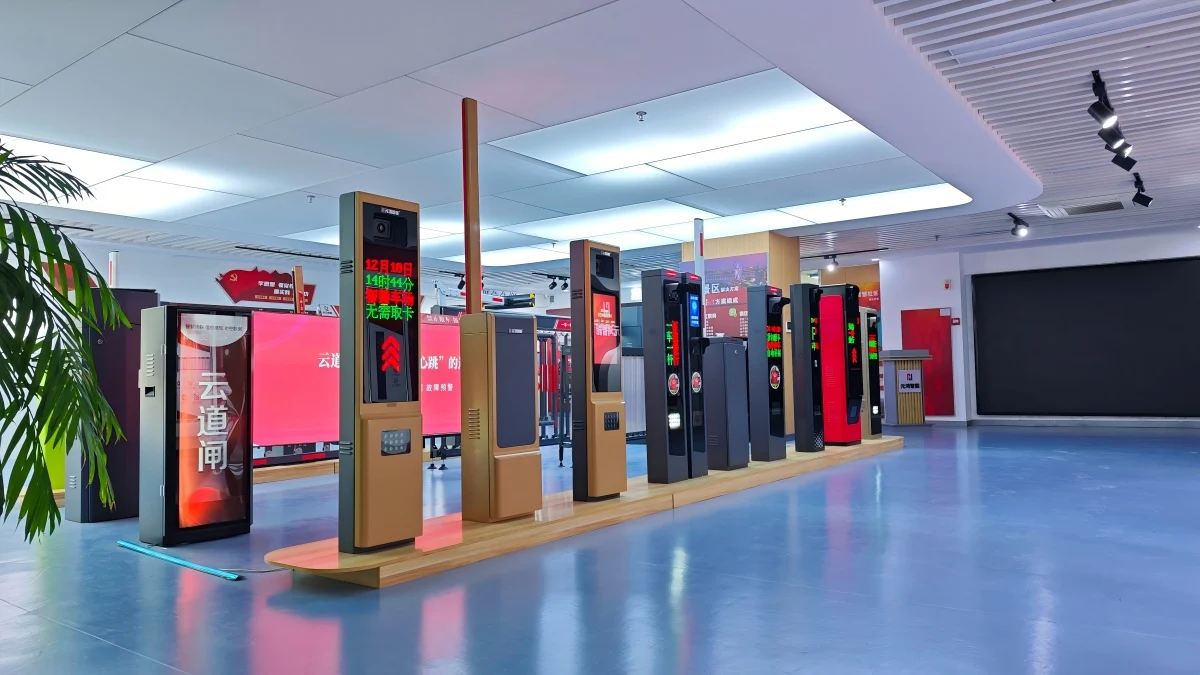
1. Define the traffic density and the daily duty cycle
The first question to ask is: how many times will the barrier open and close each day? A villa entrance or a small car park is different from a shopping centre entrance, a logistics warehouse or an industrial facility operating around the clock. At high-traffic sites, a model designed for frequent operating cycles should be selected, with confirmation that the motor, the drive mechanism and the controller can handle the actual load.
Some Baroxon Jordan product pages mention specifications of up to 5,000 cycles per day in certain configurations, and the general product page also lists continuous-duty options. These figures should not be treated as a guarantee for every model: ask for written confirmation of the recommended daily limit, the test conditions, the warranty period and the maintenance requirements for the model you are buying.
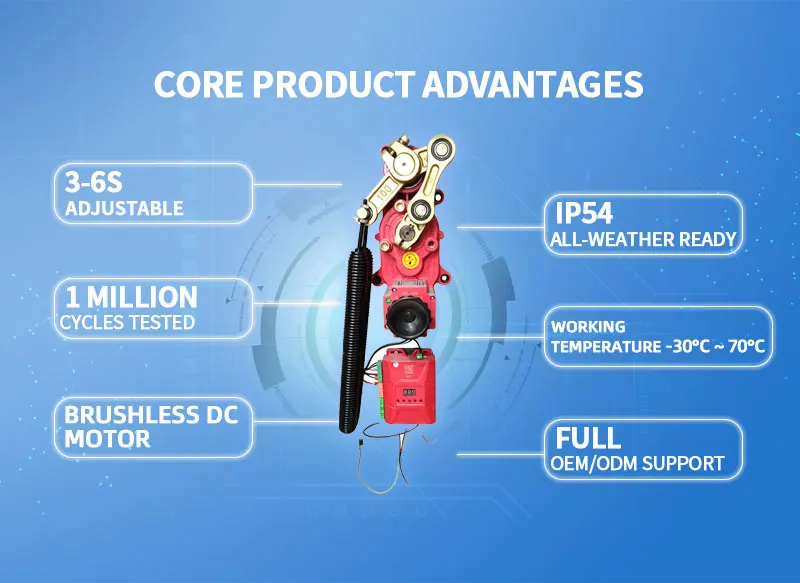
2. Choose the right motor and drive system
The motor type affects operating smoothness, noise, speed adjustment capability and maintenance method. Baroxon Jordan materials list configurations that include 24V brushless DC motors, AC motors and servo motors. A brushless motor can be a candidate for high-frequency projects, but the final choice still depends on arm length, arm weight, opening and closing frequency, power supply conditions and control requirements.
Do not compare motors by trade name alone. Ask the supplier to clarify the motor type for the specific model, the arm balancing mechanism, the speed adjustment range, the emergency manual operation method and the availability of spare parts. Opening and closing speed should suit the arm length and the operating conditions; a higher speed is not always the best choice if it affects safety or smooth movement.
3. Measure the lane width and choose the arm length
The actual lane width must be measured before deciding the arm length, taking into account the position of the barrier cabinet, the pavements, walls, columns, the pedestrian route and the vehicle turning radius. Some Baroxon Jordan products offer customisable arm lengths within ranges that vary by model; one general specification page lists a range of 1 to 6 metres, while another industrial model specifies a different maximum. The permitted limit for the required model should therefore be confirmed, and a single range should not be applied to every product.
Choose the arm shape according to the space available: a straight arm suits many open entrances, a folding arm may be more appropriate where a ceiling or overhead obstacle limits vertical clearance, and a fence arm may suit entrances that need a clearer visual barrier. Weight, balance and safety requirements should be reviewed for each configuration before it is approved.
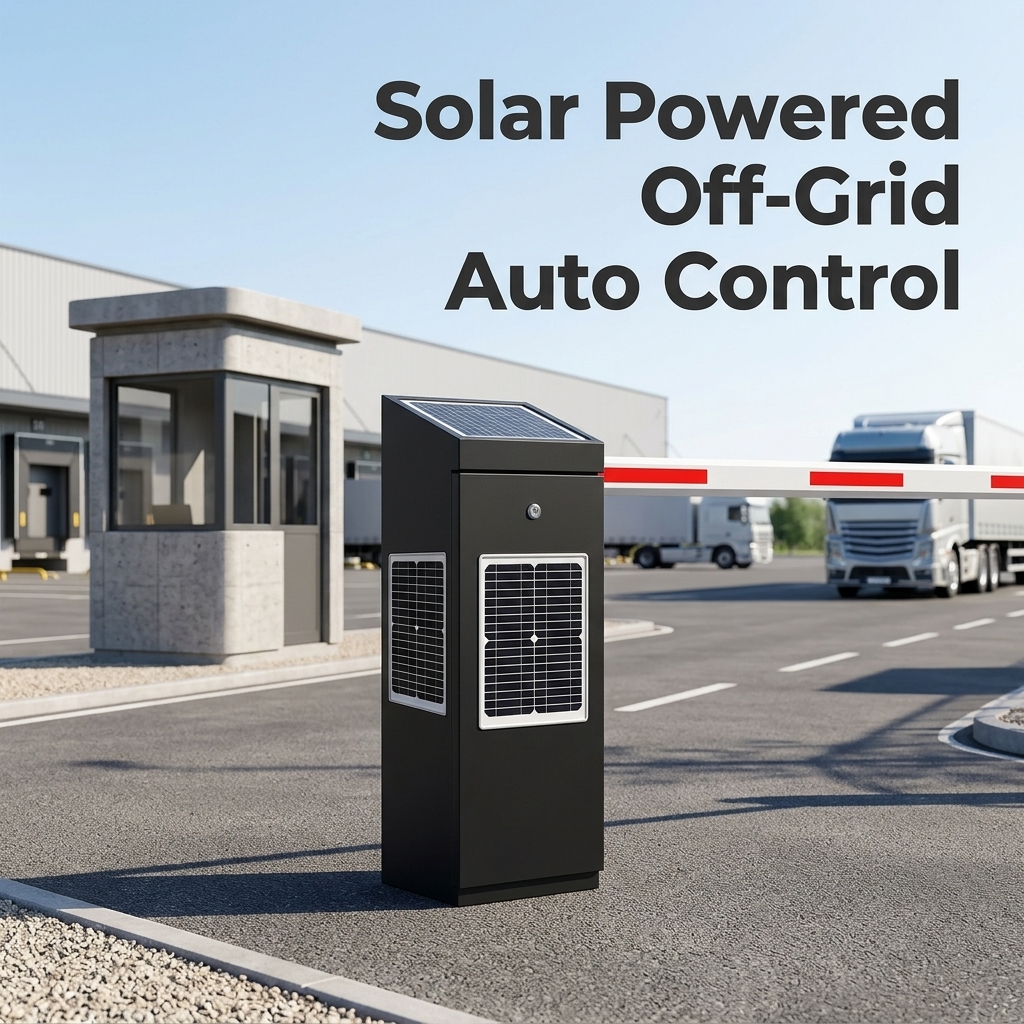
4. Examine the cabinet and protection against dust, water and heat
Outdoor entrances in Jordan require an assessment of the actual site conditions, including dust, rain, temperatures, direct sunlight, the nature of the ground and the ease of cleaning and maintaining the equipment. Review the declared ingress protection rating of the cabinet, the materials and coating, the mounting position of the controller and the operating temperature limits for the model.
Some Baroxon Jordan pages list ratings such as IP54, IP65 and IP66 within the specifications of different products, while an industrial product page states a different classification. These ratings are not automatically interchangeable, and they do not mean that every model carries the highest rating. Request the official datasheet for the model, confirm that the rating suits the installation environment, and follow the manufacturer's instructions for mounting, cleaning and maintenance.
5. Confirm vehicle detection and arm anti-collision devices
A heavy-duty barrier should not be purchased without reviewing the safety equipment. Depending on the site design, the system may include an induction loop, radar or a suitable sensor to detect whether a vehicle is in the arm's movement area. When correctly specified, installed and set up, these devices help reduce the risk of the arm closing on a vehicle. The method of handling faults, power failure and emergencies must also be defined.
Ask the supplier to explain the function of each safety device, whether it is compatible with the controller and how it should be tested on site. Do not assume that a single sensor guarantees protection in all situations, and do not allow safety devices to be bypassed in order to speed up traffic. The operating plan should include a clear route for vehicles and pedestrians, appropriate warning signs and periodic inspection procedures.
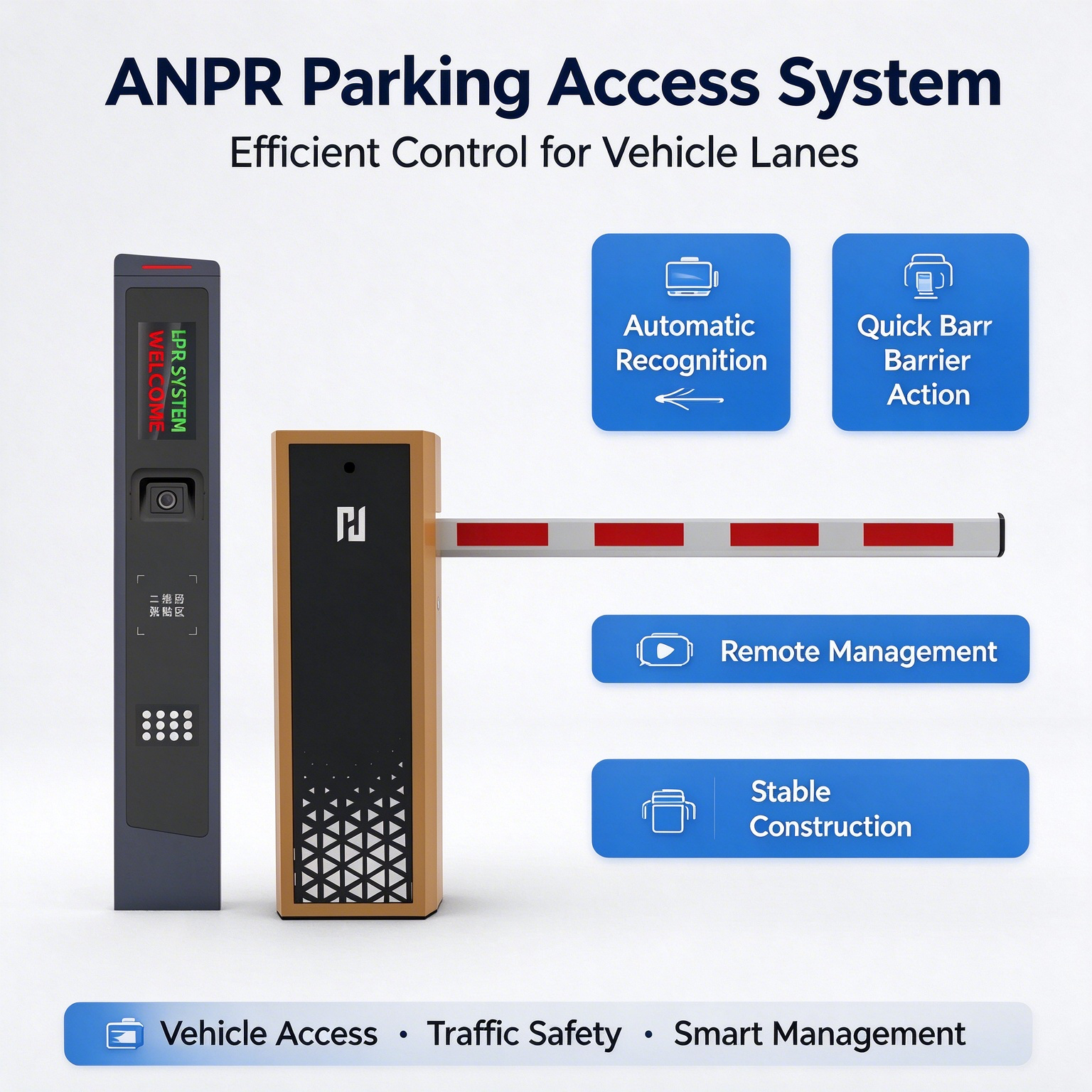
6. Review the control method and integration with existing systems
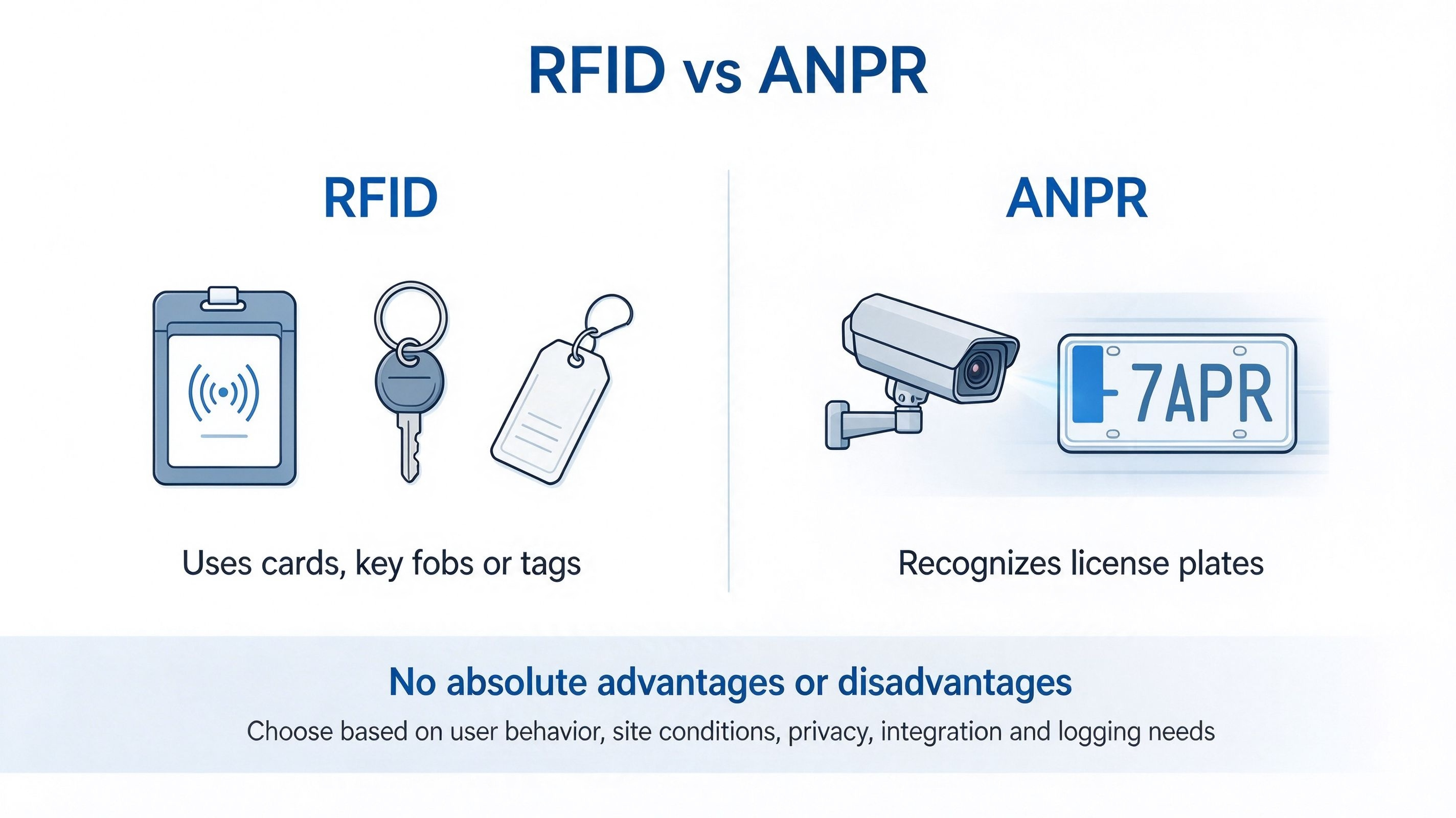
Determine whether the entrance will operate by remote control, a button at the security desk, an RFID card, a QR code, an LPR/ANPR licence plate recognition system or a ticketing and payment system. At high-traffic sites, integration with parking systems can reduce manual handling and improve the logging of entries and exits, but its success depends on the compatibility of the controller, the communication interfaces and the software in use.
Before purchase, give the supplier the name of the existing system, the controller model, the type of reader or camera, the method of sending the open signal and the data logging requirements. Ask for confirmation of compatibility and a clear wiring diagram. If the project uses licence plate recognition, test the camera under the actual lighting and vehicle speed conditions at the entrance rather than relying on theoretical specifications alone.
7. Assess maintenance, spare parts and technical support
The initial purchase price is not the only cost. You should know the maintenance schedule, the parts that need periodic inspection, the availability of the arm, drive components, controller board and sensors, and how technical support is requested. Also ask about the warranty terms, what they cover and exclude, how faults are diagnosed and whether clear installation and wiring manuals are provided.
At sites that cannot easily stop operating, such as shopping centres and industrial facilities, calculate the impact of barrier downtime on vehicle queues, staff work and security. It may be useful to agree in advance on a stock of critical spare parts, the responsibility for installation and a testing plan after maintenance. Base the decision on the expected total cost over the service life, not on the unit price alone.
8. Check the installation, power and manual operation requirements
Verify the mounting base, the direction in which the arm opens, the cabinet position, the cable routes, the power source and the protection of the electrical connections. Installation and testing should be carried out by a qualified technician in accordance with the manufacturer's instructions and local requirements. Ask for an explanation of how the mechanism is released or the arm raised manually during a power failure, and do not assume the presence of a backup battery or an automatic raise function unless it is stated in the specifications of the required model.
Before handover, test the raising and lowering of the arm, the vehicle detection devices, the access signals, manual operation, the handling of communication loss and the restoration of operation after a power failure. Document the test results and hand the operating team the user instructions, maintenance instructions and emergency procedures.
9. A comparison checklist before requesting a quotation
Use the following list when comparing supplier offers. Specifications must be completed for each model separately, and unconfirmed fields should not be treated as guaranteed specifications.
| Comparison criterion | What must be confirmed? |
|---|---|
| Operating density | The expected number of open and close cycles per day, and the recommended limit for the model |
| Motor | The type, the power requirements and the drive mechanism |
| Operating speed | The adjustable speed range for the specific model |
| Arm length | The minimum and maximum length, the weight and the arm type |
| Environmental protection | A documented IP rating and the operating temperature limits |
| Safety | The vehicle detector, radar or sensors, and the obstacle response logic |
| Control and integration | RFID, LPR/ANPR or ticketing, and the supported communication interfaces |
| Maintenance | Inspection intervals, spare parts and support response time |
| Warranty | The duration, terms and exclusions in writing |
| Installation | The base, the wiring, manual operation and handover tests |
Frequently asked questions
Is a heavy-duty barrier suitable for every car park entrance?
Not necessarily. An industrial model may be larger or more expensive than a small car park needs. The barrier should be chosen according to the lane width, vehicle traffic, the number of operating cycles and the control and safety requirements, not on the description "heavy-duty" alone.
Can the barrier be connected to a licence plate camera or RFID?
Integration options with LPR/ANPR or RFID may be available depending on the model, the controller and the supported interfaces. Compatibility should be confirmed with the supplier before purchase, and the system should be tested after installation.
Does a higher opening speed mean a better barrier?
No. The speed must match the arm length and weight, the traffic density and the safety requirements. An adjustable speed may be more appropriate than selecting the fastest available setting without assessing the site conditions.
What information should be sent to obtain an accurate quotation?
Send the lane width, the number of entrances, the vehicle types, the expected number of operations per day, the required arm length, the access control method, the installation conditions and the integration requirements. The more accurate the site information, the easier it is to define the right configuration.
Conclusion
Choosing a heavy-duty parking barrier depends on the compatibility of every element of the system: the motor, the arm, the duty cycle, environmental protection, the safety devices, the control system and the maintenance plan. Boom barriers and parking gates from Baroxon Jordan offer a range of options, but the final decision should be based on the specifications of the specific model and the actual site data. Before purchasing, request written datasheets, confirmation of compatibility, and a clear installation, testing and maintenance plan.
Latest News
Baroxon Jordan | Barrier Gates & Automatic Access Control
Advanced Security Access Control and Intelligent Parking Solutions.
Company Strength
Adequate Inventory
Fast Shipping
Our Products
CONTACT US
Address: Factory: No. 2 Wanshou Road, International Innovation Industrial Park, Jinan, Shandong, China




© COPYRIGHT 2025 Baroxon Jordan | Barrier Gates & Automatic Access Control

Contact Us
Our passion is to bring your ideas to life. Work with our design team to create a one-of-a-kind custom finish or cladding system to create a truly unique space. Together we can make your story stand out. If you need something to request a sample, request pricing, or request a demo, please fill out the contact form below. Explain your request in as much detail as you can and a representative will contact you within 1 business day.