Baroxon Jordan | Barrier Gates & Automatic Access Control

Comparing Parking Barrier Manufacturers and Suppliers in Jordan
Release time:
2026-10-29
Choosing a manufacturer or supplier of parking barriers is not a matter of picking the lowest price in a single quotation. An automatic barrier is one part of an access system that includes the boom arm, the motor, the control unit and the safety sensors, and it may also include a licence plate recognition camera, an RFID reader or parking management software. Solutions should therefore be compared on how well they fit the site, how reliable they are, how serviceable they are, and what they cost over the years of operation.
1. Start by defining site requirements before requesting quotations
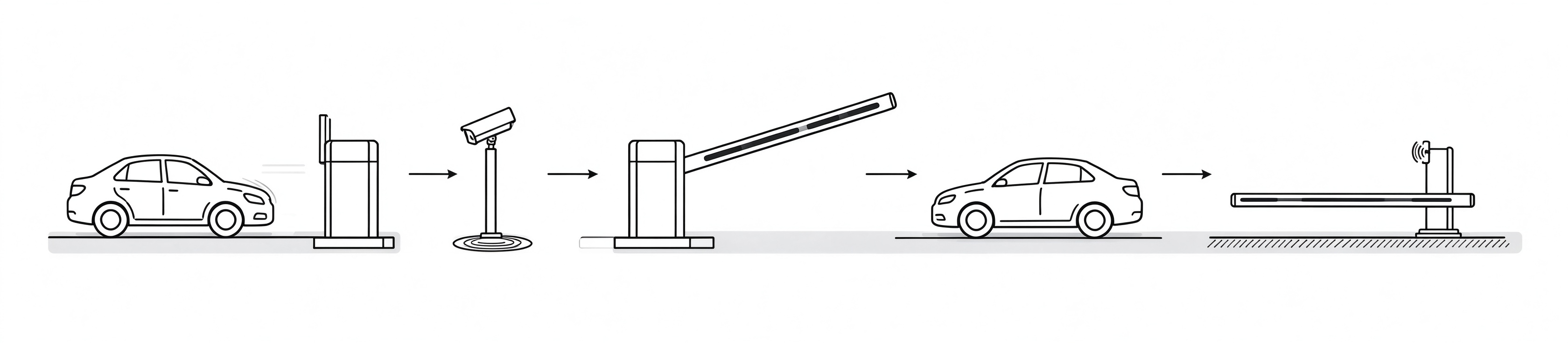
Before contacting parking barrier suppliers, define the type of facility, the vehicle traffic and the access control method. The entrance of a residential compound is different from a shopping centre car park, a logistics warehouse or an industrial facility. Record the number of lanes, the width of each lane, the average vehicle flow at peak hours, whether the site is indoor or exposed, and how reliable the power supply and network connection are.
Ask every supplier to explain why they chose the boom length, the opening speed and the type of barrier proposed. A good supplier does not simply send a general catalogue; they ask about site conditions and explain the assumptions behind the solution.
2. Verify the manufacturer's experience and real production capability
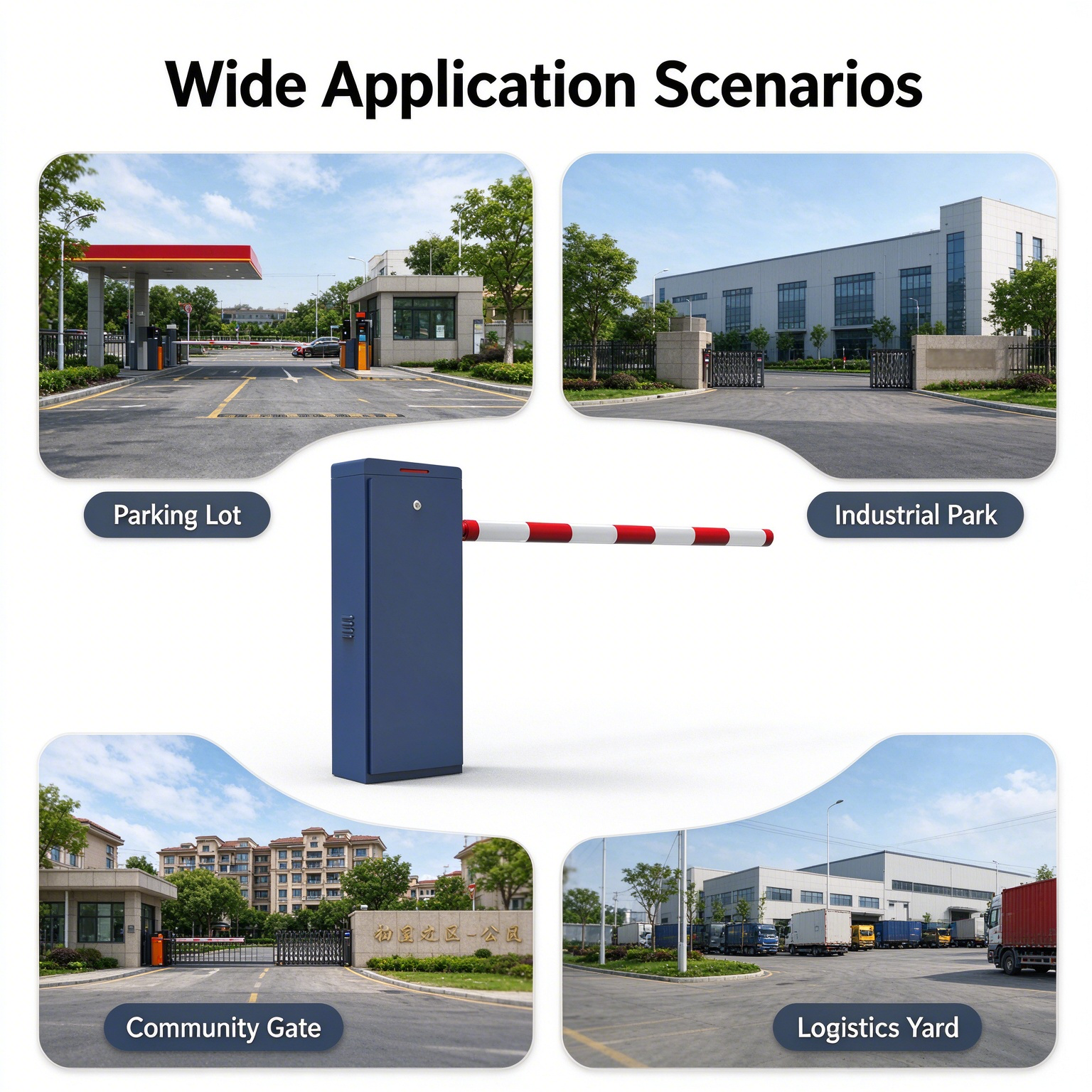
When comparing parking barrier manufacturers, ask whether the company manufactures the equipment itself or resells products from other parties. Request verifiable information about the production facility, the quality inspection procedures, the availability of technical drawings, and the possibility of customising the boom, the cabinet or the control system. If the project requires integration with an existing parking system, ask about the engineering team's experience with that type of interface.
Company profile pages can be reviewed to understand the declared scope of manufacturing and customisation, and the datasheet for the specific model should then be requested when preparing the project quotation. Marketing statements alone are not sufficient evidence; ask for documents and test results that relate to the product being offered.
3. Compare technical specifications on a common basis
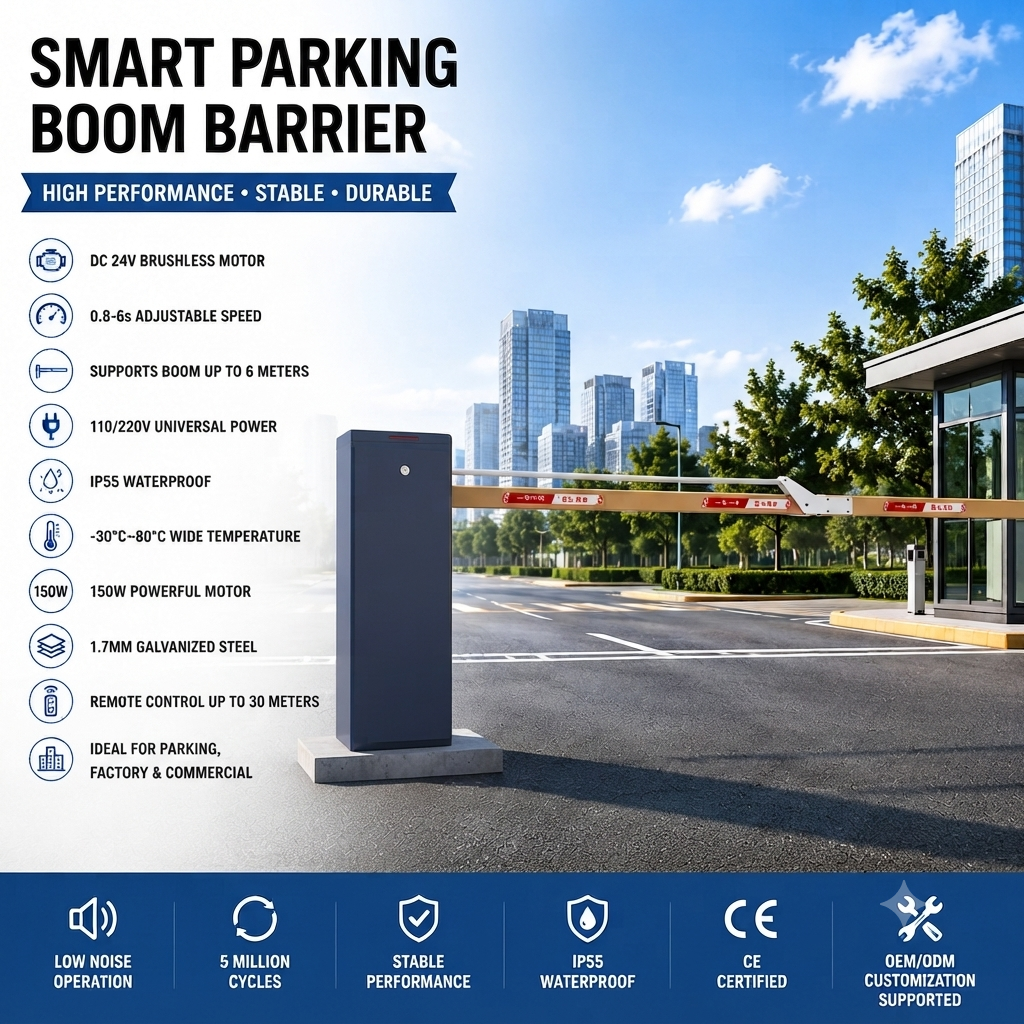
Do not compare two quotations if one includes a basic barrier and the other includes an additional camera, reader or sensor. Build one standard table and ask all suppliers to complete the same items, including:
- Motor type and transmission mechanism.
- Boom length and type: straight, folding or fence boom.
- Opening and closing time, stating whether the figure applies to a specific model.
- Duty cycle and the expected number of operations per day.
- Dust and water ingress protection rating, as documented for the product.
- Operating temperature range and suitability for indoor or outdoor installation.
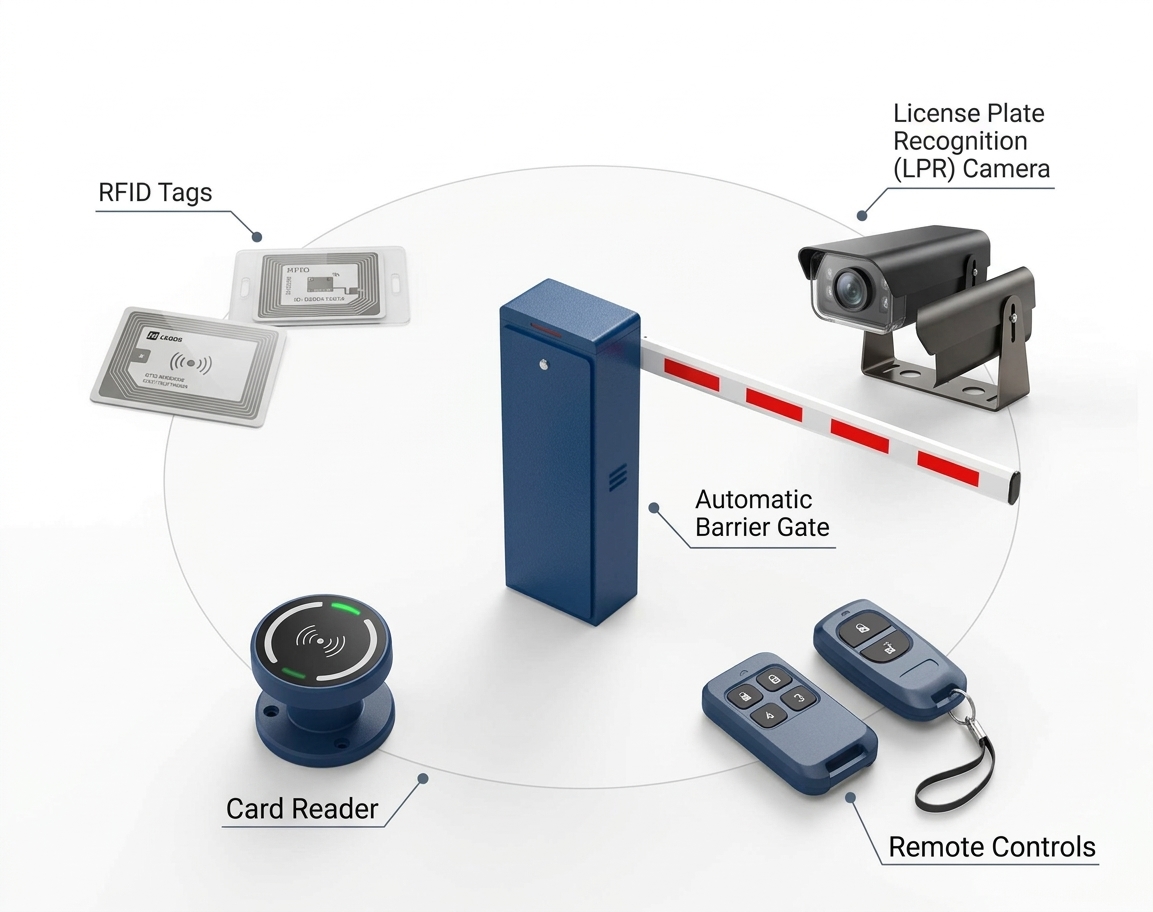
- Available control methods, such as remote control, card, RFID or LPR.
- Vehicle sensors, induction loop, collision protection and manual release during a power failure.
- Warranty, spare parts and after-sales service.
Specifications vary by model and configuration. Do not assume that an opening speed, a protection rating or an operating life published for one model applies automatically to every product from that supplier.
4. Evaluate barrier types and how well they suit the site
A supplier may recommend a straight boom barrier for standard entrances, a folding boom where vertical clearance is limited, or a fence boom where the site needs to control vehicle movement across the entrance opening. The right choice depends on the available height, the lane width, the shape of the entrance, the safety risks and ease of maintenance.
The available product categories can be reviewed through boom barriers and parking gates at Baroxon Jordan, followed by a written recommendation explaining why the boom type suits the site. Do not choose a faster barrier simply because the number is higher if the operating speed is not actually required.
5. Check integration with LPR, ANPR, RFID and parking management software
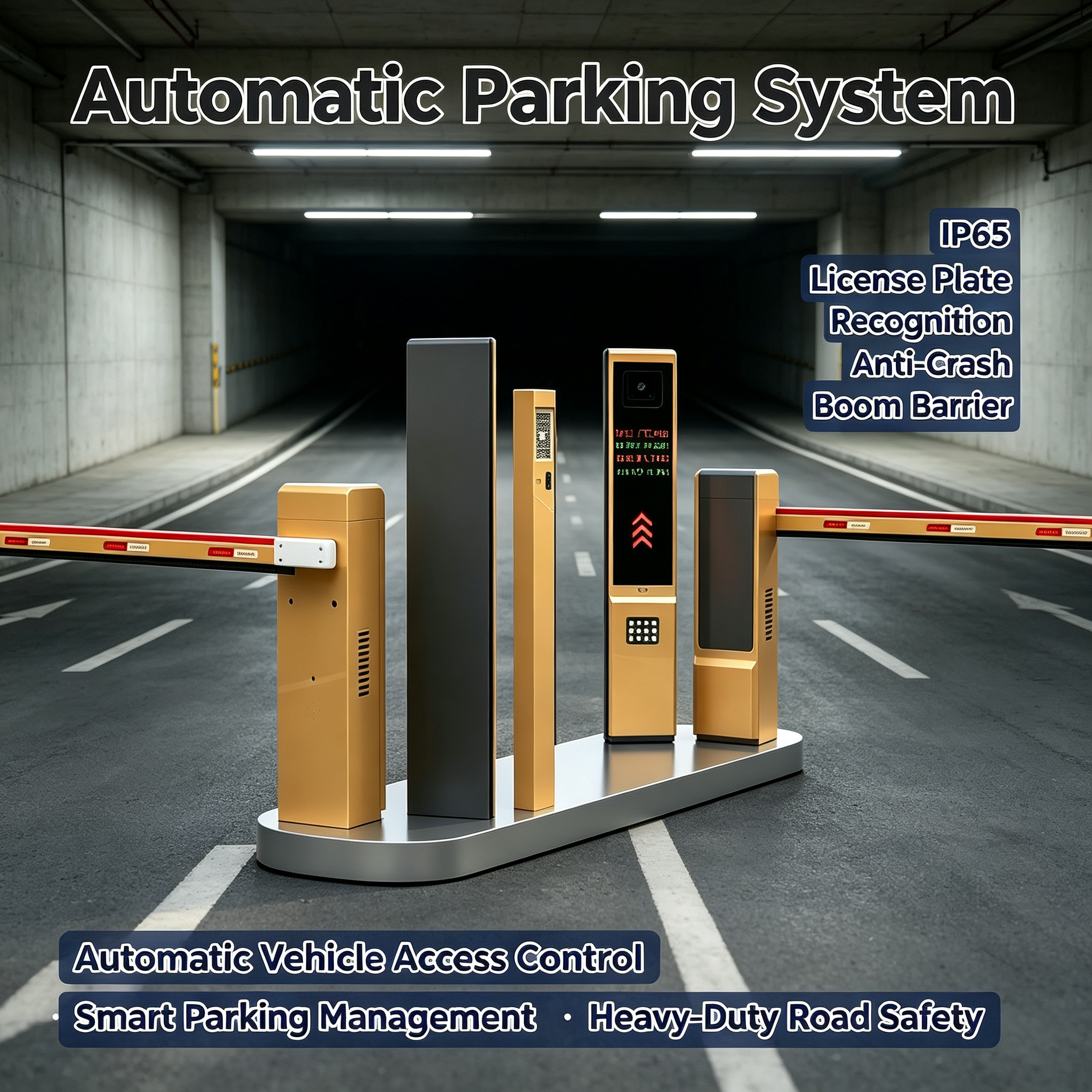
If the project requires automated entry, verify that the barrier can work with a licence plate recognition system (LPR/ANPR), RFID cards, UHF devices or QR codes, according to the actual requirements. Ask how signals are exchanged between the camera, the control unit and the barrier, which interfaces are available, how entry and exit events are logged, and what happens when a plate cannot be read or the network goes down.
In Jordan it is important to test the reading of local plates under real site conditions, including night lighting, camera angle, dirty plates and the approach speed of the vehicle. Do not rely on a general accuracy figure without knowing the test conditions, the plate types and the sample size; ask for a demonstration or an acceptance test that matches your site.
6. Do not compromise on safety and compliance
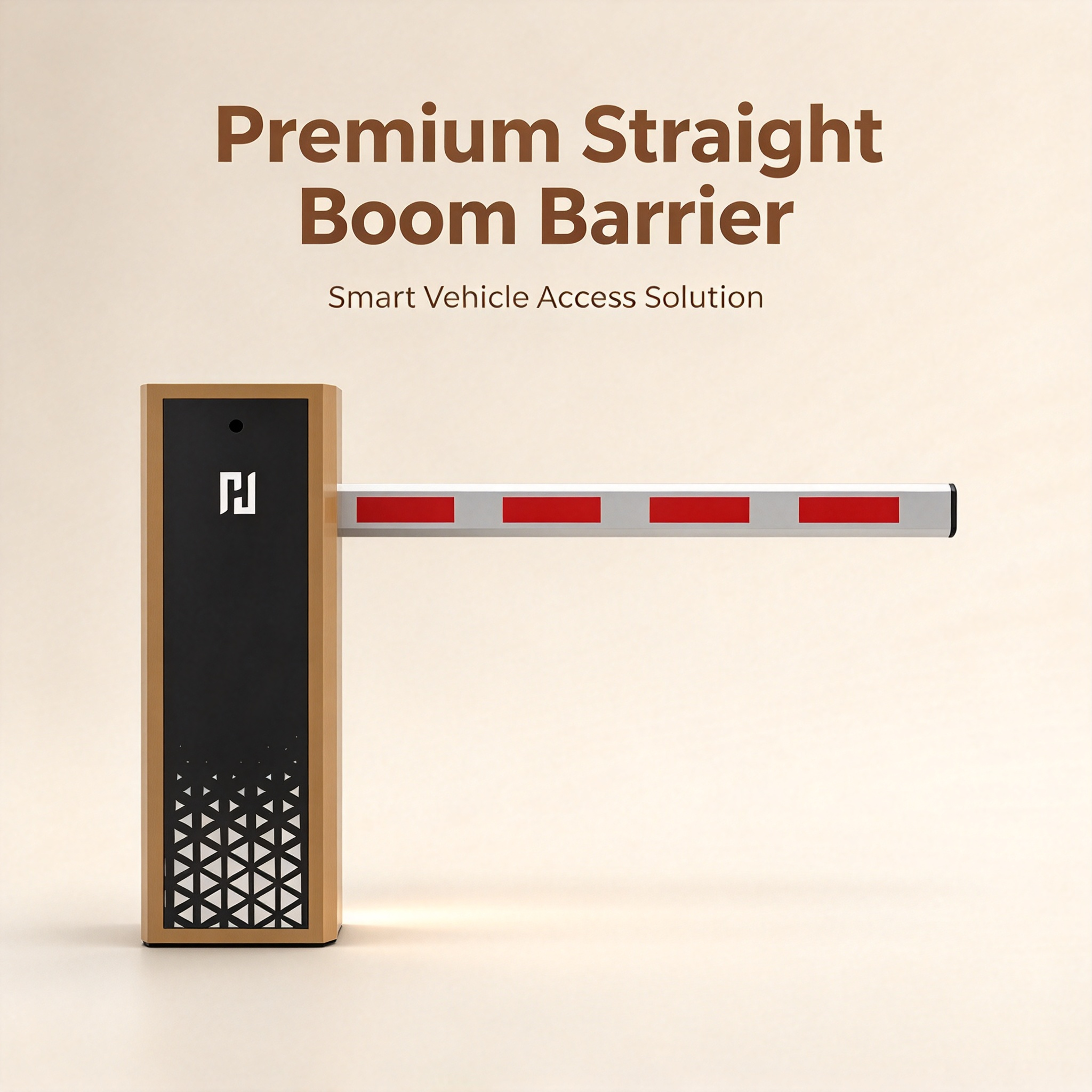
The supplier must explain how the boom will be prevented from descending onto a vehicle or a person, which vehicle detection devices are used, and how the system behaves when an obstacle is present. Depending on the site design, the solutions may include an induction loop, a radar sensor, a photocell or an automatic reverse mechanism, with a clear explanation of the limits of each device and how it is tested and maintained.
Request the safety and compliance documents relevant to the specific model, a test plan for commissioning, and the procedures for isolating power and carrying out manual maintenance. Do not assume that one sensor removes every risk; the protection design must match the vehicle and pedestrian movement on the site.
7. Calculate the total cost, not just the purchase price
The lowest quotation can be the most expensive over time if it excludes installation, programming, training, spare parts or technical support. Compare the initial price against shipping, installation, connections, civil works, software integration, routine maintenance, consumable parts and the potential downtime caused by failures.
Ask for a detailed quotation showing what is included and what is excluded, the validity period of the price, the delivery period, the payment terms, the warranty, and the cost of service visits after the warranty ends. If there are software fees, cloud service fees or an annual subscription, these must be clarified from the outset.
8. Confirm the warranty, spare parts and after-sales service
A barrier that stops working can cause congestion at the entrance or disrupt the operations of the facility. Ask about the warranty period and what it covers, the availability of the motor, control unit, boom, sensors and spare parts, how parts are ordered, and the response time for technical support. Request written clarification on whether remote assistance is available and whether installation, training and the delivery of wiring diagrams are included.
If the supplier operates through a local distributor or an installation partner in Jordan, request the details of the party responsible for installation and maintenance and the limits of its responsibility. The customer should never be left unsure of whom to call when a fault occurs.
9. Ask for project references and a clear acceptance test
Ask the supplier for examples of similar projects in terms of vehicle count, environment and control method, while respecting customer data confidentiality. Where possible, ask to see the system in operation or to speak to a reference customer. Before supply, agree on clear acceptance criteria, such as the boom opening time for the selected model, successful integration with the access system, event logging, the operation of the safety devices, and the delivery of documents and training.
The contract should define how defects found during testing are handled, who is responsible for correcting them, and when the warranty period begins. These steps reduce the disputes that can arise after installation.
10. Use one standard comparison table before deciding
The table below can be used to evaluate quotations. Give each supplier a score from 1 to 5 for each criterion, then multiply the score by the weight of the criterion. Adjust the weights to reflect the priorities of the project, and do not let price alone be the deciding factor.
| Comparison criterion | Indicative weight | What should be verified? |
|---|---|---|
| Fit of the solution to the site | 20% | Lane width, boom type, traffic flow |
| Safety and compliance | 20% | Detection devices, obstacle response, documentation |
| Specifications and reliability | 15% | Motor, duty cycle, protection rating, testing |
| Technical integration | 15% | LPR/ANPR or RFID, software, interfaces |
| Warranty, support and spare parts | 15% | Written terms, availability, response time |
| Total cost | 10% | Supply, installation, maintenance and recurring costs |
| Supplier experience and documentation | 5% | Reference projects, drawings, training |
| Total | 100% | Compare the results against the actual risks and requirements |
11. Practical questions to ask a parking barrier supplier
Before approving the quotation, use this checklist:
- What is the exact model number, and what is its datasheet?
- Does the quotation include the boom, the cabinet, the control unit and the required safety devices?
- Is the system compatible with the existing LPR/ANPR reader or RFID reader? Which interfaces are available?
- What are the power, network and civil works requirements?
- Which quality and safety tests can be documented?
- What is the warranty period and what are the exclusions?
- Which spare parts are available, and what is the lead time for parts that are not?
- Who is responsible for installation, commissioning and training?
- What is the response time for faults, and is remote support available?
- What is the total cost, and which items are excluded from the price?
- Which acceptance criteria will be used before final handover?
Why consider Baroxon Jordan solutions for your project?
The solutions published on the Baroxon Jordan website include automatic boom barriers, high-speed barriers, LPR/ANPR systems, RFID barriers, sensors and access control components. Combining the barrier and the vehicle identification control in one solution can be useful when the project requires more integrated access management. Each feature should still be matched to the model number and configuration offered, and the delivery, warranty and support terms should be confirmed in writing before a purchase order is issued.
Frequently asked questions
Should I buy directly from the manufacturer or from a local supplier?
It depends on the size of the project and the experience of your in-house team. Buying directly may offer broader customisation options, while a local supplier may provide on-site installation and maintenance. Compare responsibilities, cost and actual support, not just the name of the sales channel.
What is the most important factor when comparing parking barrier prices?
The most important step is to make sure the quotations cover the same configuration. The boom, motor, control, safety, installation and warranty specifications must all be clear before the final price is compared.
Can a parking barrier be connected to a licence plate recognition system?
Yes, systems that combine an automatic barrier with LPR/ANPR can be designed when the model, control unit and software support the required integration. Plate reading, lighting conditions and connectivity should be tested on site before the solution is approved.
Which documents should be requested before purchase?
Request the datasheet for the model, the wiring diagram, the available safety and compliance documents, the warranty terms, the accessories list, the delivery schedule, and the acceptance test and training criteria.
Latest News
Baroxon Jordan | Barrier Gates & Automatic Access Control
Advanced Security Access Control and Intelligent Parking Solutions.
Company Strength
Adequate Inventory
Fast Shipping
Our Products
CONTACT US
Address: Factory: No. 2 Wanshou Road, International Innovation Industrial Park, Jinan, Shandong, China



© COPYRIGHT 2025 Baroxon Jordan | Barrier Gates & Automatic Access Control

Contact Us
Our passion is to bring your ideas to life. Work with our design team to create a one-of-a-kind custom finish or cladding system to create a truly unique space. Together we can make your story stand out. If you need something to request a sample, request pricing, or request a demo, please fill out the contact form below. Explain your request in as much detail as you can and a representative will contact you within 1 business day.