Baroxon Jordan | Barrier Gates & Automatic Access Control

What Is the Best Parking Barrier for a Small Car Park?
Release time:
2026-10-29
The best barrier for a small car park is not necessarily the fastest or the one with the longest arm; it is the model that matches the entrance width, the daily number of vehicles, the installation space, the access verification method and the safety requirements. For many small car parks in Amman, Irbid, Zarqa and Aqaba, a compact automatic barrier with simple card or remote control can be a practical choice. Sites that want self-service entry can consider integrating LPR/ANPR licence plate recognition.
1. Start with the entrance size and the available space
In small car parks, the movement space around the entrance may be limited by walls, columns, ramps or the kerb. Measure the clear lane width, and determine the position of the barrier cabinet, the arm's travel path and where a vehicle stops before the barrier. Do not choose the arm length based on the total area of the car park; base it on the actual lane width and the cabinet mounting point.
A common mistake in small car parks is installing a barrier that spans the full width of the site when the actual lane is narrower, or mounting the cabinet on the pavement so that it narrows the passage or obstructs pedestrians. Two measurements — the clear lane width and the cabinet position — determine most of the installation decisions that follow.
2. Choose the barrier type: straight, folding or fence arm
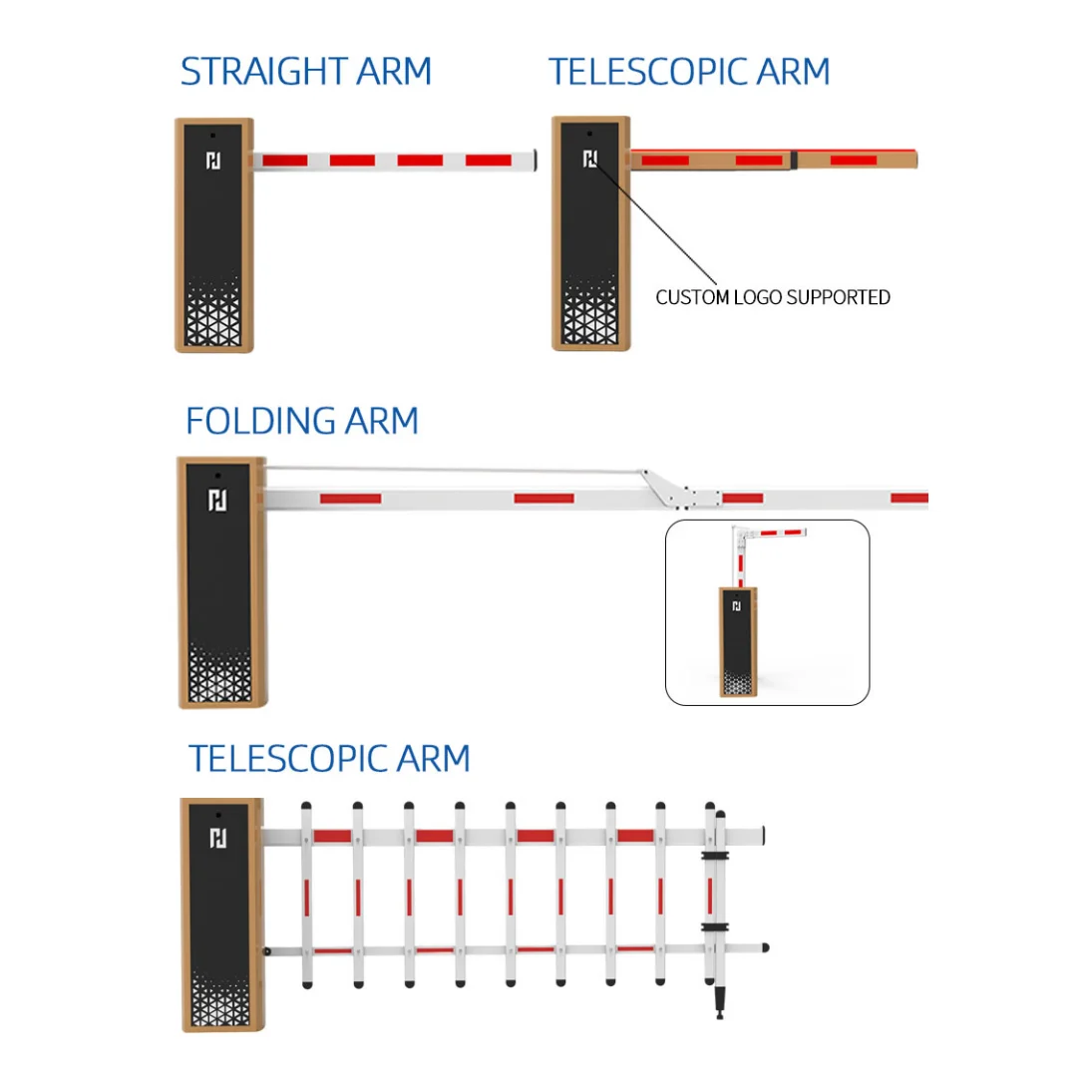
- Straight-arm barrier: suitable for regular entrances with sufficient space above, and usable in private and small commercial car parks.
- Folding-arm barrier: can be considered where beams, low ceilings or clear height restrictions exist, such as some underground car park entrances. The folding path and the available height must be verified before installation.
- Fence-arm barrier: may suit entrances that need a clearer visual barrier, but it requires space and a more careful safety assessment; it should not be chosen for narrow lanes purely for its appearance.
The Baroxon Jordan website presents compact options and different arm types. The final type should be approved on the basis of the specific model's specifications and the site measurements.
3. Count the daily operating cycles, not just the parking spaces
A car park may have only a few spaces but serve residents who enter and leave several times a day, so the number of open and close cycles may matter more than the number of parking bays alone. Determine the average number of vehicles per day, the peak times, and whether the barrier will operate all day or only during set hours.
Baroxon Jordan product pages mention options with different motors, including a brushless DC motor, and some configurations mention continuous duty or operating figures of up to 5,000 cycles per day. These are not a uniform specification for every model; ask for confirmation of the duty cycle for the specific model before purchase.
4. Choose an appropriate opening speed
In private car parks with limited traffic, a very high opening speed does not necessarily bring a clear benefit; operating stability, a reasonable waiting time and obstacle detection are usually more important. Choose the speed according to peak movement at residential, small office and shop entrances, and make sure the arm does not close before the vehicle has passed completely.
Some Baroxon Jordan product pages mention adjustable opening and closing speeds, but the actual speed varies with the model, arm length, balance setting and controller. Rely on the official datasheet for the specific model, and do not assume that the highest speed quoted for a product family applies to every configuration.
5. Choose a suitable access verification method
| Use scenario | Suggested access method | Selection notes |
|---|---|---|
| Private home or dedicated parking space | Remote control or key switch | A simple solution; remote control permissions still have to be managed |
| Small apartment building or staff parking | RFID card or tag | Suited to regular users, with the ability to cancel a lost credential |
| Shop, clinic or site receiving visitors | Access card, visitor QR code or manual release | Chosen according to visitor volume and management procedures |
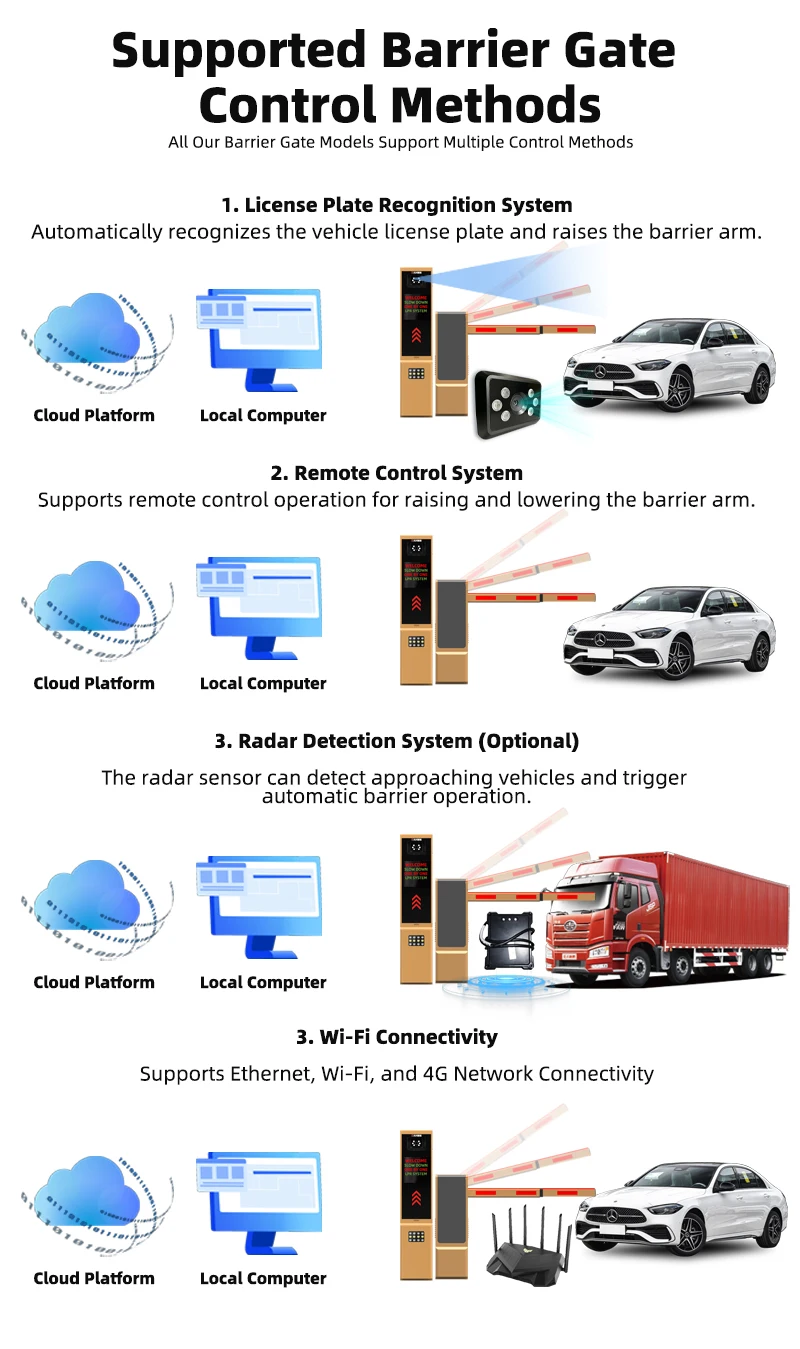
| Entrance where manual intervention should be reduced | LPR/ANPR licence plate recognition | The camera angle, lighting, reading accuracy and system compatibility must be verified |
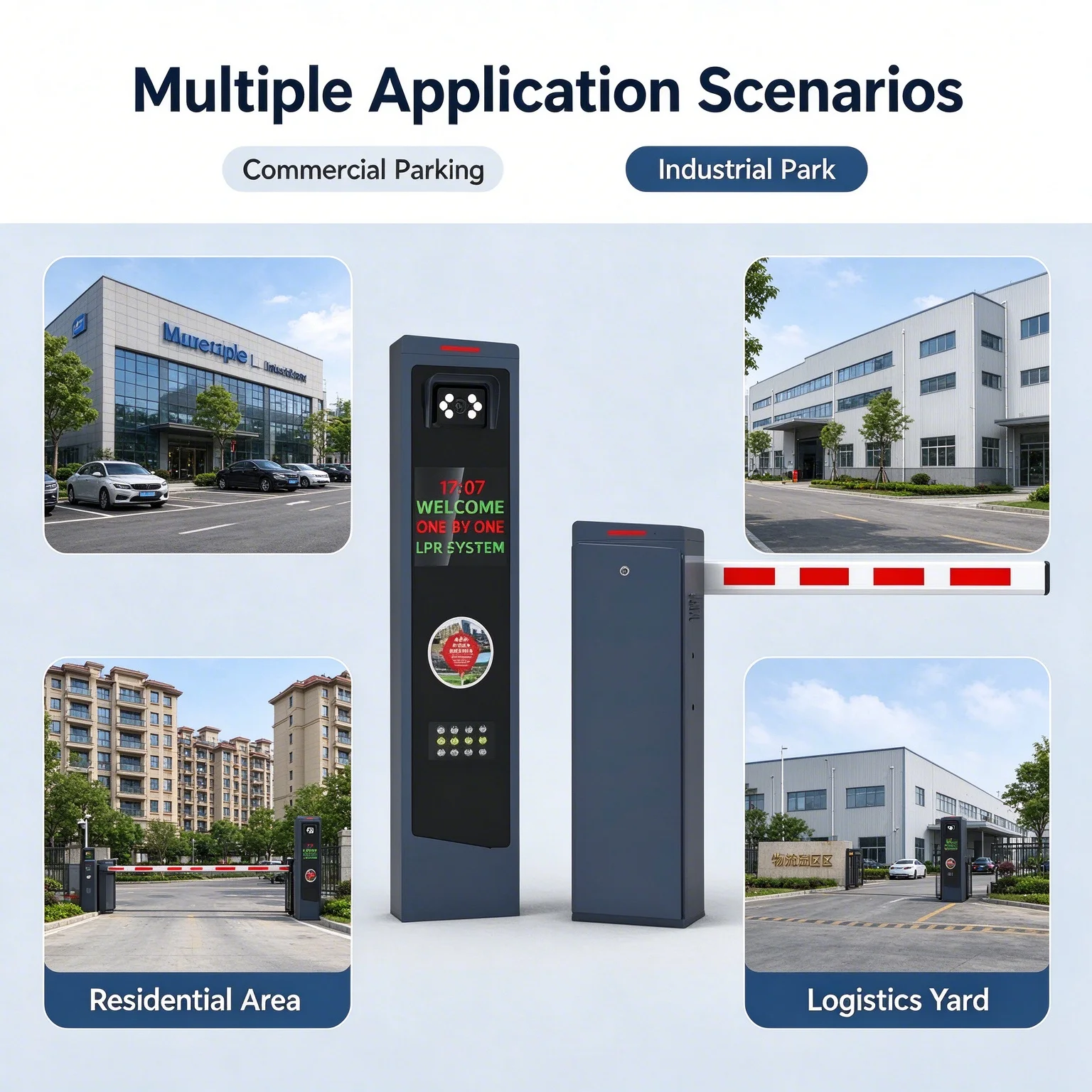
The Baroxon Jordan website lists RFID barriers, licence plate recognition systems and smart parking management solutions. For deployment in Jordan, confirm before purchase that the system suits the Arabic plate format used locally, the local plate types, night lighting and privacy requirements, and carry out an on-site test.
6. Do not compromise on safety for a small barrier
Even where the number of vehicles is limited, the system must prevent the arm from closing on a vehicle or a person. Check the barrier's compatibility with an induction loop, radar or a suitable sensor, the reverse or stop logic when an obstacle is detected, the warning signals and the option to release the arm in an emergency. The installation engineer should determine the sensor positions and test them after commissioning.
Do not assume that every sensor or safety feature mentioned for a product family is included as standard on the base model. Ask for a written list of included and optional components, and confirm that they are tested on site.
7. Consider indoor and outdoor installation conditions in Jordan
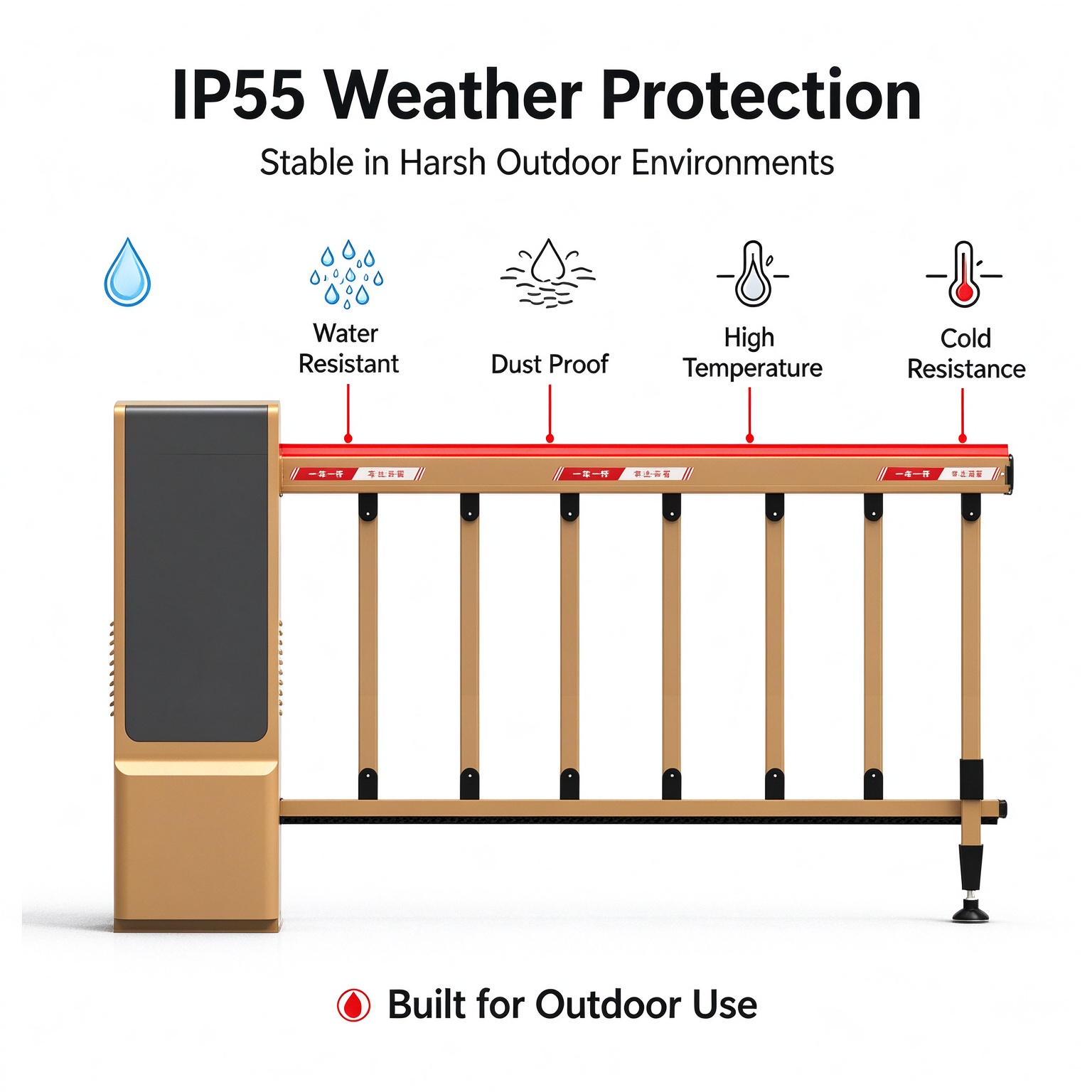
If the barrier is installed outdoors, check the cabinet's protection against dust and water, exposure to sunlight, drainage and the cleaning and maintenance requirements. In underground car parks, also check the clear height, ramps, lighting, ventilation, drainage and the vehicle stopping position.
The protection rating must be reviewed for the specific model, and the highest rating mentioned within a product series should not be assumed to apply to every model.
8. Assess installation, maintenance and total cost of ownership
The price of the device alone should not be the basis of comparison when equipping a small car park. Include in the budget the base works, wiring, power, the card reader or plate camera, vehicle detectors, software licences, commissioning, spare parts and maintenance. If entrance downtime would affect residents or customers, check the after-sales response time, the availability of common parts and the possibility of remote diagnostics.
Ask the supplier for a complete configuration list, the warranty terms, the recommended maintenance intervals and the prices of consumable parts, and request written confirmation that the device is compatible with the existing parking management or access control system.
9. Recommendations by site type
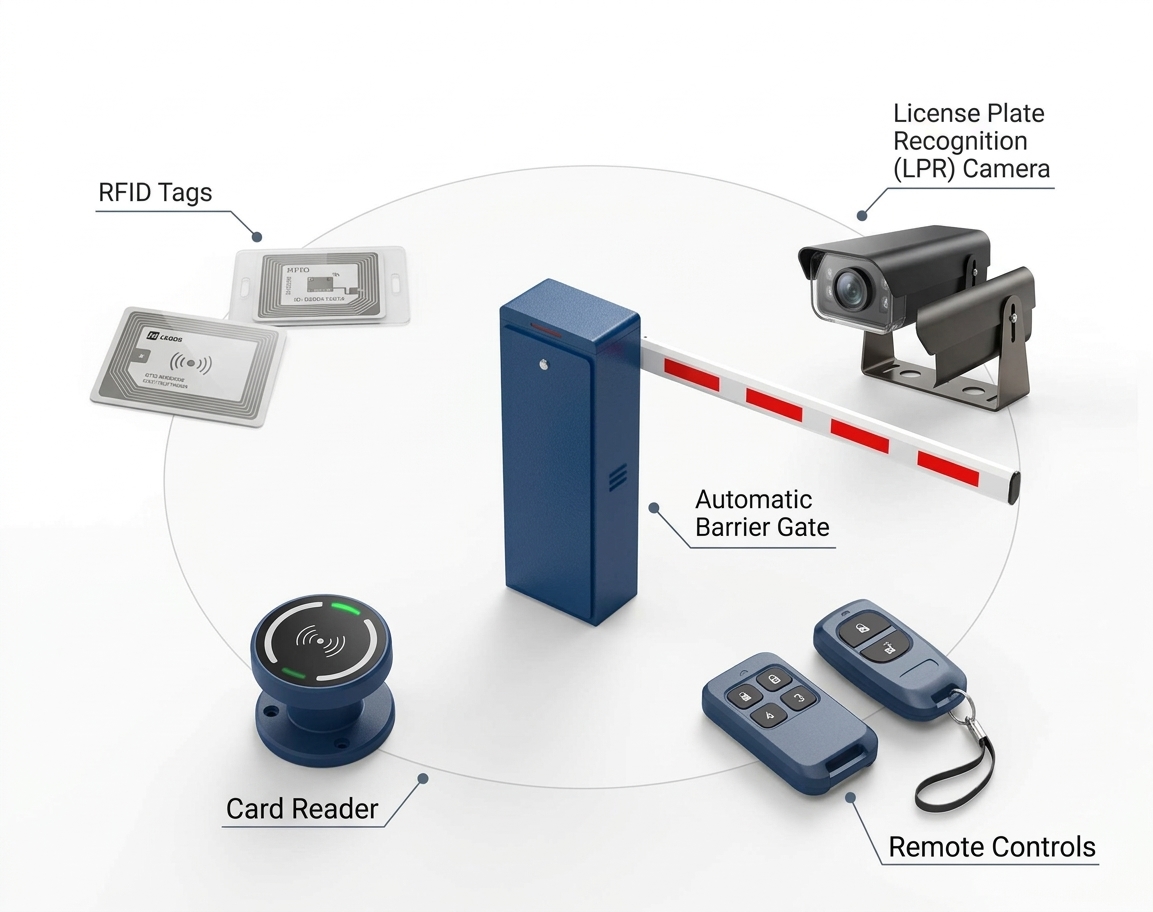
- Private, low-traffic parking space: choose an automatic barrier that matches the lane width, with a remote control or key switch and the necessary detection and safety equipment.
- Apartment building or staff car park: assess the use of RFID cards, user permission management and the visitor entry procedure, and check the daily cycle count where there are clear peak hours.
- Small commercial car park: compare a QR code, manual operation or an LPR/ANPR system according to visitor numbers, and confirm the software interfaces and payment procedures in advance.
- Entrance with limited height: assess the folding arm option and verify on site its travel path and the clear height for vehicles.
- Outdoor or dusty entrance: choose the protection level suited to the environment and set a cleaning and periodic inspection plan.
These are selection guidelines, not a recommendation of one model for every site. The final configuration should be determined after a site survey, lane measurement, assessment of vehicle movement, safety risks and budget.
10. Pre-purchase checklist
- Measure the clear lane width, the installation position and the arm's movement space.
- Confirm that a straight, folding or fence arm suits the site.
- Estimate the daily number of vehicle entries and exits and the peak movement.
- Confirm the power source, arm length, opening and closing speed and duty cycle for the specific model.
- Define the access method: remote control, RFID, QR code or LPR/ANPR.
- Confirm the vehicle detection and safety equipment, obstacle stop or reverse, and emergency release.
- Verify the appropriate protection rating and the site conditions.
- Obtain a quotation covering installation, software, maintenance, warranty and spare parts.
- Confirm the interfaces and compatibility with the existing parking system.
- Schedule the on-site tests and verify the safety functions.
Frequently asked questions
Do I need a high-speed barrier for a small car park?
Not necessarily. In car parks with limited traffic, stability, obstacle detection and a reasonable waiting time matter more than maximum speed, and a high speed may show no noticeable difference when the number of vehicles is small.
Can a small car park barrier operate without an attendant?
Yes, when it is connected to a suitable verification method such as RFID, a QR code or licence plate recognition, together with safety equipment and a clear procedure for exceptional cases, visitors and lost cards.
What is the difference between a straight arm and a fence arm in a small car park?
A straight arm is simpler and lighter and needs less space to move, while a fence arm provides a clearer visual barrier but is heavier and requires space and a more careful assessment of safety and balance.
Which item should never be cut to save cost?
The vehicle detection equipment that prevents the arm closing on a vehicle or a person, together with the quality of installation. Saving on these items creates risks and repair costs that exceed the price difference.
Conclusion
For a small car park in Jordan, start by measuring the entrance and estimating the daily number of operations, then choose the arm length and type and the appropriate control method. Do not pay for speed or functions the site does not need, but do not cut back on safety sensors or installation quality. The compact boom barriers and parking gates from Baroxon Jordan can be a suitable starting point for comparison, provided the final specifications, compatibility, price and after-sales services are reviewed with the supplier before the model is approved.
Latest News
Baroxon Jordan | Barrier Gates & Automatic Access Control
Advanced Security Access Control and Intelligent Parking Solutions.
Company Strength
Adequate Inventory
Fast Shipping
Our Products
CONTACT US
Address: Factory: No. 2 Wanshou Road, International Innovation Industrial Park, Jinan, Shandong, China




© COPYRIGHT 2025 Baroxon Jordan | Barrier Gates & Automatic Access Control

Contact Us
Our passion is to bring your ideas to life. Work with our design team to create a one-of-a-kind custom finish or cladding system to create a truly unique space. Together we can make your story stand out. If you need something to request a sample, request pricing, or request a demo, please fill out the contact form below. Explain your request in as much detail as you can and a representative will contact you within 1 business day.