Baroxon Jordan | Barrier Gates & Automatic Access Control

What to Check When Specifying an Automatic Boom Barrier
Release time:
2026-10-29
Specifying an automatic boom barrier starts with understanding the site and how it will be used, not with choosing the highest speed or the lowest price. The specification that suits the entrance of a residential compound can differ from what a busy shopping centre, a logistics warehouse or a government facility car park requires. The specification document should state what the site actually needs, how the equipment will be tested after installation, and which documents will be handed over.
This guide sets out the items to verify before a purchase order is issued, in the order the specification is normally built: the site, the boom, the speed, the motor, the environmental protection, the safety devices, the control method, the power and software integration, the installation and maintenance requirements, and finally a standard review table.
1. Define the entrance and the vehicle traffic
Before requesting a quotation, collect information on the lane width, the entry and exit directions, the number of vehicles at peak hours, the proportion of heavy vehicles, whether trucks or buses will use the entrance, and the space available for installing the cabinet and the boom. Also check the ceiling height and any overhead obstructions if the entrance is inside a building or in an underground car park.
If there are several lanes, establish whether they will operate independently or be managed by a central system. These details help the supplier propose the right boom length, operating speed and control method, and reduce the likelihood of design changes once installation has started.
2. Choose the boom length and type to suit the lane
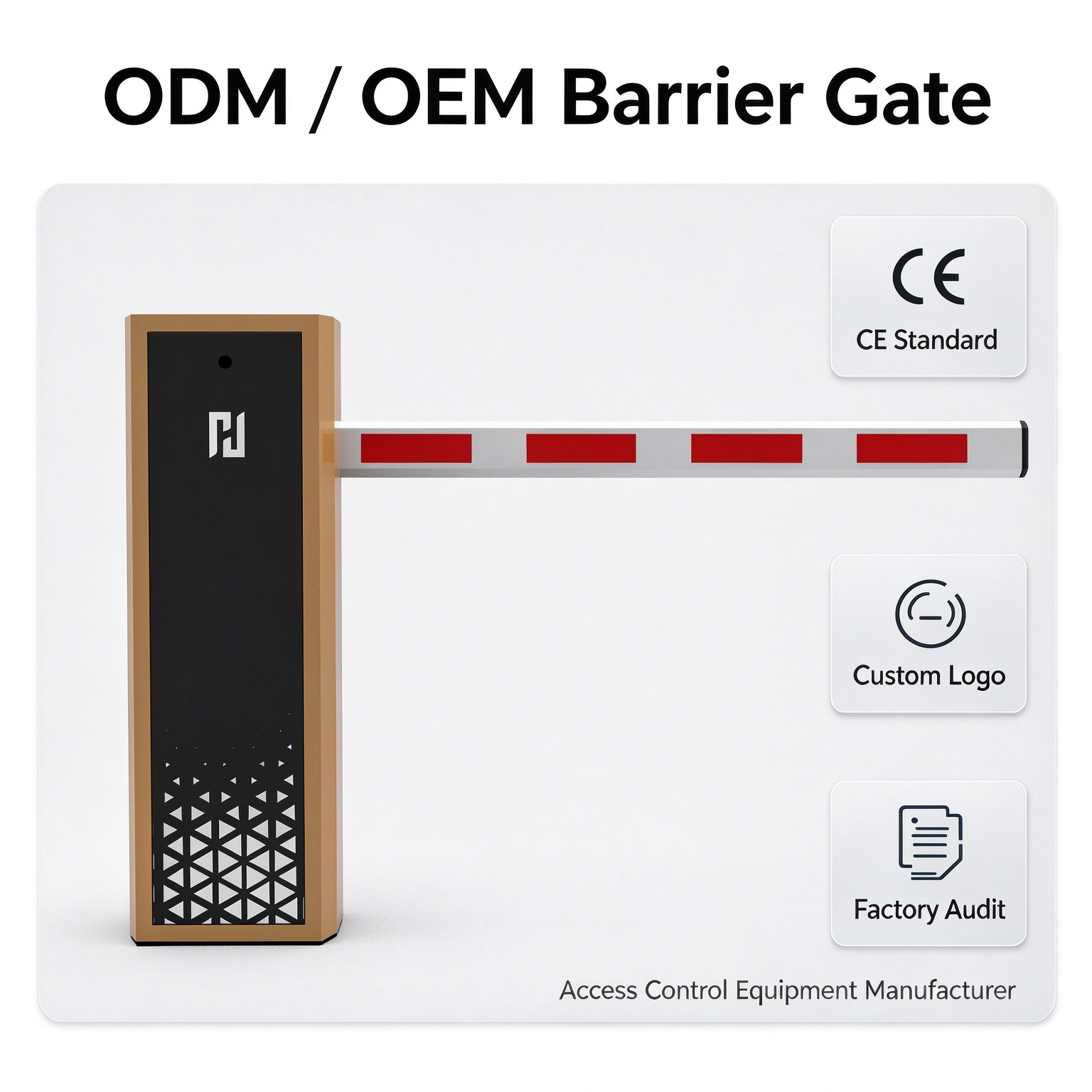
The boom must cover the required lane width while taking account of the cabinet position, the safety distance, the shape of the central island and the pedestrian route. Do not assume that a longer boom is the better choice; increasing the length may require a different mechanical configuration or affect the operating speed and the stability of the boom.
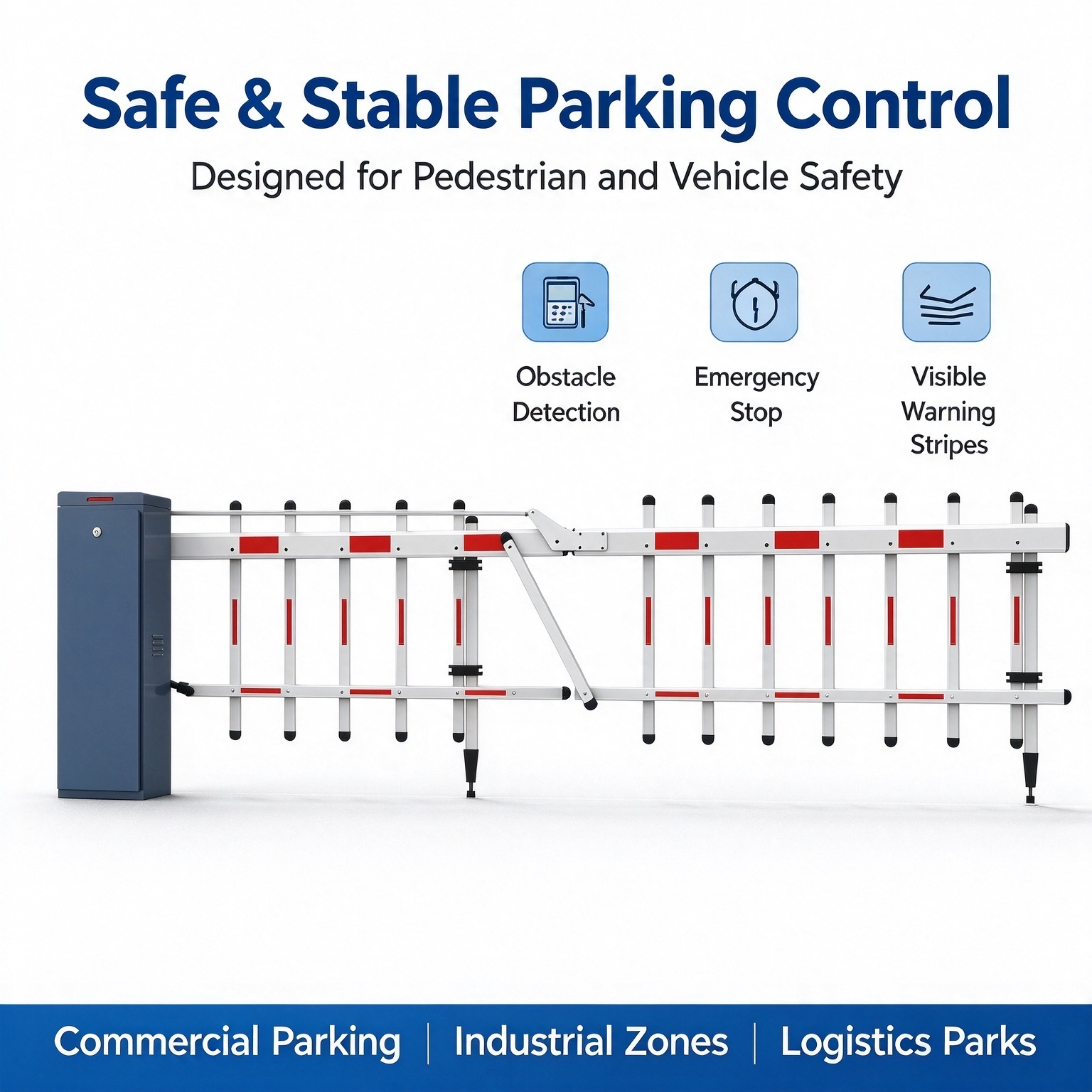
Common options include a straight boom for standard entrances, a folding boom where vertical space is limited, and a fence boom at entrances that need additional visual control. Actual compatibility must be confirmed against the model number and the required boom length, not inferred from a catalogue photograph.
Review automatic boom barriers and parking gates to see the categories available, then request a drawing that shows the cabinet position, the boom length and the height in the open and closed positions before the design is approved.
3. Set the opening and closing speed according to traffic density
Barrier speed affects vehicle waiting time, but it is not the only factor in entrance efficiency. The whole entry cycle should be considered, including authorisation of the vehicle, reading the plate or card, raising the boom, the vehicle passing through, and the boom closing safely. Increasing the boom speed alone may not produce a significant improvement if verification or payment is the cause of the delay.
Ask the supplier to state the opening and closing time for the proposed model, whether it is adjustable, and which boom length was used with the published speed figure. Values vary by model, boom and setting, so the datasheet for the product offered should be relied on rather than a general figure taken from a marketing page.
4. Specify the motor and the appropriate duty cycle
The motor and transmission system must match the number of daily operations, the boom length and weight, and the site conditions. At high-traffic entrances, ask about the permitted duty cycle, the limits on continuous operation, and any service-life test results available. The cooling requirements, overload protection and the procedure for handling motor overheating should also be established.
Some configurations are available with a brushless DC motor, alongside other configurations depending on the model. The name of the motor type alone is not enough to judge performance; compare the datasheet, the duty cycle test, the warranty terms and the spare parts availability for the specific model.
5. Check the protection rating against the site environment
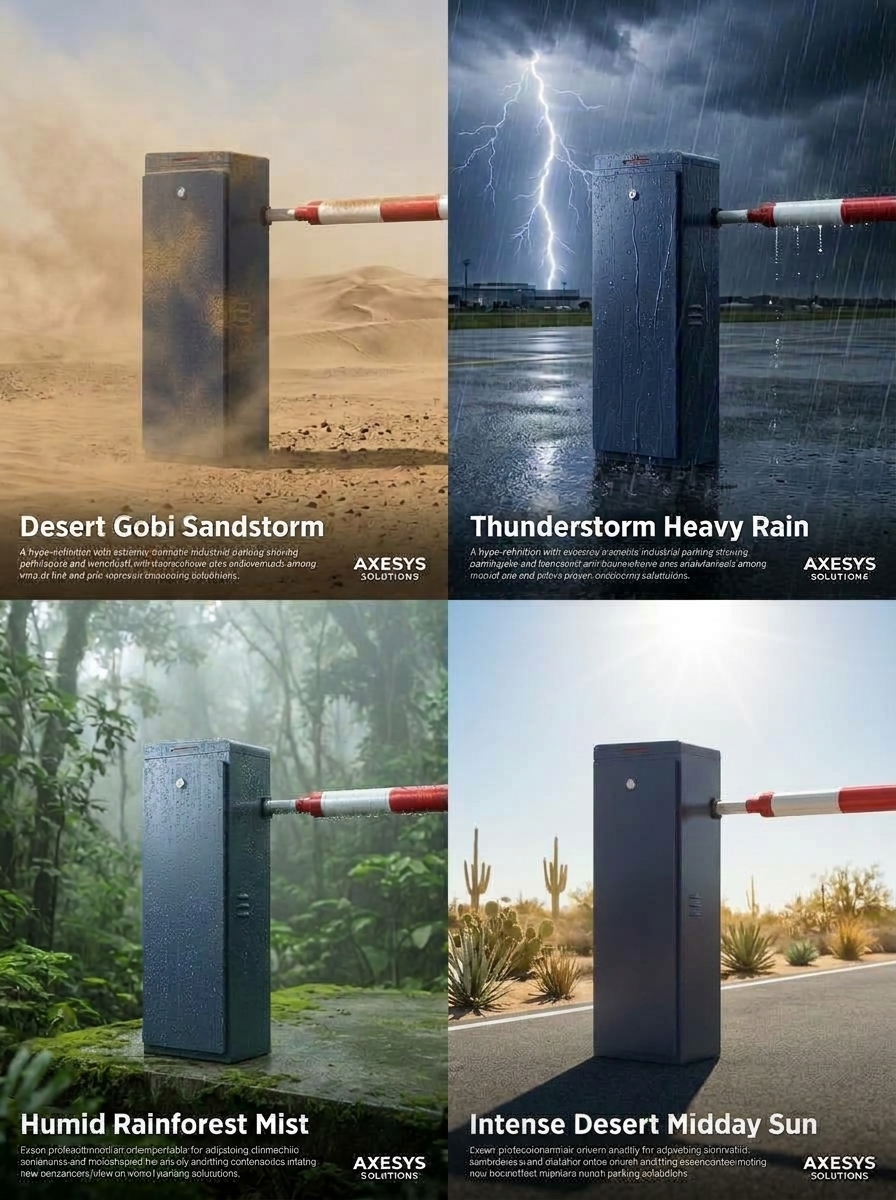
If the barrier will be installed outdoors, assess its exposure to dust, rain, sunlight and heat, as well as proximity to the coast or to sources of corrosion. Verify the IP rating declared for the model, the cabinet material, the surface coating, the operating temperature range, and any additional requirements for cables and connections.
Do not assume that every product from the same brand has the same level of protection. The IP value and the temperature range must be supported by the documents for the model offered, and the installation method must be appropriate for the stated rating. At coastal or industrial sites, ask about corrosion resistance and the routine inspection and maintenance plan.
6. Specify the safety and vehicle detection systems
The specification should define how the system detects a vehicle under the boom or in its path, and how it prevents an unsafe closing. Depending on the site design, an induction loop, a radar sensor, a photocell or an automatic reverse function may be used when an obstacle is detected. Each method has installation requirements and operating limits that should be clarified.
Request the wiring diagram for the safety devices, the test scenarios, the method for testing them periodically, and what happens when a sensor fails or the power is cut. The automatic reverse function is not a substitute for a site risk assessment or for the required detection devices; the protection design must match the actual vehicle and pedestrian movement.
7. Define the control method and the authorised access
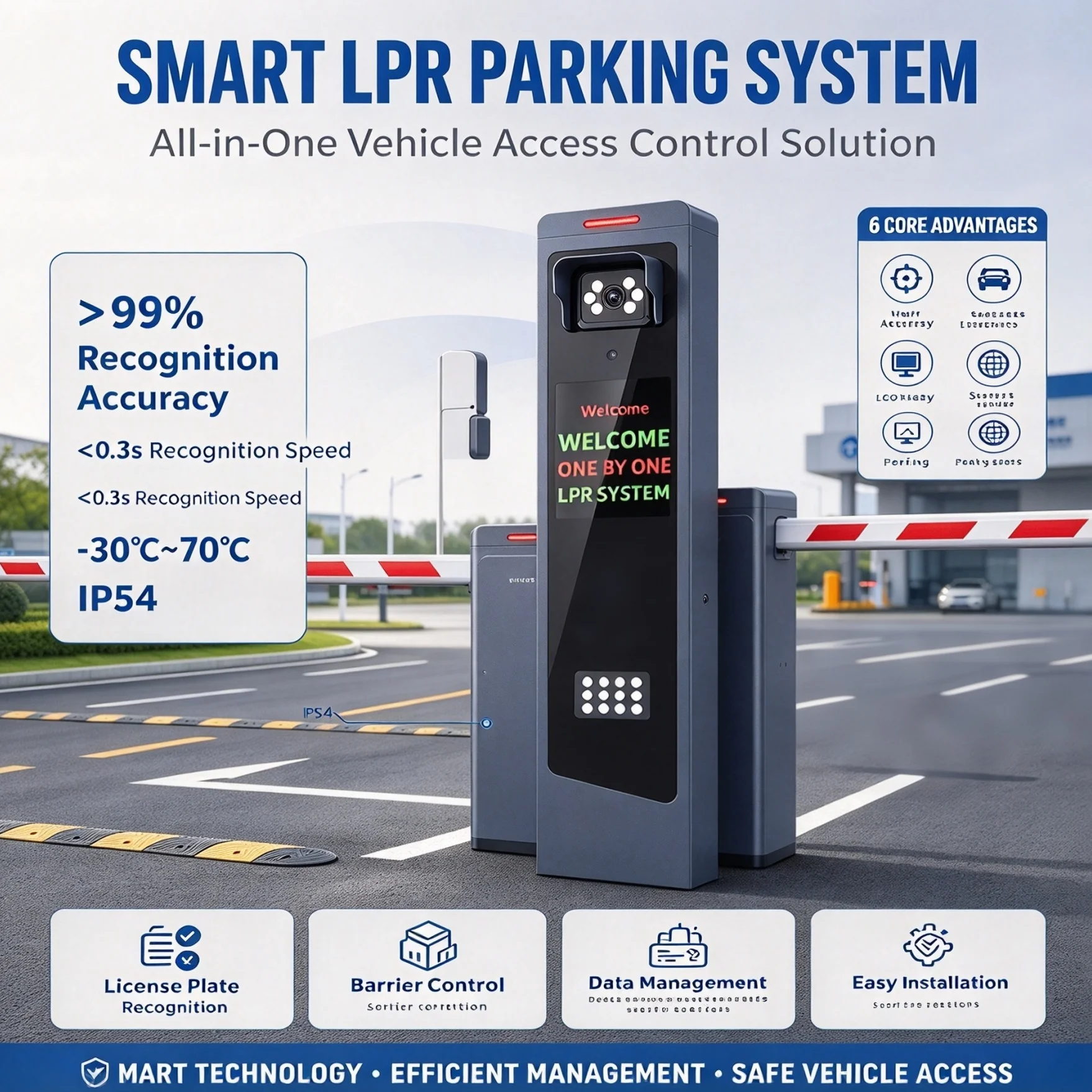
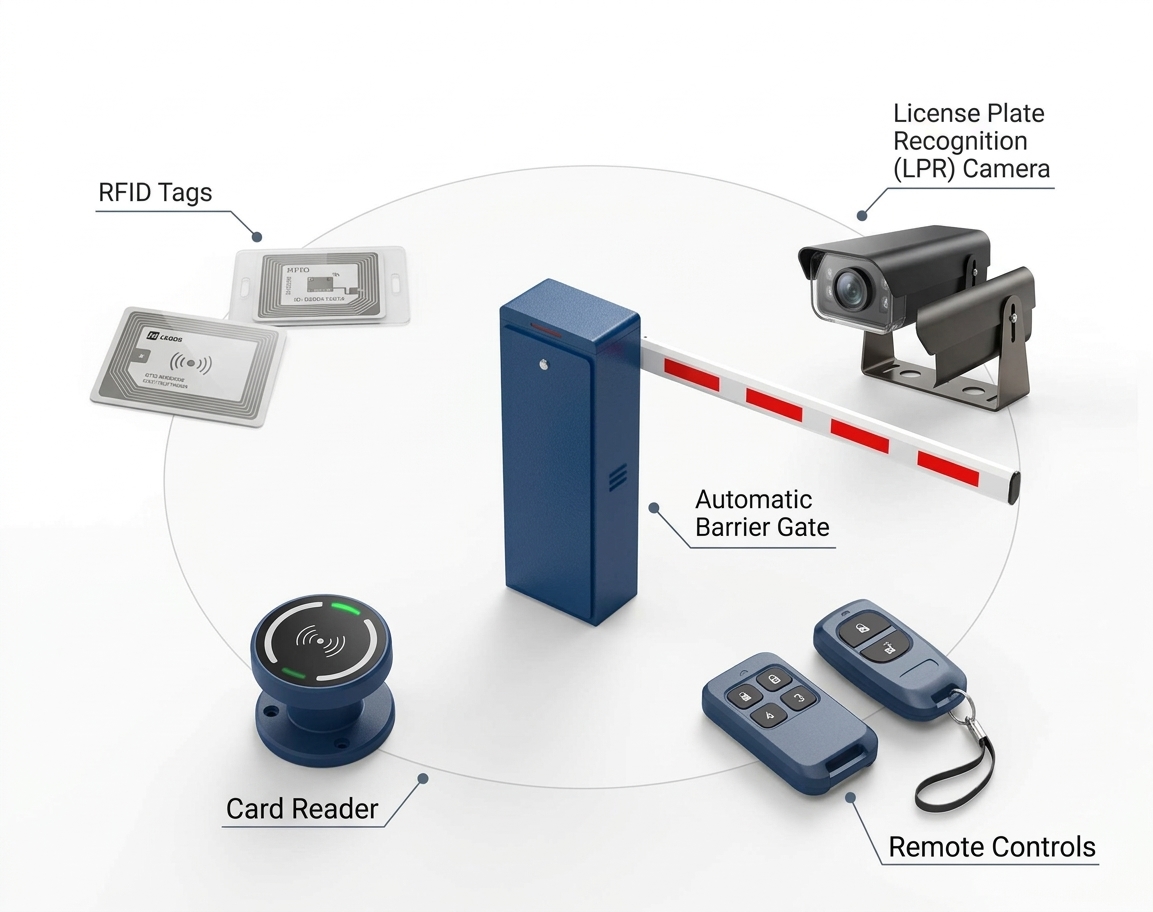
The specification document should state how the barrier will be opened: by remote control, card, code, RFID/UHF reader, licence plate recognition (LPR/ANPR) or parking management software. The site may need more than one method, such as a residents' lane and a visitors' lane, plus a manual fallback when required.
If the project requires licence plate recognition, define the plate types to be read, the camera position, the lighting conditions, the vehicle speed, and how unreadable plates will be handled. In Jordan, the system should be tested on real plates and under real site conditions before final approval, rather than relying on an accuracy figure that is unrelated to the test conditions.
The RFID parking barriers range can be reviewed to identify the options that should be discussed with the integration team.
8. Review the power supply, wiring and software integration
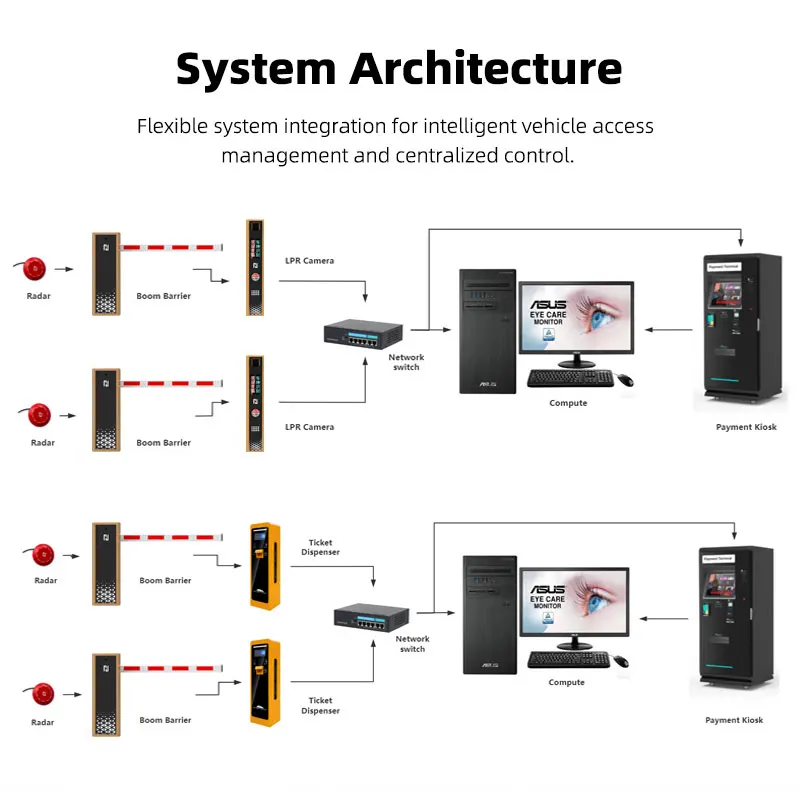
Define the required supply voltage, the power consumption, the earthing and electrical protection requirements, and the position of a backup power source if one is needed. The drawing should show the location of the control unit, the cable routes, the detection devices, the LPR camera, and any network connection or payment terminal, and it should be checked against the existing infrastructure.
If the barrier will work with third-party parking management software or an access control system, request details of the available interfaces and protocols, who is responsible for programming and testing, and any licence or subscription fees. Do not assume compatibility simply because both systems use the same terminology; integration must be confirmed against the specific device models and software versions.
9. Write the installation and maintenance requirements clearly
The specification should include the mounting base, the required space dimensions, the cable route, drainage where necessary, and the measures for protecting the equipment during civil works. Responsibility for supply, installation, programming, commissioning and training should also be agreed, together with the documents to be handed over at completion.
Request a maintenance plan covering the boom fixing, bolts, wiring, safety devices, movement mechanism and fault records. Ask about spare parts availability, lead times and how technical support is requested inside Jordan. The warranty terms, exclusions and response times must be written into the quotation or the contract.
10. Use one standard table to review the specification
The table below helps compare supplier offers on a common basis. Complete each item from the datasheet or the written quotation, and mark any value that has not been confirmed. Do not leave critical items such as safety, power, integration and warranty in verbal form only.
| Specification item | What should be recorded? | What should be verified? |
|---|---|---|
| Site and lane | Lane width, direction of movement, traffic volume | Actual measurements and site drawing |
| Boom | Length, type, required height | Compatibility with the space and obstructions |
| Speed | Opening and closing time | Model, boom length, test conditions |
| Motor | Type and duty cycle | Datasheet and warranty |
| Environmental protection | IP rating and temperature range | Model documents and site conditions |
| Safety | Induction loop, radar or photocell | Wiring diagram and acceptance test |
| Control | Remote, RFID or LPR/ANPR | Compatibility and failure handling |
| Power and communication | Voltage, earthing, network | Drawings and site requirements |
| Service | Warranty, spare parts, response | Written terms and clear responsibility |
| Cost | Equipment, installation, programming, maintenance | Items included and excluded |
11. What should be requested from the supplier before the purchase order?
Request the datasheet for the model number, the mechanical drawing and installation dimensions, the wiring diagram, the accessories list, the available safety documents, the warranty terms, the delivery date, and the installation and training details. If the solution includes LPR, RFID or software, request the component list, the software version and the integration test method.
The contract should include clear acceptance criteria, such as the opening and closing test, the safety device test, verification of access permissions, event logging, document handover and operator training. It should also define how defects found during testing are handled and who is responsible for correcting them.
How to choose a suitable boom barrier for your project in Jordan
The parking solution pages at Baroxon Jordan present categories covering automatic boom barriers, high-speed barriers, LPR/ANPR systems and RFID barriers. Some product pages list options such as a brushless DC motor, customisable boom lengths, different boom types, and detection or protection devices depending on the configuration.
These options should be treated as a starting point for review, with every value then confirmed against the model number and the formal technical offer. When requesting a quotation, send the lane measurements, the traffic volume, the installation environment and the required control method, and ask the team to define the matching configuration together with the test and warranty documents.
Frequently asked questions
What is the most important specification for a boom barrier?
No single specification suits every site. The choice depends on lane width, traffic density, boom length, duty cycle, safety and integration with the access system, and these factors should be assessed together rather than separately.
Should I choose the barrier with the fastest opening speed?
Not necessarily. The speed should match the traffic volume, the safety requirements and the boom length. The complete entry cycle should also be measured, because plate reading or access verification may be the real cause of the delay.
Can the barrier be connected to a licence plate recognition camera?
Yes, where the barrier, control unit, camera and software are compatible with each other. The interface requirements should be documented and plate reading should be tested under site conditions before handover.
Should I ask for a specific IP rating?
The protection rating should be selected according to the installation conditions and exposure to dust and water, and the model documents should then be checked to prove that rating. Do not assume that every model from the same brand carries the same rating.
Latest News
Baroxon Jordan | Barrier Gates & Automatic Access Control
Advanced Security Access Control and Intelligent Parking Solutions.
Company Strength
Adequate Inventory
Fast Shipping
Our Products
CONTACT US
Address: Factory: No. 2 Wanshou Road, International Innovation Industrial Park, Jinan, Shandong, China




© COPYRIGHT 2025 Baroxon Jordan | Barrier Gates & Automatic Access Control

Contact Us
Our passion is to bring your ideas to life. Work with our design team to create a one-of-a-kind custom finish or cladding system to create a truly unique space. Together we can make your story stand out. If you need something to request a sample, request pricing, or request a demo, please fill out the contact form below. Explain your request in as much detail as you can and a representative will contact you within 1 business day.